West End Beer Festival

WEBF

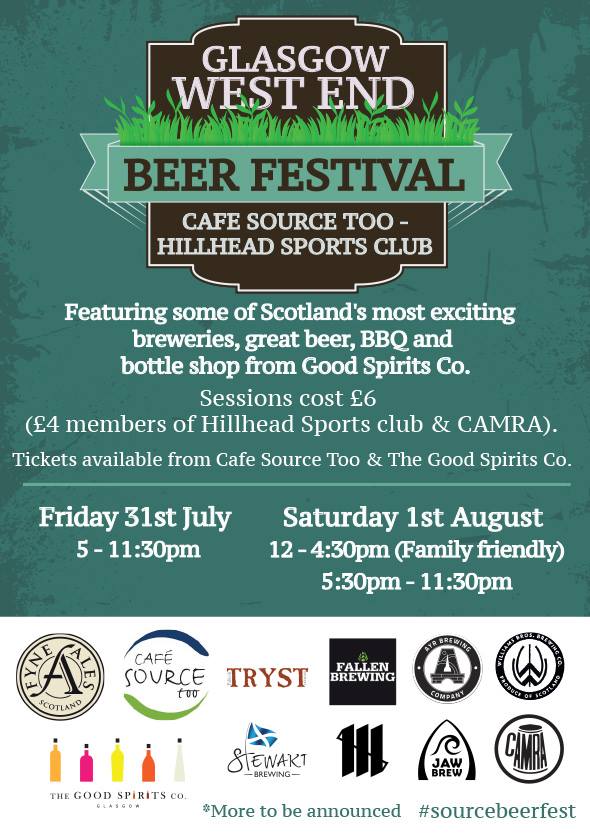
The first annual West End Beer Festival is pitching up in Glasgow from July 31 – August 1.

Situated in Hughenden grounds – at Hillhead Sports Club – the festival will be sheltered from the elements, and include bars by Cafe Source Too and Good Spirits, as well stalls from visiting breweries.

West End Beer Festival organiser Conor McGeady said: “Some of the best Central Belt breweries will be attending, including three Glasgow companies only one year old!”

The Event will run in three sessions over two days; launching from 5-11:30pm on Friday, then reopening from 12 – 4.30pm on Saturday family day, before concluding 5-11:30pm that night.

Entry to the festival is £6, or £4 for members of CAMRA and Hillhead Sports Club; all guests get a free festival glass.

Yet drinking isn’t the festival’s only feature, it will also host folk music (by Babbity Bowsters’ bands) and family- day face painting by Lisa Good.

While being entertained guests can enjoy BBQ food, with a choice of beer from nine Scottish breweries.

These breweries include: Stewart Brewing, Jaw Brew, Ayr Brewing, Monolith, Floodline Brewing; Williams Brothers; Tryst; Fallen Alechemy and Fyne Ales.

McGeady said: “You never know what crazy collaborations Fyne Ales will pull out of the hat!

“And our three new Glasgow Breweries are sure to turn heads; Monolith Brewing with their outstanding Belwether IPA; Floodline with their Fearless Nadia IPA; and Jaw Brew with the impeccable Wave Wheat Beer.”

He added: “We also have great guest beers on our bar and a selection of beers from America, England and Europe at and Good Spirits bar.”

McGeady explained that Café Source has been serving cask ales and craft beers for around four years; instilling a passion that birthed the West End Beer Festival.

He said: “As Glasgow demand for craft beer grew I started to organise meet- the- brewer tastings that showcased different Scottish breweries.”

From there McGeady noticed a gap in the market for bigger events in Glasgow’s West End.

He explained: “There was the Paisley Beer Festival, as well as the Glasgow City Centre events: CAMRAS Real Ale Fest, and Hippo’s Great Scottish Beer Celebration; but there was nothing of the sort in the West End.”

So McGeady set out to create a West End Beer Festival. However, he knew it would have to meet Scotland’s high hospitality standards.

He said: “I have been attending Scottish drinks events over the last couple of years and the standard is amazing.

“Having enjoyed many well informed tastings – at events like Fyne Fest – I have found there is a thriving beer scene in Glasgow.”

And to prove McGeady’s point the West End Beer Festival has sold over 700 tickets.

He concluded: “Scotland is pushing to the fore of a global beer movement, the likes of which we have never seen. So people should come down to the festival and support the innovative companies making this happen.

“Visitors can have a beer and some fun.”

West End Beer Festival tickets can be bought at Cafe Source Too bisto, and Good Spirits Co shop.

Lisbon

L cover

With our hearts set on a music festival, seven friends and I booked a week in July to Lisbon. Liberdade was our area of choice for its proximity to the venue; but there was a catch, it was ‘save- a- year-ahead’ expensive.

Being Portugal-virgins we had unwittingly booked accommodation in its premier shopping district. So bedraggled from the plane, we did the walk of shame past Gucci to reach our hotel foyer.

Staying

Since none of the group was shopaholics, our motive for choosing NH Lisboa Liberdade was simple, it had a pool. The thought of a city break in 30 degrees heat was too much for my Scottish soul so, like a prima donna, I pushed for a pool.

Having assessed the competition, we decided that Lisboa Liberdade had not only the best pool (for our budget) but best balconies. However, we soon realised not all balconies were created equal (two of our crew hit jackpot with room 803’s huge terrace).

Contending with balcony envy, the hotel staff consoled us with travel advice and charm in excellent English.

This charm extended to the rooms, which had spacious interiors, comfy beds, decent bathrooms and mini bars.

Mini bar prices were enough to make us shudder, but the hotel’s surrounding shops had surprisingly cheap fare to substitute.

L dining

Dining

Cheap prices continued in Lisbon’s pubs and bistros. With a beer around three euros, bottles of wine for ten, and cocktails for five; Lisbon’s bars were a joy.

To digest both drinks and cityscape we headed to Bairro Alto (an alfresco area). On Bairro Alto’s plaza we chose the further of two open-air bars, to enjoy sugar cane cocktails while listening to buskers. The music perfectly complimented the plaza’s fountain and vantage point.

Across the road from the plaza we found The Decadent a bistro that, despite its name, was a reasonably priced. Its earthy interior provided respite, along with tasty cornbread, cocktails and seafood.

Seafood also stole the show at Pinóquio, a restaurant across the road from Restauradores Metro station. With packed tables, Portuguese dialogue, and tanks full of crabs it provided perfect taste of local life.

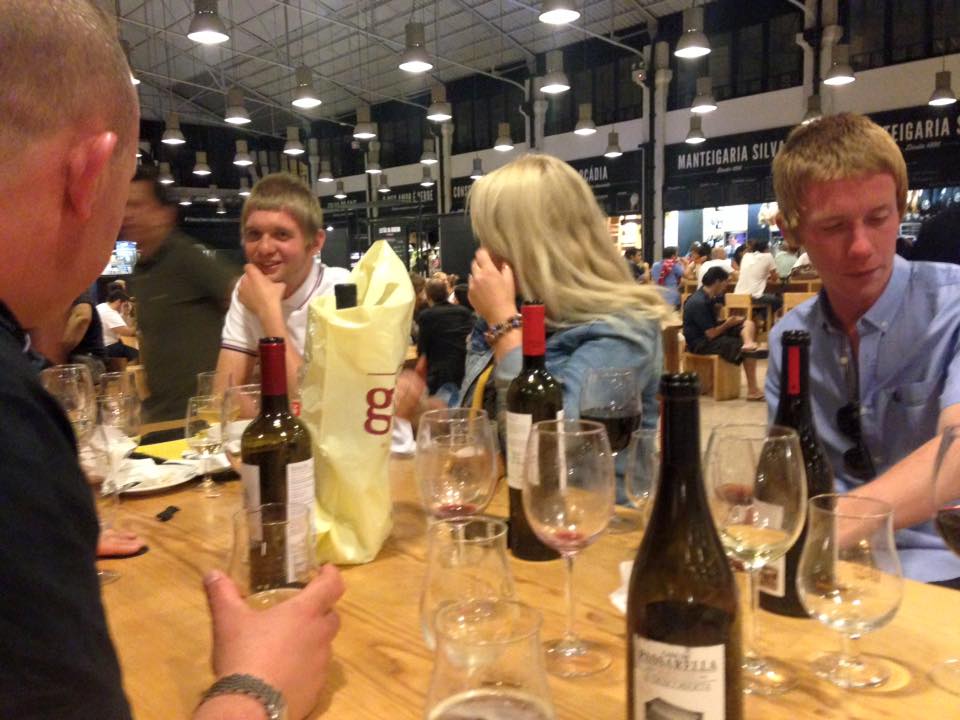
Another local treat surfaced near Cais do Sodré Metro, where we tracked down Mercado da Ribeira: Lisbon’s fab food fete. Here deli, drinks and dining units offer visitors a choice of global cuisine at cafeteria tables.

With a huge range of stalls as well as desert, wine and chocolate shops, we enjoyed post- dinner shopping.

L Music

Music

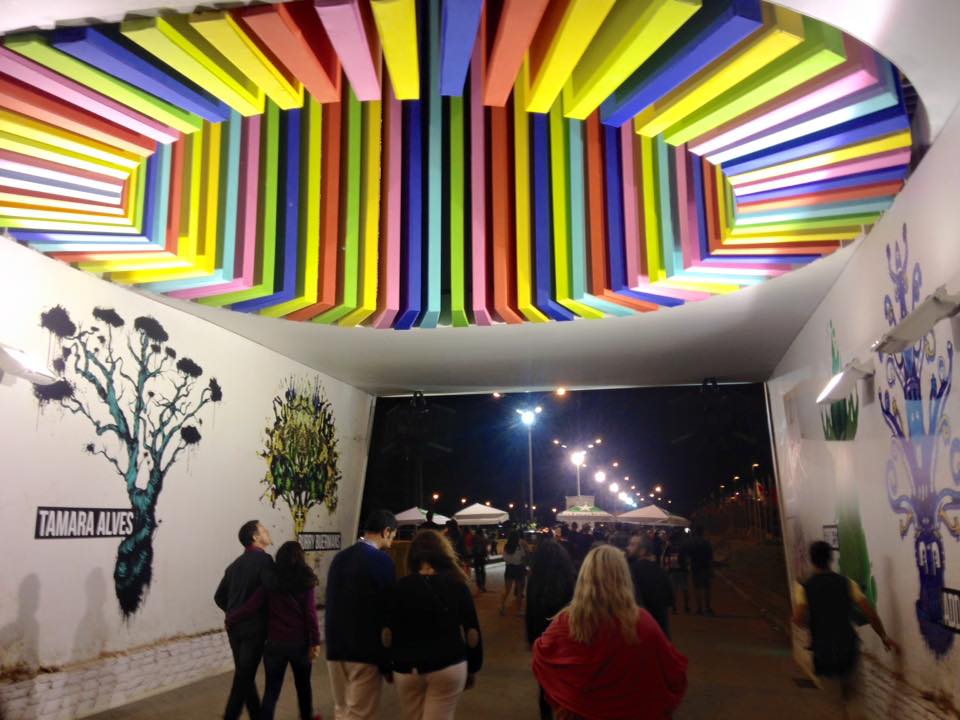
High spirits continued at Nos Alive music festival, which filled three of our seven nights in Lisbon. Situated in Passeio Marítimo de Algés (a 15 minute drive from Liberdade) the festival had four stages, indoor toilets, food, bars and walking beer tenders.

With headline acts including: The Prodigy, Muse and Mumford and Sons, Nos Alive 15 tickets were surprisingly cheap (costing £90 for all three nights). Each night ran until 3am, providing miles better value than a UK festival.

L Traveling

Travel

The only disadvantages of the festival closing at 3am was fighting competition for a taxi home; and suffering a post- midnight fare hike.

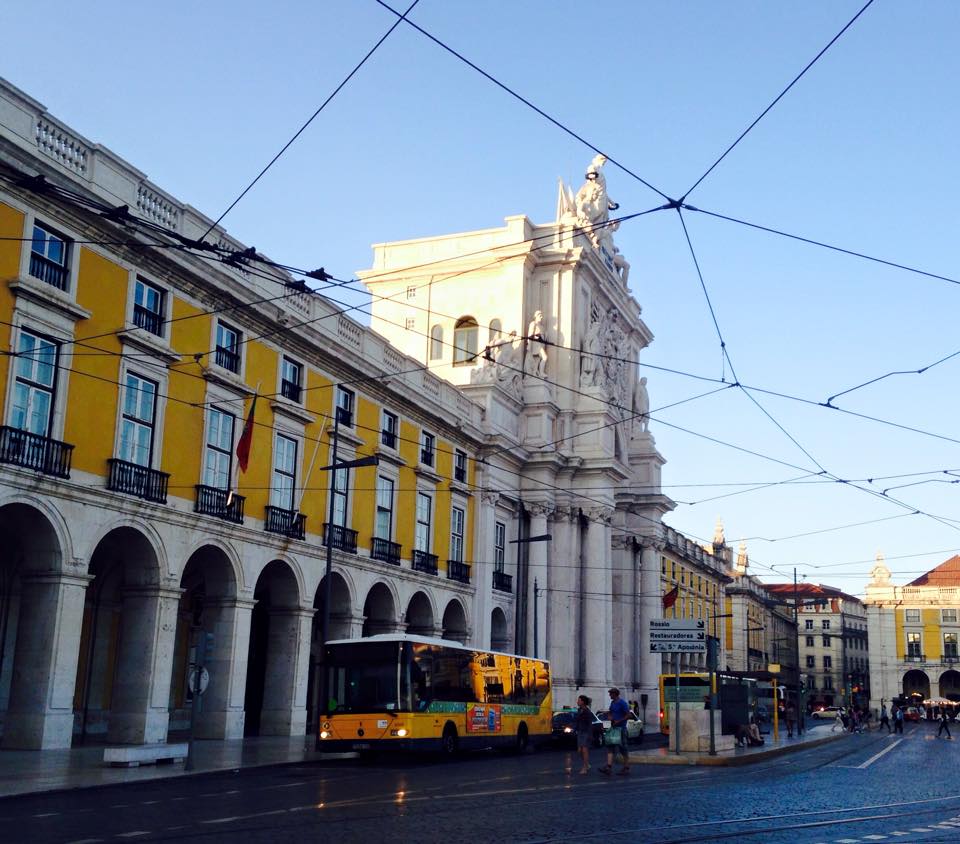
Aside from post-festival fares, Lisbon’s taxis were by large cheaper than those of the UK. As were its trams, buses and trains. While only the taxi’s had working air conditioning, each mode of transport had its appeal.

Aero-buses acted as punctual transfers from Lisbon Airport to the districts, while trams offered a vintage view of Lisbon’s ‘seven hills’. For travel outside of Lisbon centre, the trains offered quick and spacious speed.

L Art appreciating

Art appreciating

To escape the city, my boyfriend and I boarded a train to Sintra, Lisbon’s neighboring old town.

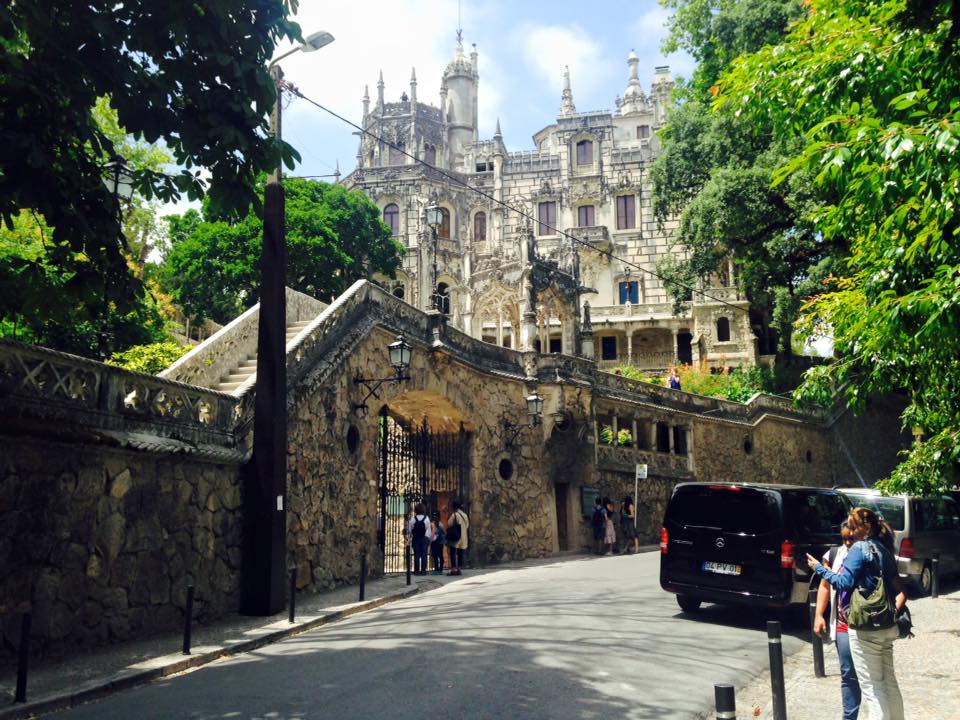
With regal buildings, museums and cliffs, the area had plenty to see. But we bee-lined to the Quinta da Regaleira, a World Heritage Site complete with chapel, underground tunnels, grotto and Gothic mansion. It really was the stuff of dreams.

The mansion house offered Portuguese history briefs, as well as drawings from the architect’s restoration. With multi-coloured tiles, intricate wooden paneling and fresco painting, signs explained that António Augusto Carvalho Monteiro (Monteiro the Millionaire) bolstered the manor’s splendor, as testament  to Portugal’s golden age.

After two hours of exploring my boyfriend and I resigned ourselves to the journey home, but not before scouring Sintra village’s crafts and wine shops.

As the trip drew to an end the group reflected on all we had done and all that we would have done, had we booked more time. Turns out a week isn’t long enough to see all Lisbon has to offer.

RCA Graduate Show

RCA picture

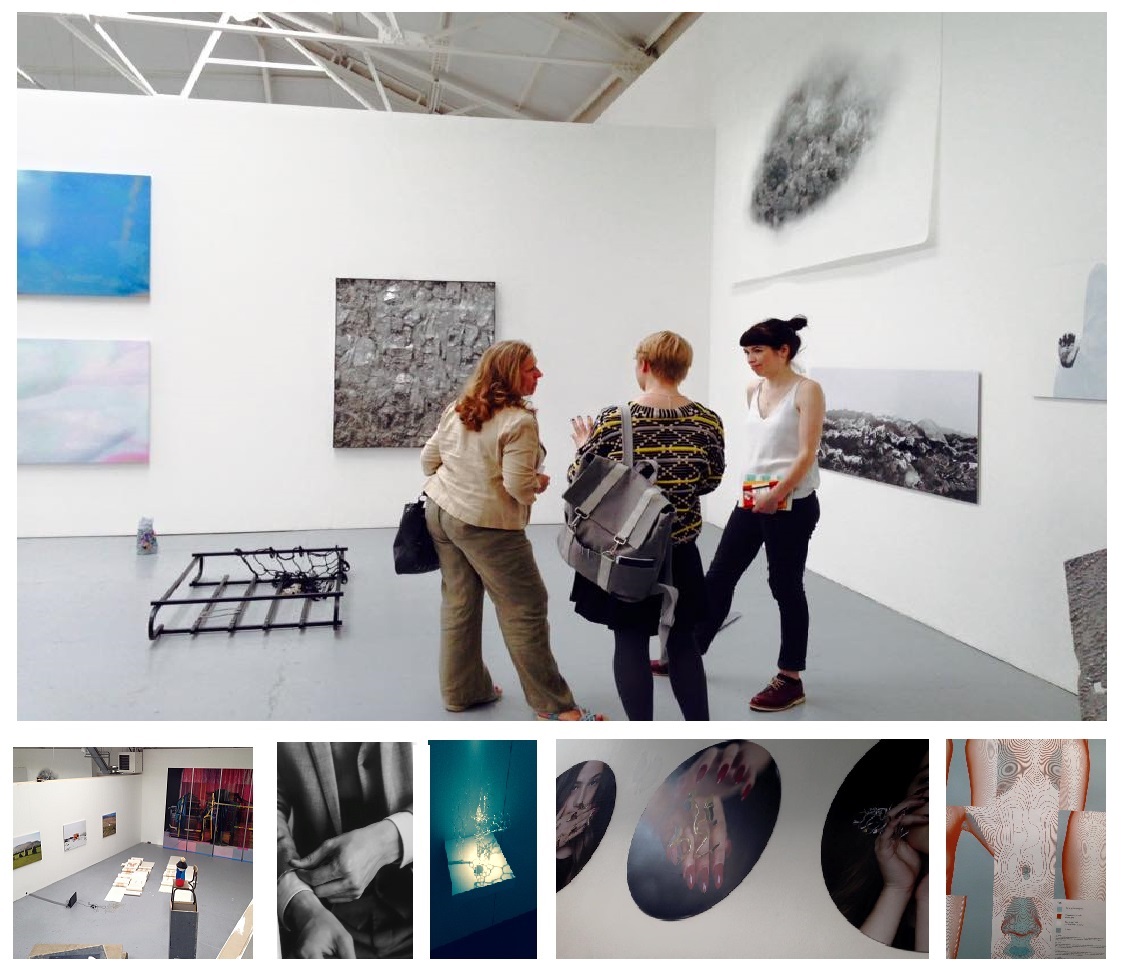
Art is for everyone; and to prove the point the Royal College of Art (RCA)  welcomed the public, without fee, to its Graduate Show 2015.

RCA Head of Communications & Marketing, Áine Duffy said: “This year saw the biggest ever graduating cohort – 648 MA, MPhil and PhD students in total, across six Schools: Architecture; Communication; Design; Humanities; Fine Art and Material.

“The Show Team, led by Dean of Fine Art Professor Juan Cruz worked tirelessly on every aspect – from ensuring that each student had the right space for her or his work to delivering the online catalogue, with 648 different profiles.”

The show featured work from its latest Alumna, across all disciplines; letting viewers wander from sublime sculpture to ridiculous renditions.

While performance art contrasted with material; the show had one constant, it was thought provoking. Throughout the exhibition artists used form to reflect preoccupations such as: fetishes, science and politics.

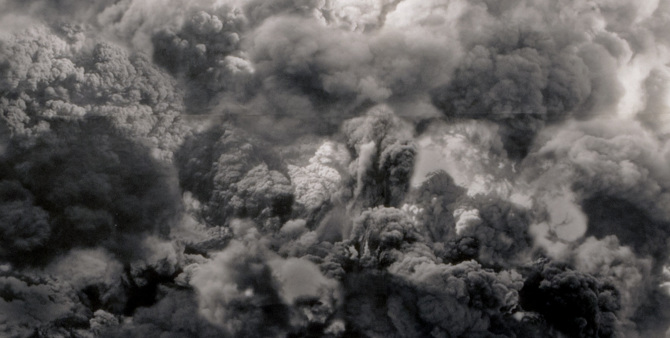
On the ground floor a huge print loomed over guests; its black and white puffs suggested tree canopies. Yet artist, Kate Fahey, explained the ‘trees’ were actually mushroom clouds, looming over Syria. She sourced aerial pictures of explosions before layering them into a dystopian textile.

RCAKate

She said: “The gap between what we see (and our reaction to it) and the initial, functional intention of the photograph on its capture is becoming further from our grasp.

“In the fragility of the work I reference both the ephemerality of the ‘poor image’ that ‘operates against the fetish value of high resolution’ and the instability of the subject matter.

“In its form and placement within space I reflect on our relationship with contemporary images – screen based perspectives, aerial, satellite and elevated views.”

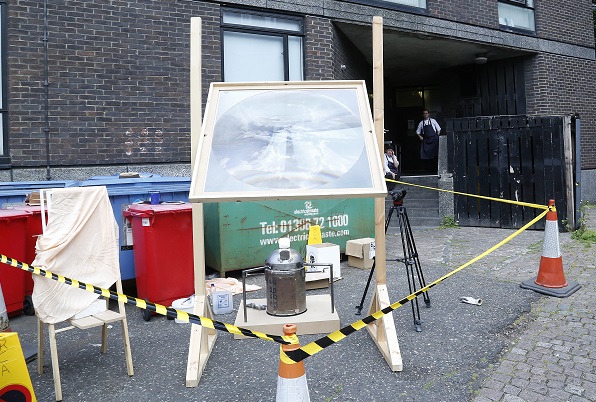
While Fahey used excess to highlight atrocity, another graduate used it to harness energy. Ghanaian artist, Nana Asafua Dawson, used his home-land’s heat as inspiration to make a (huge) magnifying- glass furnace.

Nana furnace

He said: “Back in Ghana I had worked with craftsmen who used an open- air, electric powered furnace to melt their wax and metal.

“I got to asking how craftsmen could work in an environment like this, without wasting so much fuel. So I came up with the concept of using heat conduction, conversion and rotation to harness the power of the sun.”

Dawson explained: “I bought a 1.1m squared lens; created a solar powered furnace; tested it in London; and it worked! I managed to get the lens to produce temperatures of 1500 and above. Then I used it to melt scrap metal, and create the jewelry displayed at the show.”

Nature again inspired metalwork, as artist Victoria Shennan displayed her jewellery and musical- collaboration about bacteria. The graduate first researched the quantities of human bacteria, before making jewellery that reflected its proportion and place in the body.

RCAVic

She then sought to replicate its patterns, in a musical collaboration with Exeter University Medical School Research Fellow ; Dr Linda Long, and creator of Molecular Music, Jack Hurst.

Shennan said: “The body is a landscape, host to many habitats, vastly uncharted, and part of a wider ecosystem. Through the medium of the body we experience the world.

“My exhibition asks: ‘what if you could experience the world hidden in plain view and hear the rhythms of nature that underpin existence or weigh the value of these invisible worlds?’”

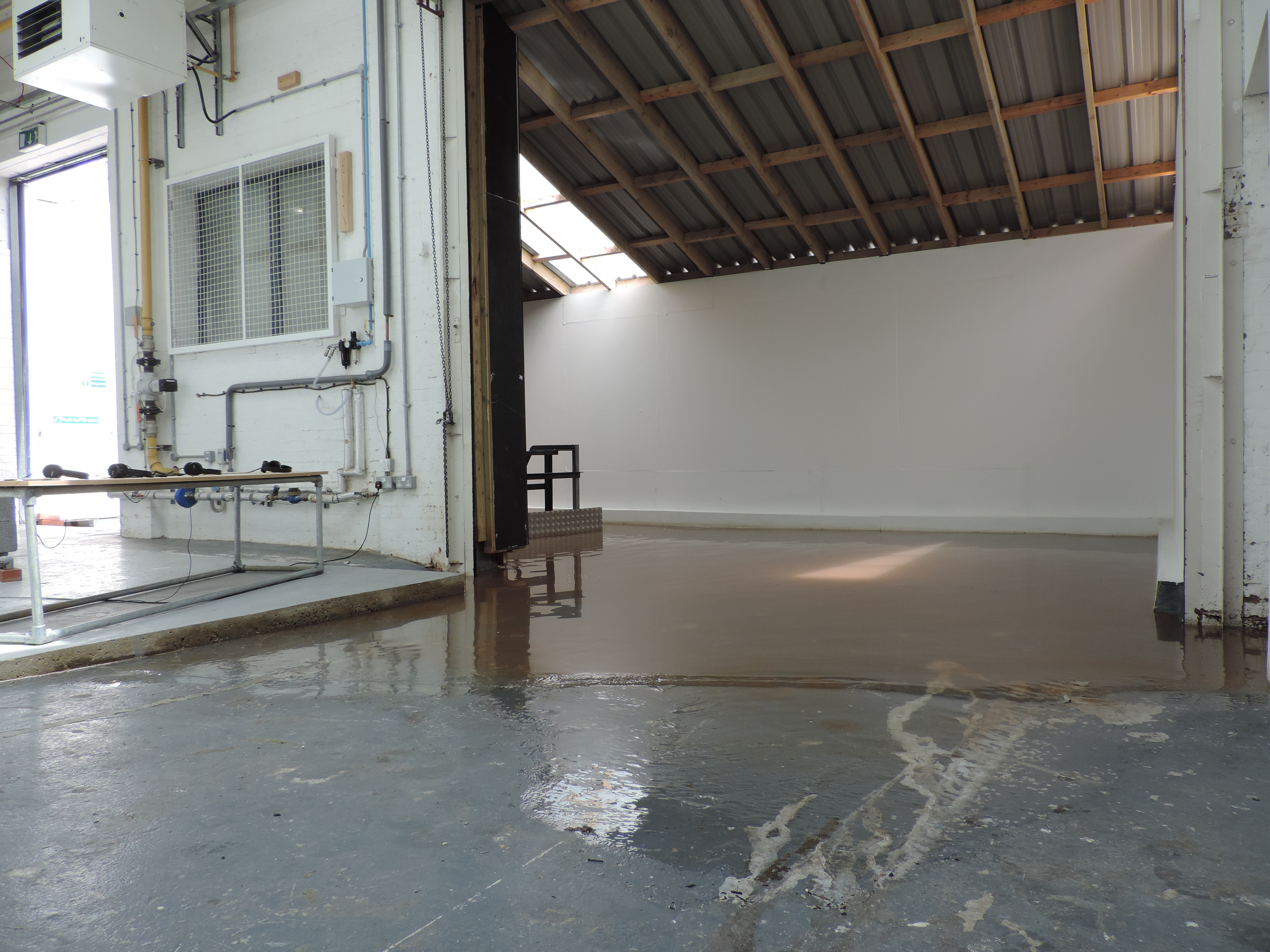
Invisible forces also acted as inspiration for artist Alexander Duncan’s installation. At the show, Duncan flooded an area and added (partially concealed) machinery to create a fake tide.

RCA Alex Duncan

He said: “In this work a loading ramp becomes a slipway; somewhere intertidal and uncanny. An artificial lapping wave powered by a pointless machine.

“I’m fascinated with how people react to water; to want to be close to something potentially harmful and control it.”

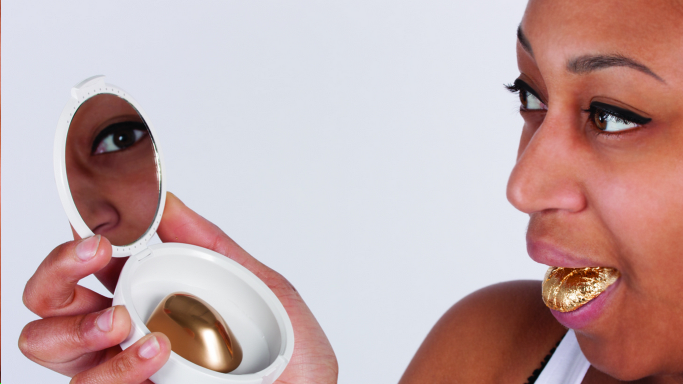
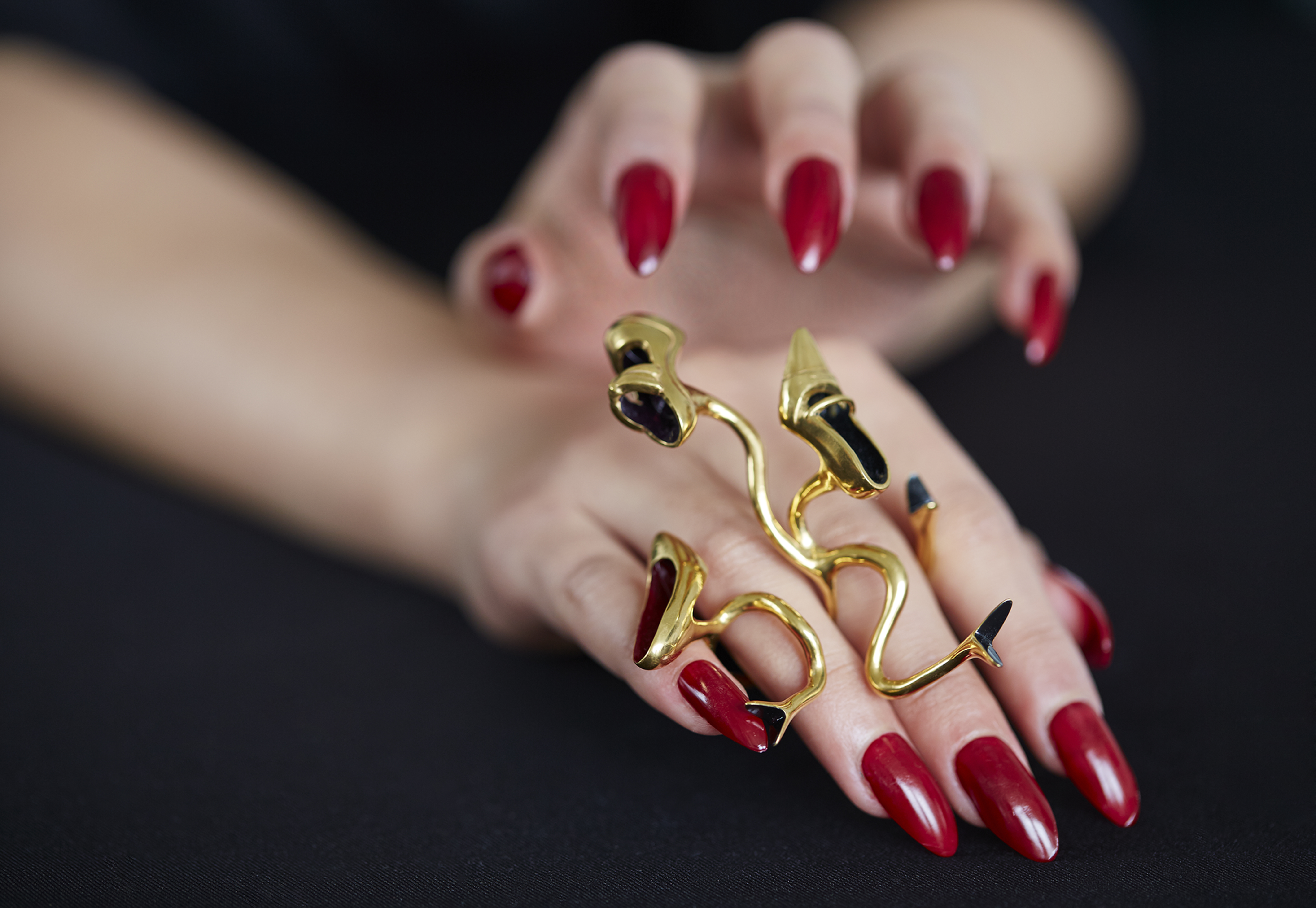
Control is a theme which resurfaced in artist Yunjung Lee’s work. Her jagged jewelry showcased rings and necklaces with fangs, snakes and stilettos.

RCAYunjungLee

She explained: “I found that there are two female stereotypes: the princess and the monster. Barbie doll is an example of the princess; Medusa and Vagina Dentata the monster.

“I fused the two different representations and created something in between. Throughout the project I tried to shed the new light on the representation of women, and make the jewellery that can be part of the wearer’s identity.”

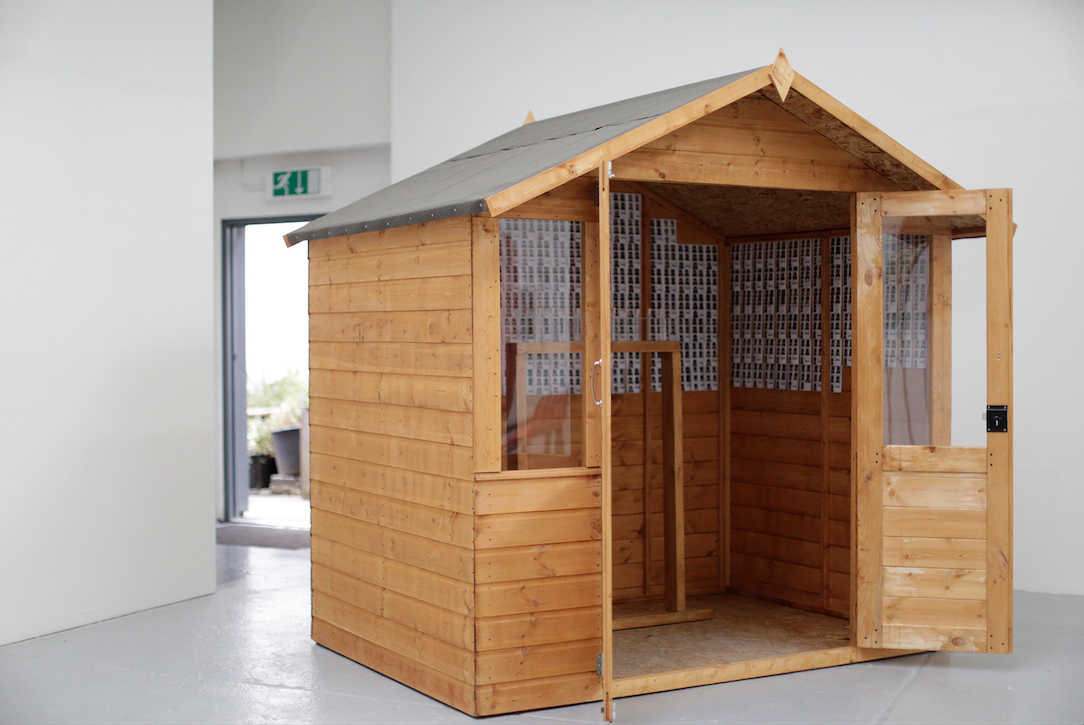
Identity formation also prevailed in RCA photographer Ruidi Mu’s work. Mu’s centrepiece was a wooden hut, papered in passport photos of similar looking people. These pictures sat behind test tubes (containing hair) in a combination that suggested cloning.

RCA Rudi Mu

Mu said: “My works revolves around the idea of ‘happening’; trying to find the boundary between art and life, and shrinking it as much as possible; using photography to recreate the environment.”

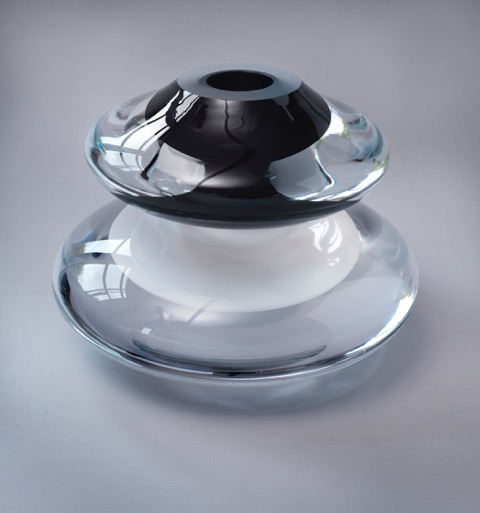
Another artist using variable environment to manipulate form was Isabella Kullmann. Kullmann’s glass vases and bowls showed clean edges that responded well to light.

RCAIsabella

She said: “This body of work is all about the glass object in its domestic environment or architectural setting- the play of light, the fall of shadows, the reflection on the surface, and the refraction of colour.

“These transitory properties stand in contrast to the permanence of the material itself. The situated environment becomes active: adding colour, movement, and light to the object, while the hardness of the glass dissolves into the space surrounding it.”

Reactive and proactive in parts, the RCA Graduate show offered something for everyone.

Head of Communications & Marketing, Áine Duffy concluded: “The RCA 2015 show has been an unmatched showcase for the talented designers and artists graduating this year.”