Scottish Poetry Library

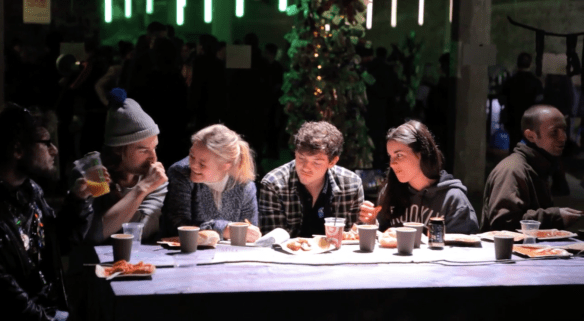
Hankering for a haiku or starving for a sonnet? Then look no further than the Scottish Poetry Library. Situated just off of Edinburgh’s Royal Mile, it’s filled with people to help you find just the thing! Even if the thing you want is an opaque verse from childhood.

Finding missing poems is all part of the service, as the Poetry Library’s Communications Manager, Colin Waters, explained.

“People tend to call or email with a few lines of a poem they wish to track down, then our librarians call on our collection, before searching lines, trying variants and consulting colleagues to find it.”

Often people remember poems from milestones in their lives, but forget the title or the author.

Waters explained: “People often want a poem read at a wedding, funeral or indeed at a political meeting. In Scotland, when we experience important moments in our lives we like to hear what the poets have to say about them.”

This vice for verse is, Waters recons, the reason the country has produced so many world class poets.

He said: “The mature generation of Scottish poets – such as Don Paterson, Kathleen Jamie and John Burnside – have won every prize going; and the Scottish Poetry Library is the best place to discover more about this wonderful heritage.”

While Scotland’s poetry is centuries old, the Scottish Poetry Library is young, having been founded in 1984. A brain child of the poet Tessa Ransford, the library first inhabited rooms within Edinburgh’s Tweedale Court, before outgrowing this space.

Waters recalled: “The Library’s collection grew, so in 1999 (after extensive fund raising) the Scottish Poetry Library moved to its current building at Crichton’s Close.”

But the work didn’t stop there; in 2015 the library underwent refurbishment to include a new entrance, sheltered terrace, further storage, recording room and event spaces.

Now the SPL is the only poetry library in Europe housed in its own specially-constituted building.

“The Library has evolved beyond bricks-and-mortar and we are exploring ways of making its poems easier to access beyond the building. We offer postal loans, our catalogue is online and people can download our poetry posters wherever they live,” Waters said.

The library has also increased its interactivity with fortnightly podcasts; as well as email, Facebook and Twitter campaigns. In 2011, the SPL’s Twitter feed was judged to be the fourth most influential in the library world.

Waters quipped: “The virtual door is always open.”

In fact, the Scottish Poetry Library website plays a vital role in recruiting its volunteers. Those interested in helping at the library can fill in an online form describing the skills they could contribute, as well as those they wish to gain.

The library also has a lot to offer recreational visitors.

Water said: “In July the Saltire Prize-winning poet Ryan Van Winkle will be hosting a SPL event at Jupiter Artland.”

He added: “The Scottish Poetry Library has a reputation for experimenting; in the past year its events have featured drag queens, throat singing, and film-poems. So far this year’s events have been somewhat more restrained, but we have interesting shows to announce this autumn.”

 

Glasgow Women’s Library

Glasgow Women's Library

Ascending the cultural statusphere is a museum unlike any other. From its base in Bridgeton, Glasgow Women’s Library is blazing a trail for the rest of the UK.

“The Library has grown from a tiny grassroots organisation to become the only accredited museum – in the UK – dedicated to Women’s History. It is also a recognised collection of national significance,” GWL Enterprise Development Manager, Sue John, said.

GWL’s status of national significance comes not just from its records of society, but from its social action. The Library grew from an Eighties project titled Women in Profile, which highlighted the cultural achievements of Glasgow’s Women, in the run up to its European City of Culture award.

Since then the library has remained committed to social activism.

John explained: “Outreach programmes are something that Glasgow Women’s Library has always ran. For instance, we have a long standing adult literacy programme and its students often become involved in our other projects.”

Part of these projects has always been the gathering of artifacts on women’s history.

John said: “We collect items that tell the stories of women’s lives, whether it be things from the women’s liberation movement or more recently things collected at Trump protests.”

Throughout the years, as GWL projects grew in number so did its artifacts. Once an impressive collection had formed the GWL went through the robust process of becoming an accredited museum.

John said: “GWL has managed to keep grassroots ownership, because everything in the Library is donated; whether it be the 20000 books, 3000 museum items or 300000 archive items.

“We have kept all of the resources accessible and friendly, to maintain our core values of equality, diversity and inclusion.”

This democratic approach even extends to the museum’s curatorial choices.

John revealed: “We have a project called Women Making an Exhibition of Themselves that gets volunteers involved as the library’s community curators. This means that they help to decide which artifacts make it through to our permanent collection. The community curators pick items and find ways of interpreting their stories.”

Similar interactivity also lies at the heart of GWL events.

John explained: “We host speaker and workshop events that attract both men and women, old and young. For instance, we are hosting Open the Door, a Literary Festival that brings together women authors and aspiring writers. 

The festival will have workshops, performances and networking sessions. Headlining the festival will be writers including, Louise Welsh, Kirsty Logan, Sim Bajwa, Val MacDermid and Lesley McDowell.

John enthused: “The beauty of Glasgow Women’s Library is that we bring together people whose paths might not naturally cross. We have local people rubbing shoulders with Turner Prize nominee artists.”

GWL attempts to make culture accessible to all by offering free activities, Pay It Forward ticket schemes and disability friendly events.

John said: “As a society we are not placing as much importance as we should on the life-changing power of art, culture and heritage. We know that it can be a powerful vehicle in providing opportunities.

“When you improve the lives of women you also improve the lives of their families and the communities that they live within. That is how Glasgow Women’s Library has worked throughout the years to win hearts and minds.”

She concluded: “Everyone is welcome to come into Glasgow Women’s Library. Visitors are greeted with the offer of tea and a tour, they don’t have to spend any money or even have a reason for coming.”

[Photo credit: Keith Hunter]

Glasgow Tango Studio

Glasgow Tango Studio

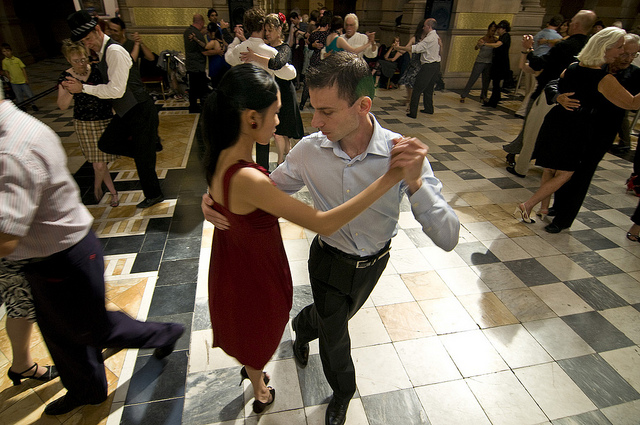
Bringing Latin flavour to Scottish dance floors is Glasgow Tango Studio. Launched in 2005, by tutors Jeff Allan and Sari Lievonen, the hub operates across different venues and class levels.

Lievonen explained the dance’s appeal, saying: “If you enjoy beautiful music and interaction with other human beings then tango is for you!”

Tango is a partner dance from the Argentinean region, with many modern-day forms.

Lievonen explained: “You can sort tango into two different categories performance tango – which you see on Strictly Come Dancing – and the milonga (social) tango that we do.”

Milonga sessions are set to a tanda of similar songs, before a cortina (break) allows for the swapping of partners. In Glasgow Tango Studio events, dancers swap partners by inclining their head towards a prospectus partner  – who will move forward (to accept) or look away to decline. This tradition is called cabeceo.

After dancers have practiced their moves milongas often conclude with students demonstrating their skills. This improvised showcase is however different from the choreography of performance tango.

Lievonen said: “Learning social tango is like learning a language; you study its vocabulary and grammar and this will enable you to start making your own sentences.”

The spacing of these sentences varies depending on the type of tango. Milonguero tango uses close embraces and small steps, whereas salon tango favors open posture and longer steps. Core to both styles is traveling – heal first – with the music and your partner.

Lievonen stressed: “Tango is about connecting with your partner, not learning fancy steps. It is body language communication within the couple that makes what we call the tango connection.”

Tango connection describes the way in which a dancer can anticipate their partner’s next move.

Lievonen added: “It is possible to experience this connection in the very early stages of practicing. If both parties have the right posture then all they have to do is walk in unison, and the magic of the dance will start to appear.”

To experience this magic dancers can join Glasgow Tango Studio, on 21 April at El Abrazo Milonga (in Glasgow CCA). The night promises music from golden era tangoes, milonga and tango-valses, as well as contemporary arrangements of traditional tunes.

Alternatively, beginners can try the dance at Glasgow Tango Studio taster sessions, the next of which is being held on 5 May, also at Glasgow CCA. These sessions occur around three times a year.

Lievonen added: “Beginners’ courses start in September, January and May. These classes can last 6 – 12 weeks. We also host private classes that allow people to get a better understanding of the art.”

Glasgow Tango Studio classes are currently being held in 76 Kelbourne Street Scout Hall, but updates of their details are held online.

Class participants are encouraged to book in advance, via the website or phone, to ensure even numbers for dance couples. Lievonen also explained that while tango is open to all ages, she finds it best suited to adults.

She concluded: “Life experience makes you more comfortable dancing with a partner. Men think that you need to impress a woman with fancy footwork, but this is not what women want, they want to dance with someone with whom they can relax.”

Fools and Heroes Glasgow

LARP


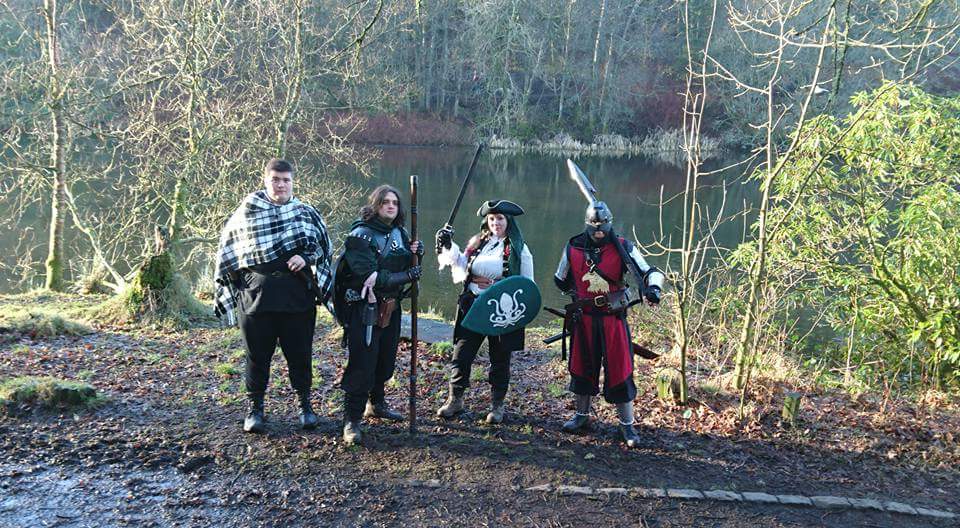
LARP or Live Action Role Play is latest form of gaming to capture the UKs imagination. Using improv, costumes and outdoor settings, it is literally a breath of fresh air.

“It’s similar to games like Dungeons and Dragons, but instead of sitting around the table rolling dice you put on costumes and become the characters,” LARP veteran Claire Main said.

Main works as Glasgow Branch Liaison Officer to LARP group Fools and Heroes, in which she has gamed for four years.

She said: LARPing has been around for quite a long time; in the eighties we spotted the first groups in the UK. In the nineties the Cuckoos Nest was set up as part of Glasgow University LARP society, but it has now become its own separate entity. Lots of LARP groups have now sprung up in Glasgow.”

Although one of many, Main explained that the Fools and Heroes group works as part of a wider network.

She said: “The society, as a whole, works by allowing members of one local branch to play in the games of others throughout the country. So you can play as your character and travel as them throughout the UK.”

Main recalled: “I had a phone call this week from a couple in the Plymouth branch of Fools and Heroes, wanting to match our LARP session dates with those of their holiday, so that they could join the game while on their break.”

She added: “I have friends all over the UK now that I wouldn’t have met otherwise; it is a wonderful social network!”

Although part of a national scene, Fools and Heroes Glasgow branch practices most in Mugdock Country Park.

Main set the scene: “The park has a lot of terrain to play with. It has an old World War II bunker that can be adapted to be a trap in the game; it also has open fields and marsh that can be farmland, battlefields or graveyards. Nature can set a wonderful backdrop to get your mind going. Some of the best games that I have had have been when the mist has come rolling in or there has been snow on the ground.”

She added: “Nature is however, only a starting point. Its up to the player to get immersed into the character and for the referees to set each situation up well, so that the game feels authentic.”

This authentic vibe is created by splitting the game and group in half; the first half sees one lot of fools and heroes assume characters on a noble quest, while the second lot will play the villains and damsels in distress. Then after lunch participants swap around, so that everyone gets a chance to play both signature and supporting characters.

Signature characters have become synonymous with LARPing, as many players use the medium to become their idols. However, Main explained that is not quite how it works in the world of Fools and Heroes.

She said: “All LARP groups are different, but Fools and Heroes sees you play one main character of your own design. You will start of as a primary character, such as a squire, then as your character grows in experience and wealth they can progress. For instance, after a while your character can join a guild, join a church, learn magic and develop into an epic hero.

“This development allows you to learn as the same time as your character, for instance the first time your character encounters a troll they won’t know what to do, so a more experienced character will need to step in and show you. Then as you learn and progress you will help those less experienced.”

This learning also expands players’ life skills.

Main explained: “It gets you exercising and encourages you to develop other skills on the side. I have learned to sew, knit, crochet all through LARPing.”

While the game is progressive, it is high contact, so not suitable for everyone.

Main cautioned: “Fools and Heroes LARP is a physical game, it involves running and combat so it would be more challenging for people with mobility restrictions, however there are all kinds of LARPing out there, so it is up to the player to find one that suits them.”

Likewise Fools and Heroes only allows full membership at the age of eighteen, due to its adult content, but Main explains that there are other groups out there that will cater to younger players.

She concluded: It is hard to describe what LARPing is, so I would say to anyone that is curious about it to just come along and give it a go. It would lend itself well to team building and an alternative day out.”


Glasgow Goes Green


Glasgow Goes Green


Bringing sustainable living facts, fun and food is the pop up festival Glasgow Goes Green. Running 15 February in SWG3 from 5– 11pm, the event is part of UK Go Green Week.

Festival lead organiser Sarah Bacom explained: Go Green Week is the largest week of student climate action. Glasgow Goes Green comes as part of it, bringing together the city’s four universities in the common cause of environmentalism.”

Although student led the festival welcomes people from all walks of life, with daytime family activities and an 18+ after party.

Bacom said: “The festival will be running in two stages; from 5- 8pm it will be family friendly, with stalls, activities and acoustic music. Then from 9 – 11pm the stalls will close and a DJ from the IM Project will lead the party.”

The venue has disabled access and guests can book free tickets from Eventbite website.

We want the festival to show that environmentalism is accessible to everyone,” the organiser added.

This sentiment will ring throughout the day’s activities.

Bacom said: “The festival will have food, arts, crafts, lifestyle and biodiversity strands. Some people will have stalls and some will host workshops. The arts strands will see interactive sessions, such as live mural painting, where the crowd can come forward and feed into the artists’ work.

“There will be art displays that people can pass and admire, but most of the art will have an interactive element.”

Getting everyone involved is the aim of the game.

Bacom explained: “This year’s festival theme is ‘What does Green Mean to You’; so we are trying to engage with people who might not identify themselves as environmentalists and change their perspective.”

She added: “Environmentalism means different things to different people; some people think of gardening while others think of protesting. Some people are very passionate about human rights, but don’t associate this with environmentalism, however we are working to show that climate justice is social justice.”

With its food for thought the festival also brings food for sustenance.

Bacom promised: “There is going to be lots of vegan, as well as gluten free food. Some of the more unusual food will include honey from the Glasgow University Beekeeping Society. The beekeepers will even be hosting honey tasting sessions!”

Honey can also be found in some of the festival’s drinks, as it will include Plan Bee a company that flavours its beer with locally sourced nectar.

Bacom enthused: “There are so many eco-friendly start- ups, niche organisations and projects in Glasgow! This shows that Glaswegians have a real desire to make their city better and empower others too.” 

This desire was reflected in the strong turn out of last year’s Glasgow Goes Green festival, which boasted over 800 attendees.

This year’s festival looks to follow suit, with 2/3 of the tickets snapped up within the first few weeks of going live.

Bacom concluded: “Come and explore Glasgow Goes Green! We have something for everyone. You never know what you might do or who you might meet!”

Traditions and Tales of a Victorian Christmas


Victorian Christmas


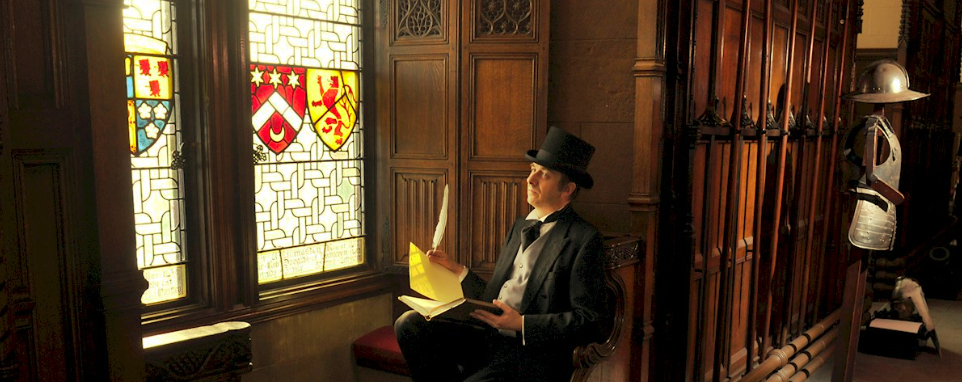
Christmas brings nostalgia, often with chocolate box images of Victorian Britain; an association immortalised in Charles Dickens’ novella A Christmas Carol. Now Edinburgh Castle is exploring the period’s festivities with celebrations running from December 19 – 23.

Launching this festive cheer is Assistant Events Manager at Historic Environment Scotland, Fran Caine.

He said: “Our Traditions and Tales of a Victorian Christmas was developed to provide visitors with a festive event that would explore history in an engaging way. It’s always a popular fixture in our events programme.”

Caine explained that the UK Victorian era, through its German royal family members, brought the tradition of decorating yew bows and eventually trees to the country. In keeping with this tradition, Edinburgh castle’s Victorian Christmas will be adorned with evergreen.

He described: “The centerpiece of the castle’s decoration is a Noble Fir tree, which usually stands at around 17-feet tall. Situated in the Great Hall, it proves to be an additional draw for our visitors over the festive season.”

Festivities will also include historically dressed performers, with tales and verses from the Victorian era.

Caine said: “Our performers source their own authentic costumes. Inspired by Charles Dickens, the event centers around a re-enactor portraying one of this period’s most iconic writers.”

Dickens’ depiction of festivities in A Christmas Carol showcases many Victorian conventions that have prevailed.

Caine recalled: “This particular period in time can be seen by many as the origin of the Christmas that we know and celebrate today. It was the start of a number of festive traditions that continued over a century and a half later.”

Among these traditions are annual leave from work and gift exchanging, both made possible by Victorian industrialisation.

Industrial boom in the 19th Century brought newfound wealth that allowed middle class families to take time off work, over December 25 and 26. December 26 then became known as Boxing Day, when lower class people would open the parcels of money gifted to them by employers or benefactors.

Other gifts made popular by the 19th Century were those of toys that, with the introduction of factory production, were made more affordable to the middle classes.

Just as toys became associated with Christmas in the Victorian era, so did games.

Caine said: “We might have swapped festive parlour games for more contemporary versions, but the traditions of Christmases past can still be recognised today.”

Today’s Christmas dinner also has its roots in Victorian custom.

Caine explained: “During Victorian times turkey became the popular meat dish on the Christmas table. Previously goose or beef were the preferred choices. The Victorians were also responsible for the development of the mincemeat filled mince pies that are still enjoyed at this time of year.”

He added: “Many of the festive traditions such as decorating the home, pulling crackers, sending Christmas cards and even the popularisation of the Christmas tree can be traced back to the Victorians.”

To trace these traditions in person, revellers can visit Edinburgh castle from December 19- 23, at 11.15, 12.15, 14.00 and 15.00; during this time Traditions and Tales of a Victorian Christmas is included in the cost of admission to the castle.

Caine concluded: The event will offer a real insight into the festive traditions and customs and how Christmas might once have been celebrated over 160 years ago. It is definitely one for all the family to enjoy.”

Glasgow Paranormal Investigations


GPI 

Exploring the unknown in Scotland is Glasgow Paranormal Investigations, one of the country’s oldest ghost hunting clubs. Founded in 2008, GPI investigates places like castles and military bases; as well as businesses and homes.

In fact, it was haunted house that led to the club’s formation.

Investigator Billy Binnie said: He said: “One night I was at home watching TV, with my back to the door, when my wife went upstairs for a shower. I heard her come back downstairs, open and then shut the door and go back upstairs. I didn’t think anything of it until she came back to watch TV.

“I asked her what she had forgotten and she was confused; she said that she hadn’t been down the stairs until right then. But I had felt and heard the door open and close. So if it wasn’t her then what was it?”

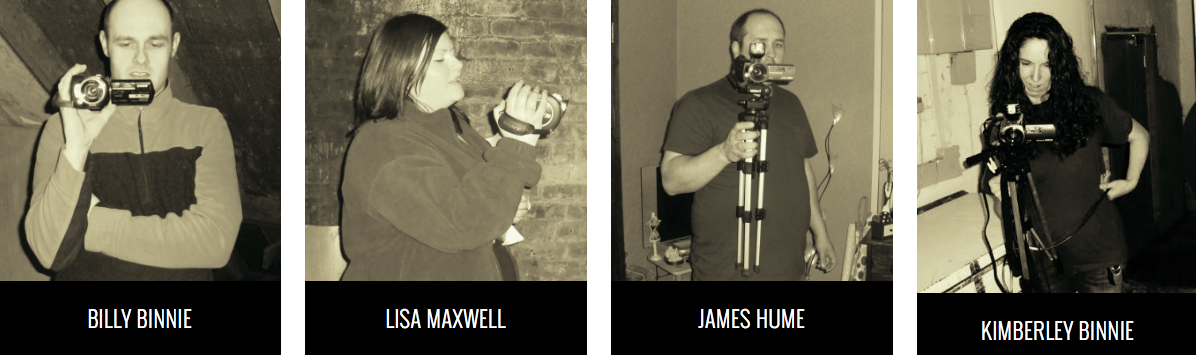
Intrigued by their experience, both Billy and Kim Binnie attended a ghost-hunting group, where they met paranormal investigators Lisa Maxwell and James Hume.

Binnie recalled: “After going to a few of these meetings we decided we could do much better ourselves; so we broke off and formed our own group, which became Glasgow Paranormal Investigations.”

Now the four work with ‘relief investigators’ to track paranormal activity.

Binnie said: “We can help people understand what is going on their houses; we can track the paranormal activity and attempt to communicate with spirits through our technology.”

The group does not however perform exorcisms.

Binnie explained: “For that you would need a priest or a really good medium.”

He added: “If people have genuine poltergeist activity then they should seek help, not attempt to tackle it themselves. Care should be taken when dealing with spirits.”

Despite this warning, Binnie perceives ghostly activity as a positive thing.

He said: “Belief in the paranormal has given me more hope in life after death. It makes me think that when people die it is not just the end; that they continue on in another plane of existence.

While firm in his belief, Binnie wants to find more evidence of ghosts.

He said: “Paranormal activity centres around personal experience, which can be hard to translate into solid evidence.

“For example when GPI went to Renfrew Baths, we heard a faint cry about four or five times in a row. Of the eight of us in the room, six of us heard it. No one in the room made the noise, but I am at a loss to say what did. I would say it was a spirit, but I can’t prove it beyond doubt because I didn’t have a camera on everyone.”

Video cameras are just some of the technology GPI use to track ghosts.

Binnie said: “We now use spirit boxes to scan radio frequencies and look for manipulation. This allows us to ask questions and hear answers in real time.”

As well as spirit boxes the club uses electromagnetic frequency (EMF) detectors, video and thermal imaging cameras.

Binnie said: “Thermal imaging cameras detect change in heat, so you can see hand and feet prints left by spirits. The cameras used to be thousands of pounds to buy, but now you can get ones that you plug into iPads and capture the thermal images through its screen.”

Evidence of the clubs’ findings can be seen on its website, but Binnie said this is no substitute for a live investigation.

He added: “Sometimes when you are just about to pack up the tracking technology goes crazy or you hear an unusual noise. Sometimes when you are chatting as a group the spirit can feed of your energy; or seek to get the energy directed back to them and let you know they are around.”

While exciting, Binnie said GPI work was hard.

He explained: “The club is not for everyone. There can be hours and hours of video footage and audio files to go back and examine after an investigation takes place.”

However, enthusiasts are always welcome to try the club.

Binnie concluded: “The best way to join GPI is to come along on our investigations and get to know us. We have very high standards/expectations from members. So at the moment it is a case of working alongside us as a relief investigator until everyone is happy.”

To join GPI gatherings enthusiasts can find the details on the group’s Facebook page.


Origami Scotland

Origami Scotland


Origami – the art of folding paper into decorative forms – has many appeals: it’s cheap, easy to practice and beautiful, so it’s no surprise that the craft has grown from Japanese to global culture.

Dennis Walker, Origami Scotland member said: “Origami seems to have originated in Japan. Early Japanese records show representative models, depicting things such as cranes and flapping birds. Then in the early 20th century the craft was developed almost singlehandedly by Akira Yoshizawa.”

He added: “Yoshizawa’s work reached 1950s America and its enthusiasts were inspired to hold an exhibition in Holland. At the same time origami societies started popping up, hosted by people such as Lillian Oppenheimer. Oppenheimer founded the OrigamiUSA club and went on to help establish the British Origami Society.”

The British Origami Society will next year celebrate its 50th anniversary, showing just how far the craft has come.

Walker said: “About 15 years ago people didn’t know what origami was. Now the British Origami Society holds conventions every year. A few years ago we had the first one in Scotland, situated in Edinburgh and organised by Origami Scotland.”

A member of both Origami Scotland and the British Society for Origami, Walker explained his love of the craft.

He said: “Origami is versatile; it is both mathematical and creative. It can be as cheap or as expensive as you like; and it is mobile, you can pick up a bit of paper wherever you are and start practicing.”

This accessibility was what first got him hooked.

He confessed: “Some of my early models were made from the inside sheets of my school jotters; so my early origami has little blue lines across it.”

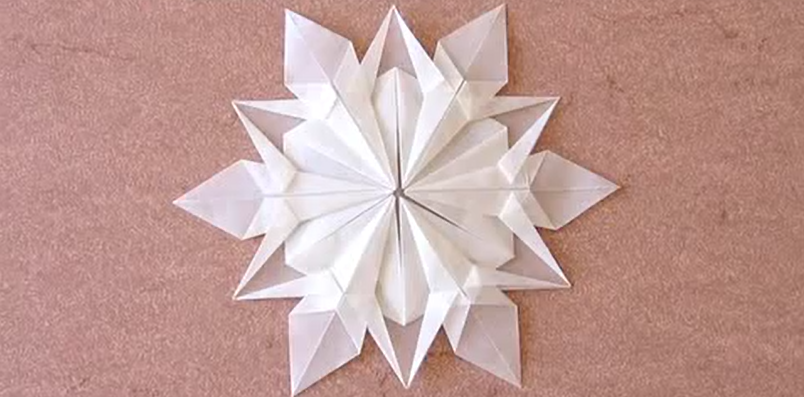
Having practiced the art for years, Walker then went on to create his own origami model, the Snowflake.

He said: “I like snow, so a few years ago I had gone looking for a design for a snowflake fold. I found a diagram by a well-respected artist called Joseph Wu; but the edges seemed quite curved and didn’t seem spikey enough. I wanted something that had more spikes and a layered effect.”

Failing to find the design he wanted, Walker set about making it from scratch.

He recalled: “I understood the techniques that would be needed to create such a pattern -having folded many models before – and knew that I would need something based around a centre twist fold; to give me paper to create the spikes and overlaps. So after trying a few variations I settled on the pattern that you can see now.”

Walker added: “I can now fold this pattern in about 20 minutes; it’s quite mathematical and includes repeating the same pattern of folds around six times.”

Repetition is – Walker explained – one of the things that causes origami to be so relaxing.

He said: “Modular origami – which repeats folds in paper the same way – can be quite meditative. But another way practicing origami can be relaxing is through following technical designs that require concentration; this allows folders to focus on following diagrams – step by step – and forget their troubles.”

As well as relaxing participants, origami can stimulate its creators.

Walker explained: “Origami creators can be likened to composers. Like composers origami creators will make the diagrams detailing construction of the final piece. Folders are then like musicians; they take these patterns and use them to perform the final piece. Folders also put their own interpretation into the pattern as they go.”

Walker recalled his favourite origami creators.

He said: “I like the work of the late French artists Eric Joisvl; his work is very artistic, but very difficult to diagram, because all the folds were improvised.

“At the opposite end of the spectrum is an origami artist called Joel Cooper who folds beautiful masks using a polygon technique to form faces.”

Both artists’ creations can be found online, along with a host of many other origami and how-to videos.

Walker said: “My favourite video sharing site is Happy Folding, but beginners can visit the British Origami Society information site and visit the Origami Scotland Facebook page for support.”

The internet – Walker said – has been a double-edged sword for origami clubs.

He explained: “Social media has made it a lot easier for origami clubs to stay in touch, however it has made it harder to attract new members, as the art form lends itself to online resources, which enable people to practice more and more from home. Sometimes this makes people less inclined to join a society – which means that they miss out on the social aspect of the clubs.”

Walker explained the other benefits of origami meet ups.

He said: “When members go to clubs they get a varied understanding of the way in which people fold. Some fold more accurately than others and these differences lead to different techniques that are easier to understand when meeting in the flesh. I certainly find it easier to be more creative when I can listen to live feedback.”

Walker encouraged people to come along and try Origami Scotland.

He said: “Every two months or so we meet up. Before our meeting we have a look through books at origami patterns that we would like to share. If there are beginners struggling with a fold then we all muck in and try and give them a hand. It can help to have a few people put their heads together.”

For information on clubs in the UK, Walker explained that fans could visit both the Origami Scotland and British Origami Society websites.


ASMR

ASMR

Dr Craig Richard Ph.D.


Giving the world tingles is the new art form ASMR. Autonomous Sensory Meridian Response (ASMR) is an audio and visual phenomenon that has gained popularity through YouTube, where thousands of artists continue to post their relaxation videos.


What is ASMR


ASMR is a term coined in by cyber security professional Jennifer Allen, who in 2010 identified common sensations she and other Facebookers experienced. The sensations included tingles from the head to the body and mild euphoria, prompted by soothing, repetitive sounds and actions.

Although similar to hypnosis ASMR is so called because it doesn’t just relax its subjects, it provokes peaking waves of pleasure.


How does ASMR work


One man who has studied the phenomenon is Dr Craig Richard, Ph.D. in Physiology and Cell Biology and founder of the ASMR University (an online resource sharing centre).

While Dr Richard admits more research is needed to discover the cause of ASMR, he hypothesises that it mimics interpersonal bonding – such as that of a parent and child – and causes similar feelings of comfort.

He said: “ASMR and bonding behaviours share similar triggers like gentle touches and soft voices between individuals that trust each other, and also have similar responses like feeling comforted, feeling relaxed, and feeling secure. 

“Some of the basic biology of bonding is well established and this involves specific behaviours, which stimulate the release of endorphins, dopamine, oxytocin, and serotonin. These bonding behaviours and molecules may provide a good explanation for most of the triggers and responses associated with ASMR.”

Dr Richard summarised that endorphins were likely to be the source of ASMR ‘tingles’; dopamine the source of ASMR’s moreish nature; oxytocin for the reduction of stress and serotonin for the elevation in mood incurred by ASMR.


Does ASMR work for everyone


Dr Richard suggested the key to understanding ASMR lay in ASMR insusceptibility and cited a 2016 study by Smith, Fredborga and Kornelsen.

He said: “This study demonstrated that people who experience ASMR may have different neuronal connections in their brains.”

The study compared the default mode network (daydreaming part of the brain) of 11 individuals with ASMR to that of 11 matched controls. The results indicated DMN of individuals with ASMR showed ‘significantly less functional connectivity’ than that of the controls, but also increased ‘blending of multiple resting-state networks’.

These network conditions seem to make some people genetically more likely to experience the phenomenon than others.

However, Dr Richard noted that even those who easily experienced ASMR could build a tolerance to its triggers (such as whispering) when faced with repeated exposure.

He said: “ASMR is probably mediated by neurotransmitters or neurohormones because tolerance is a typical response to repeated stimulation of a receptor.

“Receptors are very good at becoming less sensitive over time in response to the same stimulus, this is especially true for endorphin receptors. This is why people who repeatedly use morphine or oxycodone (which bind to endorphin receptors) need more drug to get the same response over time.”

Dr Richard said that if ASMR were confirmed to trigger endorphins it would explain ASMR tolerance.


Can ASMR help treat illness


Aside from recreation, fans have started to debate whether ASMR might also help lessen the experience of pain and illness.

Dr Richard said: “There are many anecdotal reports on the internet of people sharing how ASMR has been helpful for their insomnia, anxiety, and/or depression.”

He noted the 2015 publication about ASMR – Autonomous Sensory Meridian Response: A flow-like Mental State – which suggested ASMR might be helpful to individuals suffering from depression or chronic pain.

The doctor explained: “This data set showed that watching ASMR videos boosted the mood of 80% of the participants, and those at high risk for depression had an even greater boost to their mood.”

However, Dr Richard was quick to explain that many more studies must be completed before any real conclusion could be met. He also cautioned that ASMR was no substitute for medical diagnosis and treatment.

He said: My biggest concern is that people may use ASMR to self-treat serious medical issues rather than seeking medical attention. I strongly recommend that individuals talk to a clinician if they think they are suffering from insomnia, depression, anxiety or other serious conditions – and to talk with the clinician about the potential use of ASMR for their condition.”


ASMR as Art


While its medical value remains unproven ASMR has been embraced – by many- as art. ASMR videos across YouTube feature everything from make-up tutorials, to car maintenance, massage, and role –play; with artists investing hundreds in 3D sound equipment to enrich the experience.

Dr Richard listed some of his favourite ASMR artists as WhispersRed, Tony Bomboni, Deep Ocean of Sounds, SoftlyGaloshes, SoftAnna, Heather Feather, GentleWhispering, JellyBean Green, SensorAdi, Dana ASMR and theASMRnerd.

Reflecting on the vast range of ASMR videos available, Dr Richard offered ASMR artists advice.

He said: “Artists should be genuine and not expect everyone to love the type of ASMR they create. ASMR is a personal and specific experience triggered by many different stimuli.”

To help gain further insight into ASMR, the doctor encouraged readers to go to the ASMR University and take part in its survey.

He concluded: The wider goal of the website is to help to encourage others to further spread the awareness of ASMR and/or to get involved with research to help understand it better.”

Glasgow Mela Festival

Mela pic


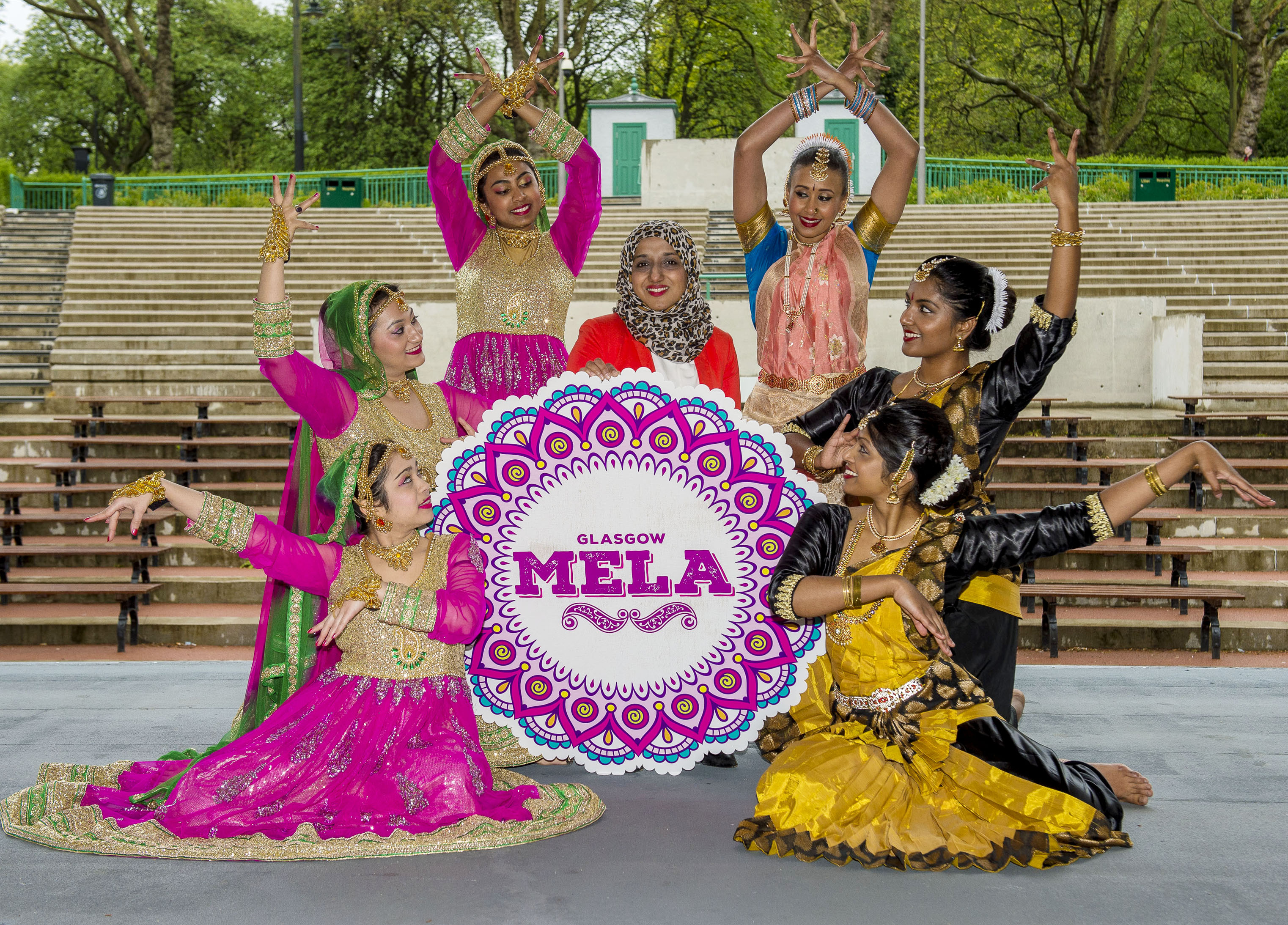
Bringing the world to Kelvingrove Park is Scotland’s biggest multicultural arts festival, Glasgow Mela. Taking place on 17 July – from noon until 8pm – the event celebrates Scotland’s diversity.

Glasgow Mela Steering Group Chair, Councillor Soryia Siddique said: “We have artists coming from India and Pakistan, as well as acts who will perform sets based on Roma, Polish, Chinese, African and Scottish Culture, to name just a few. It is truly a multi-cultural celebration of Glasgow and all its communities. “

With live music, dancing, workshops and food, Glasgow Mela has something for everyone.

Siddique added: “Mela is a family event so everyone – from the very young to the very old – can come and enjoy it and they often do. One of the real pleasures of working on the event is to see so many families.”

40,000 people attended Mela 2015, as the festival celebrated its 25th year.

Siddique recalled: “Last year was brilliant, amazing, fantastic. I don’t imagine anyone who saw the headline collaboration of the Red Hot Chilli Pipers and The Dhol Foundation will ever forget it. We enjoyed a glorious day.”

This year’s festival looks to continue the trend, with Pakistan’s Pop Idol Asad Abbas; UK Bhangra star Lehmber Hussainpuri; and the Rajasthan Heritage Brass Band all headlining.

Siddique added: There will also be several Glasgow based musical collaborations that I am very excited to see performed live for the first time.”

As well as music, Mela 2016 will host interactive workshops.

Siddique said: “We have a dedicated area which will allow younger people to give new sports a try and there is also an area dedicated to global games. As well as this, there is a Children’s zone that includes an Indian puppet show and a place to make and fly kites.”

After working up an appetite revellers can take respite from Glasgow Mela’ s many food and drink stalls.

Siddique explained: “The Glasgow Mela is always held shortly after the end of Ramadan and so we aim to have a broad range of food, much of it locally sourced, for people to enjoy.”

The Councillor concluded: “If you’ve never been you have to come and give it a try. There’s a whole world of entertainment happening on your doorstep. Come and join us as we celebrate the many cultures that make Glasgow the vibrant and distinct city it is.”


Picture: Copyright to Glasgow City Council, Glasgow Mela.
(L-R) Amisha Mandaniya, Gayatri Dixi, Pragati Malhotra, Consellor Soryia Siddique, Dhuwaraha Rajathelakan, Thurgajini Srikaran and Dagshagini Taylor.