Diversions

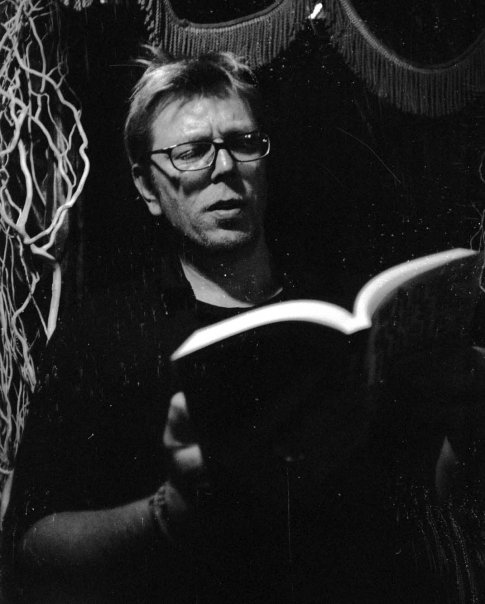
Nick Griffiths

Image copyright of Legend Press

An interview with author Nick Griffiths

From engineering, to music journalism, to young adult fiction, Nick Griffiths’ life has been quite a journey.

He admits: “It took three years of an Electrical & Electronic Engineering course, and one essay to finally click that I fucking hated electronics and should have been writing all along.”

Once granted this epiphany Griffiths started writing for Music mags Sounds, and Select, before branching out to write TV reviews for Radio Times, Daily Mail and the likes.

Despite taking joy in writing, interviewing, and meeting people, Griffiths explained ‘selling myself was the part of journalism I loathed, being terribly British.’

Throwing off the compromise of journalism in 1976 Griffiths began his first novel, In the Footsteps of Harrison Dextrose; a story with as many turns as his own life.

“My original intention was to write a non-fiction, travel book along the lines of Bill Bryson. However I quickly realised that I hadn’t travelled anywhere near extensively enough, so would have to make it all up.”

44 years and multiple books later Griffiths returned to the Dextrose world, in his novel, Looking for Mrs Dextrose (LFTD). The plot sees self styled adventurer, Pilsbury, fight alcoholism and Amazon climates, in attempt to reunite his broken family. Griffiths describes it as, ‘inept travels among the world’s least fashionable corners, looking for Mum’. As one liners go Griffiths certainly has the knack.

Describing his love of language the author said: “Writing entire books can be a painful process and hitting those funny, apt metaphors lightens the load”.

Griffiths cites comedy as his priority in writing.

“I’m pretty obsessed with making people laugh – I’ll be the one interjecting inanities into heated political discussions down the pub – and my books give me the opportunity to do that.”

Noting the risqué edge to his humour, Griffiths states his writing style originates from a ‘childish take on life’, although he says it is not suitable for children, as ‘there’s too much crudeness in it for their little souls.’ Instead, he hopes his writing appeals to the student aged people.

When asked whether his own son read his books as a teen, Griffiths said: “At sixteen Dylan, like most of his friends, did not read books. I was more disheartened by that than I let him know. I just hope that one day he will realise what he was missing.”

‘Reading’, specifically in an ‘overflow bath’, makes Griffiths top list of pleasures, along with ‘fishing, tracking down ciders, badminton’, and getting his ‘loved ones through life half smiling.’

Back on the subject of work, Griffiths talks of the sequel to LFMD, titled, Pilsbury Dextrose and the End of the World. He synopsises it saying, it’s a ‘group of eccentrics sitting on a hill, fully expecting the world to end.’

Aside from the Dextrose world, he said: “There’s a possibility of a sequel to Who Goes There (wandering around the country, finding old Doctor Who locations). I’d also like to write a radio sitcom based around the residents of the Series of Gentlemen Home for Retired Explorers, in Looking for Mrs D. We shall see.”

For more information on Nick Griffiths work, visit his website.

Breaking Barriers

nicholas_dane

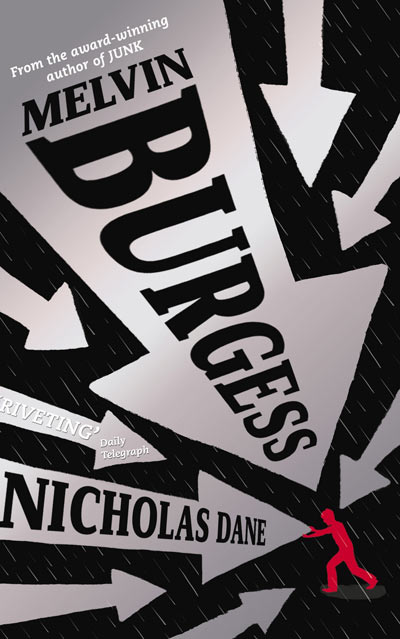
Image copyright of Puffin Teenage Books


An interview with author Melvin Burgess

West Yorkshire based writer Melvin Burgess has shaken up the world of teenage literature. With over 20 titles under his belt, he has written novels, radio, and TV scripts.

The author’s debut novel, The Cry of the Wolf (1990) shot to fame by being short listed for the Carnegie Medal. This was followed by the success of his 1996 novel, Junk, which scooped the Carnegie Medal and the Guardian Children’s Fiction Prize. Later Burgess’ 1999 novel Bloodtide won joint first at Lancashire County Library Children’s Book of the Year Award.

Burgess’ narratives confront risqué subjects, such as sex, drugs and violence. I ask him how his novels compare to the ones he read growing up. He sighs, and takes a big breath.

“Well, there just wasn’t stuff for teenagers when I was a kid. It’s also true that realist fiction just didn’t exist. You had fantasy stuff, and then you had stuff that was written as if it was real, where y’know kids would be out catching burglars or discovering treasure, doing things that don’t really happen. I can’t remember reading any realist books when I was a kid that actually told the truth.

“But now people are a lot more open with young people. Society’s a lot more multi cultural, and with the internet it’s a lot harder to keep secrets from kids, so we have to deal with them in a much more straightforward way than we used to”.

In the absence of realist fiction, I ask Burgess what he did read throughout his youth. His tone lifts in indulgence.

The first book I really fell in love with was The Wind in the Willows, I adored that book when I was six, and I was always a big nature boy. I really adored Gerald Durrell, as well, who wrote books about collecting animals in zoos.

“Later I was really keen on fantasy, oddly enough, because it’s not something I write. But after that, the author who had a big influence on me was Gorge Orwell. I like his work because he writes about difficult subjects, such as politics, but does it so simply that it’s easy to understand. Thereby proving there’s no such thing as difficult subjects, just badly written subjects”.

This sentiment certainly rings true to Burgess’ own writing. As he is never one to shy away from social taboos, I ask him if there are any issues he still feels need exploring. He mulls this over for a second.

“Over the last 10 or 12 years since Junk came out, I realised there was this huge area of things that people did not like to talk to young people about, and that they found difficult to be straight with them about. So I have made a sort of career writing about those subjects; and y’know I think it’s great now that people do talk more openly about drugs culture, and sexual issues.

“But sexual abuse is still something that people feel very, very uncomfortable discussing. And I think we have a fair way to go before people are happier to be open about those kinds of subjects”.

Burgess novel Nicholas Dane tells the story of a boy struggling to come to terms with the sexual abuse he faces within a 1980s care home. I ask him if he found it difficult researching the novel. He pauses.

“Well, it was really painful.”

Then dives in.

“What happened was there were several big cases of abuse coming up every now and again, and it was incredibly wide spread, practically in every town and every borough in the UK. And then one came up in Manchester, and I got in touch with a layer who was dealing with the case, and talked to him about it. Then he circulated my name among some of his clients, and I went to interview some of them.”

Burgess slows down a bit.

“It was pretty heart breaking really. The people who were kids in the homes, quite often they had been taken off their families, and they were at a low anyway, and were treated really violently and even sexually abused in these kid’s homes.

“They were so vulnerable it would just break your heart. And those guys had suffered, for decades no one would believe them because they were pegged as ‘bad lads’. Some of them were in and out of prison, taking drugs and alcohol, and whatever chance they had of getting their lives together was very firmly squashed by those experiences. You would be amazed how many people in prison for very violent crimes had been through that type of experience. We all pay the price for that sort of abuse.”

Just as I think Burgess has stopped, he continues.

“So it was very gruelling really…And then I wrote the bloody book. And you kind of distance yourself from it while you’re writing it, and you turn it into a story. But then when I had finished it and had published it and was doing talks about it, it all came back. I remember the first talk I did I was getting really nervous about it, just because I had to talk about such dreadful things in public.

“I think maybe the reason that some of the abusers got away with it for so long, and got through so many victims, was because people found it so disturbing that they didn’t want it to go public.”

Confronting taboos is not always such a hard job, as Burgess recalls his ventures researching other novels.

I’ve done everything from the sublime to the ridiculous. For my novel Doing It, I was talking about young male sexual culture, and showing you can have a sense of humour about it.

“I just asked everyone I knew about their early sex stories, getting people to tell me about their first encounters. There were such great stories, rude, silly and very touching. I got to hear about the nice and charming side of sex, when people are just getting to know about it”.

With the majority of his work being prose, I asked Burgess how the writing process of his TV drama The Well compared. He sounds surprised.

“I really enjoyed it. I mean, you always hear novelist moaning about their team when they try to write for telly, because if you write a novel it’s all your own way really, but you just have to be patient.

“It’s a great relief to do something collaborative, I’ve written over twenty novels, and you’re stuck on your own. So it’s great to be able to go out there and get a lot of feedback from people”.

I ask Burgess if how he combats writers block when he is working alone.

“Funnily enough I don’t get writer’s block. I’m always quite good with ideas. But what happens is, when I don’t know what to do, I just sit down and write any old crap. I just work my way through ideas. So I don’t so much tend to get writer’s constipation as writer’s diarrhoea. But I try not to write more than five hours a day, so I don’t burn myself out.

“As an author, you get a build- up of people emailing you. I’ve got these daily twitter stories and visits I have to do, and all sorts of things going on. So you get a lot of business associated with being an author that’s not actually writing”.

With such ‘business’ in mind, I ask Burges what it was that inspired him to give a talk on Pagan Heritage in November 2009.

“Before Christianity came to Britain, we were pagans. Even though some of those pagan stories have been forgotten for so long, the ways of thinking associated with them, like the traditions and the characters of the old heroes and gods are still oddly familiar to us. Thursday originated from Thor’s day. So I’m attracted to Northern paganism, because it is the mythology out of which our country was born”.

Talking of mythology, my mind wanders to Burgess’ novel Lady My Life as a Bitch. In the story the main character Sandra faces a Buddhist style reincarnation as a dog. I ask Burgess which animal he would come back to life as, given the choice. He ponders the question for a second.

Well, I think actually it might be a wolf. Y’know it’s very tempting to want to be one of the beautiful big cats, but they lead very isolated lives. Whereas wolves, they have a family structure and get on well together. And they are quite exciting.”

For many more revelations see Melvin Burgess’ website.

Polling Opinion

miriam


Since its boom in the noughties pole classes have popped up all over Glasgow, ranging in location from night clubs to community centres. This surge in popularity has pole trainers locking horns with patriarchs and feminists alike. While many participants deem the activity a sport, there are still those who class it as erotic dance.

The problem lies in varied expectation, as Dr Samantha Holland found in her 2010 study, some women liked pole ‘dancing’ for its feminine image, while others preferred pole training for its opposition to gender roles depicting women as weak. This, she explained, led to a division between dancers and acrobats.

Holland said: “In the same way that a high church has incense and robes, the strippery classes have high heels and feather boas; and just as a low church would eschew too many statues, the exercise classes have bare feet and refute comparisons with lap dancing.”

Yet, of the two it seems the ‘lower church’ trend is leading, with 73 per cent of Holland’s survey saying they took classes to improve their fitness, while only 61 per cent did so to feel sexy. Further to this, 85 per cent of the 140 polers surveyed said they had no experience or intention of working in a strip club.

Interesting as the doctor’s statistics are, they are somewhat unbalanced, with only 3 of the polers surveyed being male. This inequality reflects another dispute among polers, as to the acceptance of men within the practice. Theorists often establish pole classes as being empowering to women, on the basis that they exclude men, creating all-female gyms. This view is expressed by Holland, as she said: “Classes are not subject to the male gaze because pole classes are, for the majority, all female.

But this perception seems to be changing, as 23 -year-old dance instructor, Zhang Peng, proved when he won China’s 2007 National Pole Dancing competition.

Wolanski’s Pole & Aerial Fitness owner said: “Men are by nature stronger in the upper body so find a lot of the moves easier to perform than the females, but they do not do so well where pain threshold is concerned and the co-ordination for spins do not come so easily.”

Wolanski has been professionally training for over five years.

She said: “I was fortunate to represent Scotland at the World’s first Pole Cup in Brazil. Their government is backing the organisation and the event will now be held annually in different countries across the globe.”

Events such as this return pole fitness to its roots of Mallakhamb the traditional Indian sport, dating back to the 12th Century. It involves gymnastic moves being performed on a vertical wooden pole or rope.

Wolanski added: “People who automatically associate pole training with strip clubs should be aware that it never originated here. Pole originated from India as part of the Mallakhamb dance; then associated with the pagan festival. This was well before Western society created the strip club industry.”

“Even classes termed as pole dance are now unlikely to aid people who wish to join clubs. Classes can cause bruising and burns depending on what moves the individual is working on, something I can’t imagine managers at these clubs would want on their dancers.”

Bruises and burns seem inevitable in an exercise as high impact as pole fitness, something which would suggest it is not suitable for the young and elderly. But, never one to accept defeat, Wolanski disagrees.

“I can’t speak for all pole classes but my classes cater for all ages as there is no adult content. In fact juniors pick it up far easier as they don’t have the same fear factor as adults. Although, I don’t give certain moves to children as some techniques put a lot of pressure on elbow and knee joints.”

The ability to tailor work-outs to individuals’ needs enable people of any stamina or shape to practice pole fitness. While Wolanski says her class can practice in their tracksuits, more advanced moves require skin contact with the pole. The pros often strip down to their smalls, to allow grip with their stomach.

The idea of bearing all daunted student teacher Cara McKnight, as she joined Pole Physique on Argyle Street.

The 22-year-old from Dennistoun said: “I was so nervous I expected it to be a bunch of perfect-looking, stuck-up girls, but it’s not at all. There are girls of all shapes and sizes and everyone is made to feel welcome.”

She continued: “I would say my arms are a lot stronger now, as you’re holding your body weight, a lot of the moves tighten your tummy muscles too. It’s a good way to work out without realising you’re working out. Though I don’t think young girls should be doing it, as I guess it is a form of sexy dance.”

Despite dividing opinion there is no denying the growing popularity of pole classes, X – Pole statistics claim every 12 hours, somewhere in the world a pole studio is opened, or added to a business.

See Miriam’s pole fitness demonstration via her Facebook page.

Waving not Drowning

Reading-the-waves-12-300x225

A feature on Reading the Waves

Most people hate public speaking; imagine then Robbie Gillon’s dismay when the drill of a forgotten phone interrupted his monologue. I cringed as the noise bounced off Street Level Photoworks’ walls.

What will he do, pause until the imposter is silenced? No, he powered on. Like a pro the student finished his exert about fatherhood, “My children will grow to be who they are, who I am and who I never will be.”

As a father, he is no doubt used to interruptions. Like many of the night’s performers Gillian has had to balance parenthood with his creative writing. He and the rest of the readers come from a course that allows school leavers, parents and career- turncoats a start in the industry.

Originally launched at the Nautical College, in 2000, the HND Professional Writing Skills class has since produced award winning students and a bi-annual event, aptly named, Reading the Waves.

The event allows members of the public the chance to enjoy literature, lyrics and low cost liquor (okay wine) served up by students old and new. As well as being an outlet for fresh talent, it traditionally closes with readings from Scottish writers, such as Janice Galloway and Liz Lochhead. Not bad for three pounds a ticket.

Why then don’t more people know about it? Well, The Waves is usually hosted in Glasgow hideouts, like the Street Level Photoworks and the Scotia Bar, and since it’s a college event, it isn’t commercially punted.

Founder, Linda Jackson, explained, “Reading the Waves started years ago; it was organised as a night to make the HND course more concrete and give the students space to connect with previous students.

“This developed into the writers meeting others and doing events themselves.”

Testimony to this is Kady Reilly; ex-student and host of Magic Carpet Cabaret. Inspired by her college performances Reilly got involved with the open mic night, in Glasgow’s Tchi Ovna. Staged on the first Friday of every month, it sees musicians and writers gather to perform their work.

Despite her cabaret commitments, Reilly revisited Reading the Waves, to perform with Gillon and crew. She said: “I love coming here; it’s great to support the event.

“At college Linda always encouraged us to find our own individuality.”

The theme individuality prevailed as Reilly took to the stage to read her poem, The Tribe. Inspired by her time at school, Reilly parodied the culture of bullying, facebook hypocrisy and chav names, waxing, “No joke, there’s a Pocahontas too.”

At the interval she explained, “Every school in Glasgow has its neds, but I went to the second most violent school in the city.

“I got involved in a couple of incidents, but got through it. So I think it is important to show kids that there are more important things than trying to fit in with the crowd.”

More food for thought came as Joanna Bolouri recited her poem Cinderella, a comedy ballad describing the damsel’s boredom in marriage. Cinderella lamented, “She never knew he’d search for her or she would have moved abroad.”

Later Bolouri explained: “This poem was inspired by my daughter, who is six and obsessed with the world of Disney.

“She asked me, ‘Mum when will I meet my prince?’ You don’t want to tell her that it’s all bullshit, so the poem is a modern imagining of the fairy-tale.

“It shows, that just because you meet your prince, doesn’t mean you get your happy ending.”

With a punch line like that it is no surprise her poem went down a storm. However, Bolouri admitted it was the first time she had read that or any of her own material in public.

“I think a lot of new writers find it nerve racking reading their work or even submitting things, so any event like this that encourages them is good.”

“Reading the Waves is great because it is not just residents performing… I have been writing for four years and I know it can be very hard to get anything published.”

However, Balouri has persevered and managed not only to get her work in the Huffington Post, but also made it to mainstream publishing with her debut novel The List.

Balouri was just one of the night’s many stars; later to read was an SQA award winning poet, whose Sudanese name I won’t insult by misspelling, and Glasgow philanthropist Kevin Branigan, who founded charity Kev’s Stars.

Following these performances, the readers got to kick back and relax, with music from Gus Monro and poetry from Des Dillon.

So after rubbing shoulders with Glasgow’s finest, I left with change in my pocket and faith in the budget Arts scene.

For details of Reading the Waves events, check its founder Linda Jackson’s facebook page.

Introducing Editions

editions

An interview with Editions magazine founding editors

Bridging the gap between amateur and professional art is Editions; an online magazine founded by Glasgow School of Art students, who wanted a forum for new work.

Editions founder, Rachael Gallacher, said: “After leaving art school it became apparent I had not utilised the resources to the full extent I should have. Especially exhibitions.

“I was anxious about the act of putting my work out there and it cost me a full year of worry once I had left.

“Projects like Editions make the transition from art school to that unknown world of practice a little easier.”

Fellow founder, Gillian Carey, agrees.

“With Editions we want to translate exhibitions into an informal space and setup.”

The idea is that artists submit their work to the online magazine and join the shows and networking opportunities that follow.

Carey said: “We plan to put together the art shows fairly quickly and have the documentation through the website and magazine to give it a little more permanence.

“For some it could be the first exhibition out of the art school studios, for others it could just be trying out some new ideas. But the idea is to gather as many people’s work as possible and get them all talking on the nights.”

The first Digital Exhibition night was in 2013, at The Art School (union bar that was Capitol) it showcased a variety of work that was digitally recorded, such as photography, film, animation, sound, documentary, painting, drawing, and sculpture.

Gallacher, said: “The exhibition welcomed the unfinished – so it was an ideal opportunity for people to bounce ideas around and get a dialogue going with their peers.”

The ‘unfinished’ inspiration came from the girls’ visit to Brooklyn, where they discovered G E L A T O, monthly art displays thrown together in impromptu locations.

Carey said: “G E L A T O allows artists to digitally submit their work and contact details, have it shown and – if they can attend – go to the show and exchange ideas with like – minded folks.

“We thought: Glasgow needed something like that.”

Following the example of G E L A T O, Editions will show artists’ work through Youtube, before going one step further to publish it in the online magazine. This allows artists to add literary flourishes to their pieces.

Gallacher, said: “We are excited to see what this project can become. What can spin off the basic format of a digital exhibition. We don’t really have rules to play by, the possibilities are endless.

“If we can keep the premise of a free platform for all a constant it’s already a success in our minds.”

Print and be Damned

Alistair

A feature on getting fiction published

Alistair Canlin leads a double life. By day he works with retailers in Glasgow, by night he works with strippers, zombies and murders and he’s not alone.

“There are lots of us writers out there.”

Every year hundreds of people take part in the National November Writing Month, NaNoWriMo, all attempting to have drafted manuscripts by the end. Well, they do say everyone has a novel in them.

As if to prove the point, Canlin has written four: Heaven, the tale of a Glasgow strip club, Twisted Love, about a partner turned killer, Black and White, which follows a forensic photographer and Middle Class Zombie.

Yet these are not the fruits of NaNoWrimiMo or any other writing group; instead Canlin’s work comes from an Open University course and self publishing.

“To be honest Lulu is not a proper mainstream publishing deal; I am still pursuing that, along with an agent.

“I have a box filled with rejection letters that one day I intend to paper a room with. Rejection is just part and parcel of being a writer.”

Si – fi author, Tara Harper explained that (in the United States) each year only three out of every 10,000 submitted manuscripts are actually published.

Harper explained this turnover to be a product of the profession’s demands. Work must be well written, edited and commercially popular, to get to print.

With such odds, it is no wonder self-publishing sites have boomed. They give writers the assurance of print and allow them control of production, with some sites offering choice of lay- out and finish.

Despite this democratic effect, the revolution has not been embraced by everyone.

Author Kristine Kathryn Rusch was quoted saying ‘vanity presses are called vanity for a reason. They appeal to the writer’s vanity, not the writer’s sanity. Stay away if you want to be a serious writer’.

Yet, self- publishing can lead to mainstream success, as Canlin found out, when an American producer read Heaven and wanted to adapt it to film.

Another success story of self- publishing is that of Catherine Baird, a writer from Cumbernauld. She replied to Padgett Powell’s book of questions, The Interrogative Mood, with her own book of answers, The Responsive Mood.

As well as selling her book on Amazon website, Baird read it alongside Powell in Glasgow Centre for Contemporary Arts.

While the novel had finesse enough to gain his endorsement, it was rejected by Cargo publishers, due to its abstract nature.

This concept of style dictating success is one Baird is familiar with, despite writing and editing Valve literary journal, published by Freight, she is not optimistic about her solo work getting the same reception.

“The stuff I write is never going to be in the genre which millions of people will buy. When it comes to literary fiction, or really exciting Scottish literature, publishers don’t give it as much of a push.”

That being said, there are a wealth of literary journals and magazines on the Scottish writing scene looking for such material. One of which is Octavius, a magazine open to submissions from any Scot in higher education.

Octavius editor, Samuel Best, said: “We saw a gap in the market for student writing, and decided that we should create a platform for newcomers to have their work published.

“Within just a week of launching we had a flood of submissions and some of the pieces were incredible: professional-standard writing without the famous name behind it.”

This quality of work is often the product of writing groups, scribes who share and critique each other’s work to get the best finished product. Many of these can be found in central Glasgow haunts, such as the Scotia Bar.

So if you fancy writing but aren’t sure where to start, why not visit: the Scottish Poetry Library to find a group near you. Or to submit work see Books from Scotland’s list of literary journals.

From Coatbridge to Kiev

billytim

An interview with author Des Dillon

In Glasgow some things will never change, the Scottish Premier League will divide opinion and home-grown comedy will fill seats. Perhaps this is why Des Dillon’s play, Singing I’m No a Billy He’s a Tim, continues touring theatres years after its debut.

The drama tells the story of a Rangers and Celtic fan clashing during a night in the cells. Although the subject of sectarianism is an old one, Dillon keeps the play fresh by adding contemporary twists to each new tour. So it is no surprise the play struck a chord with audiences across the UK, and received a standing ovation in Belfast. Remembering this, Dillon cites it as the most rewarding moment of his career.

“I felt like I was finally getting recognised as the author I consider myself to be. What’s happened recently for me is that people who won’t read my books will come and see my plays. I’m No a Billy sold 2000 seats at the Armadillo in 2011, and I have never sold 2000 books.”

Commercial success hasn’t come easy to the author who claims he progressed into the writing scene over a period of years. Having grown up in Coatbridge, one of nine siblings, he worked jobs ranging from fruit machine engineer to bouncer, before going to university.

“I went to Coatbridge college to get three Highers and become a PE teacher, but I got the best mark in the country that year for one exam, and that was when my teacher said I should go on to uni and do English.”

Taking this advice Dillon joined Strathclyde University, where he first became published as the winner of the Keith Write literary competition. While Dillon’s poems were popular among the department, he felt his fiction more at odds with the world of academia. Drawing inspiration from the blue collar Glasgow he grew up in, Dillon claims his stories remain at odds with literary circles.

“I wrote my first novel and it took seven years to get published. When I did get published the reviews were like ‘Ned writes book, and ned writes another book’, and it was like this for the first five years.

“My problem is I write for a demographic of people who don’t read books. I’ve got a value system that is totally at odds with the one you meet at book readings and university tutorials.”

The value system Dillon recognises in his work is that of oral narrative, which he claims is inherited from his Irish Scots background. Taking inspiration from his own experiences, Dillon approaches stories as a conversation with his reader.

“Coatbridge has a real Irish culture, with lots of storytelling, and a lot of my work is based on my family and people I know; true stories but fictionalised. My novel Six Black Candles is my six sisters getting together to do a witchcraft spell to kill the girlfriend of one of their husbands…my sisters do actually do witchcraft.”

Quirky as it sounds, the novel became a best seller in Moscow, and when adapted to play was translated into Russian for performance at the Kyiv Drama Theatre on Podol (Ukraine).

“One of the reasons my stuff does so well in the Ukraine is because the area is just one big Glasgow, they have the same dark sense of humour as us, but less of a class structure.”

Parallels between the two places sparked Dillon’s interest in Eastern Bloc history and catalysed his latest project, a story set during the Siege of Leningrad. Unlike previous work, Dillon spent days researching, and learned to speak enough Russian, to navigate his way around the city. Leningrad, now known as St Petersburg, is famous for having endured the longest resistance to German siege, during World War II. It is the pivotal moment of this siege that Dillon focused on.

“During the attack they played Shostakovich’s Seventh Symphony, which had been written during the siege for the besieged city. When they played it they broadcast it to the Germans and the German morale fell apart. So this was the turning point of the Siege of Leningrad, therefore the turning point of the war in Russia, therefore the turning point of the whole Second World War.”

Dillon credits his interest with pivotal moments down to his abstinence.

“I have been sober for twenty years, and when I go to AA meetings I like to hear stories about the guy’s turning points. I have always had compassion for the underdog, cause I’ve had a rough life myself. When I was a drinker I used to get into fights, but I do all the adrenalin sports, like rock climbing and mountain biking so that’s like my substitute.”

As for relaxation, Dillon turns to poetry.

“I feel at my most blissful when I am in the garden writing poetry. No one really knows me for poetry, but that’s my main thing, that’s what I’ll end up doing once I get these books out the way. I use it to express my more philosophical ideas; questioning the meaning of life. Of course you never find out, but trying to find out is good.”

To read his poetry for yourself, visit the Scottish Poetry Library.


SambaYaBamba

SambaYaBamba-logo

An interview with Lisa Stewart of SambaYaBamba

If you watched the BBC hype of the 2014 Commonwealth Games then might you might have noticed a Samba band jazzing outside Buchanan Galleries. Who are these guys and what were they doing there? Well here sax player, Lisa Stewart, explains all.

“SambaYaBamba are a community band, formed in 1996.

“Recently we got to play live for BBC breakfast, as part of the Commonwealth Games coverage; it was great fun and we’re excited to be associated with the Games.

“The live TV segments were just snippets; a bit different from our normal performances. We also spent the morning performing for crowds on Buchanan Street to get them excited for the Games.”

Hired by Glasgow 2014 officials, to create a festival atmosphere, SambaYaBamba played the streets and venues of the city, something in which the band was already well versed.

“We’re all proud Glaswegians, so we’ve done more than our share of rainy and windy sets. Our music is so energetic though that it’s always fun – and hopefully we brighten up the days of the people listening.”

Bright is apt description of the band, usually clad in tartan and red icon tops.

“Our t-shirt logo is developed from the Glasgow coat of arms, the fish are meant to represent the fish swimming towards the ring in the Clyde, from the story of the coat of arms. It’s tough explaining this one when we play abroad! We always get a lot of attention at the annual samba festival in Germany for wearing our kilts.”

Every year the band travel to Coburg festival to represent Scotland in the global samba scene.

“Coburg is the highlight of our calendar. This small town in Bavaria, Germany becomes a mardi gras for samba groups from all around the world. We always get a great reception and after going for years, it’s now a massive social event for us where we are reunited with our international friends.”

Trips like Coburg are made possible from the band’s relentless performances.

“We are a non-profit band. Every member has full time jobs – our performance fees keep the band running and enable us to run beginners workshops, and travel to festivals.”

The band has also stared at festivals closer to home, leading the way at Glasgow’s West End Festival 2013.

“We were upfront, leading the parade from the Botanic Gardens and through the streets of the West End – we could not believe the crowds that turned out. Over 80,000 people saw us that day – the atmosphere was electric. It just shows how much Glasgow values community events like this; at our heart we are a community band.”

This is shown in the band’s usual bill of festivals, gala days, club nights, weddings, and corporate events.

Such practice has allowed the band to develop its own style, which veers slightly from the genre norm.

“We are of course, primarily a samba band, but we don’t just stick to Brazilian music or traditional samba. The fact that we have a horn section really sets us apart from other baterias (Brazilian drumming groups) and opens up a whole range of styles that we can play.

“Our set includes reggae, funk and drum n bass – even a bit of rapping and beat-boxing sometimes.

“I’ve been in the band for over three years now. I play saxophone, so I’m not actually part of the bateria. In the horn section we develop our own riffs to go with the grooves that the bateria come up with. We don’t use any written music, just come up with our riffs and memorise them. We improvise a bit too, especially on the funky tunes.”

To sample these tunes, get information on live performances at SambaYaBamba website.


Desolation Yes!

desolation yes

An Interview with Paul Elliott of Desolation Yes!

Think they don’t make music like they used to? Well Glasgow band, Desolation Yes! agree.

Lead singer, Paul Elliott, said: “These days people don’t release albums, they release collections of songs. We wanted to make an album with a central theme and a narrative, which is what we’ve done.”

The album Out of Orbit offers electric- rock- crossover, with Elliott on vocals, Jagged on guitar, Miro on drums, and Shisho on bass.  All tempered with some sequencers, drum machines and synthesizers.

Using this mixed bag, the band tells the story of Tech, a character searching for utopia. Elliott explained the concept was influenced by theatre.

“It sounds a bit arty-farty but it was an interesting thing to try and I think it worked. There’s a song on the album called Army of Flesh, which is basically a play within a song.”

This unusual approach comes from a band with unusual roots. While the founding members Elliott and Jagged grew up together, the latter two Slovakians only met once they had immigrated to Glasgow.  One advert and some sessions later Desolation Yes! was formed.

“The name Desolation Yes! was inspired by a Smashing Pumpkins lyric. Apparently ‘desolation yes’ is also in the bible. That obviously makes us the first band to be mentioned in the bible. Jesus was a fan… still is.”

Jokes aside, Elliott said the band owed its fan base to a breakthrough gig at Classic Grand, where they supported the Howling Bells.

“That was the one that kinda got the ball rolling for us. We wouldn’t be where we are today if it wasn’t for that gig.”

Since then Desolation Yes! have played venues including: the O2 Academy, 13th Note and Strathclyde Union, a far cry away from their modest roots.

Elliott said: “The first Desolation Yes! gig was myself and Jagged performing at Fury Murray’s. Jagged got so drunk he stood on his guitar lead and it popped out.

“He left me to play two songs solo while he figured out what happened. I’m glad to say we’ve come a long way since then. We’ve discovered strap locks for a start…”

Now the band practice at Creation Studios in Maryhill. However, that’s not where they recorded Out of Orbit.

“We had all the equipment we needed to record, so we decided to do it on location. These locations tended to be in flats and houses, but there was something more natural in doing it like that.”

To hear the album, and decide for yourself go to iTunes.

From Green to Granite

charly

An Interview with Charly Houston

They say romance is dead, but here to prove them wrong is Charly Houston, a musician taking on the Scottish scene with a style she calls ‘romantindie’. No, not a new kind of ethnicity, rather a mix of folk and inde music that sees her don strings and sing about love.

Each track on my new E.P is also named after an eventful month, for example I have a ukulele track called November, which was the month I fell in love, how romantic.”

But it’s not all mushy stuff, naming her new EP after her niece, Ella-Grace; Houston was inspired by moving up to Aberdeen and missing her Glasgow bound family.

“I grew up in a very musical environment watching my dad play guitar, as well as obsessively watching bands live on YouTube, definitely made an impact.”

Houston, who started playing at the age of seven, dabbles in guitar, ukulele, mandolin, cajon, drums and piano. She even writes her own songs.

“I took to music instantly, but I certainly wasn’t a prodigy at guitar, it took many broken strings and sore fingers before I could perform it to a competent level.”

After years of practice she started performing, under the banner Charly Houston Music, before getting her first break at Kelvingrove City Sounds festival, in 2007.

“I remember shaking so much that I could barely play the chords I wanted on guitar, and I spent the full time staring at my dad for support.”

Many gigs later, the nerves are gone and Houston is promoting her EP nationwide, at venues like Aberdeen’s Café Drummond, and Glasgow’s O’Neill’s bar.

Jumping between cities has become standard for the musician, who recorded her album at Aberdeen College, with help from producer Drew Gibson.   Despite being a weegie at heart, Huston is warming to the Granite City.

“In comparison to Glasgow, Aberdeen has a much smaller music scene with less diversity and only a few well known venues, however, I have played in a number of places up here and I quite enjoy Café Drummonds, almost as much as I enjoy King Tuts Wah Wah Hut!

Having performed King Tuts Wah Wah Hut in 2012, Houston supported established London band, The Diagrams. She remembers it fondly.

“It was super cool; the venue gave me my own fridge- shelf full of beer.

“I got a VIP pass, a good crowd and it was also the best sounding venue I’ve played.”

Looking forward to playing many new venues, Houston is continuing to promote her music across Scotland, as well as via iTunes, Spotify, Amazon and Bandcamp.

Check her out at Soundcloud.