Lisbon

L cover

With our hearts set on a music festival, seven friends and I booked a week in July to Lisbon. Liberdade was our area of choice for its proximity to the venue; but there was a catch, it was ‘save- a- year-ahead’ expensive.

Being Portugal-virgins we had unwittingly booked accommodation in its premier shopping district. So bedraggled from the plane, we did the walk of shame past Gucci to reach our hotel foyer.

Staying

Since none of the group was shopaholics, our motive for choosing NH Lisboa Liberdade was simple, it had a pool. The thought of a city break in 30 degrees heat was too much for my Scottish soul so, like a prima donna, I pushed for a pool.

Having assessed the competition, we decided that Lisboa Liberdade had not only the best pool (for our budget) but best balconies. However, we soon realised not all balconies were created equal (two of our crew hit jackpot with room 803’s huge terrace).

Contending with balcony envy, the hotel staff consoled us with travel advice and charm in excellent English.

This charm extended to the rooms, which had spacious interiors, comfy beds, decent bathrooms and mini bars.

Mini bar prices were enough to make us shudder, but the hotel’s surrounding shops had surprisingly cheap fare to substitute.
L dining

Dining

Cheap prices continued in Lisbon’s pubs and bistros. With a beer around three euros, bottles of wine for ten, and cocktails for five; Lisbon’s bars were a joy.

To digest both drinks and cityscape we headed to Bairro Alto (an alfresco area). On Bairro Alto’s plaza we chose the further of two open-air bars, to enjoy sugar cane cocktails while listening to buskers. The music perfectly complimented the plaza’s fountain and vantage point.

Across the road from the plaza we found The Decadent a bistro that, despite its name, was a reasonably priced. Its earthy interior provided respite, along with tasty cornbread, cocktails and seafood.

Seafood also stole the show at Pinóquio, a restaurant across the road from Restauradores Metro station. With packed tables, Portuguese dialogue, and tanks full of crabs it provided perfect taste of local life.

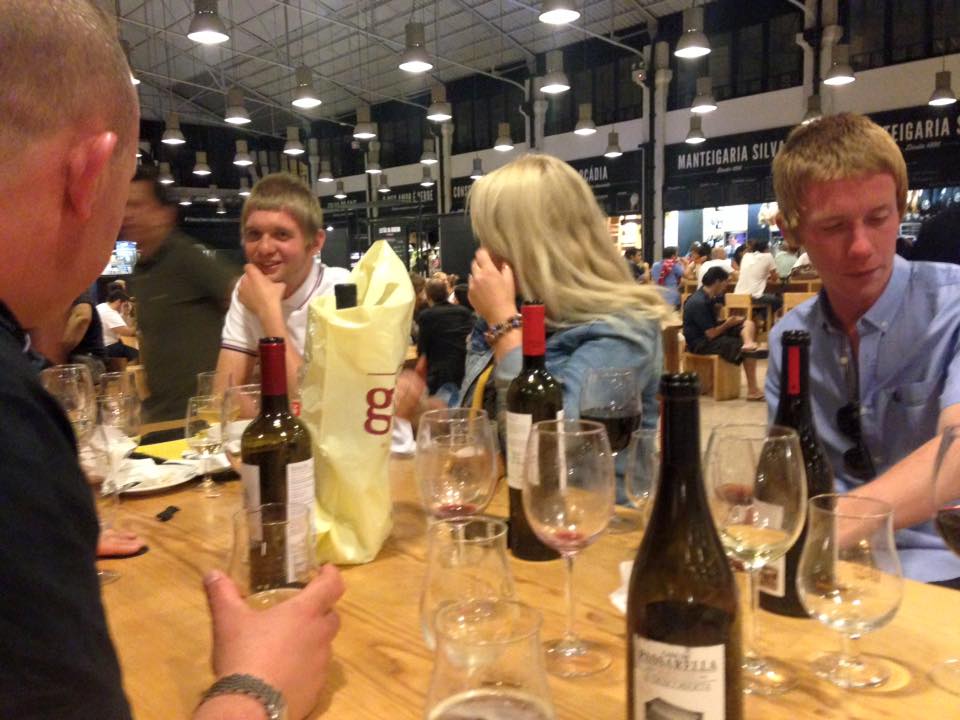
Another local treat surfaced near Cais do Sodré Metro, where we tracked down Mercado da Ribeira: Lisbon’s fab food fete. Here deli, drinks and dining units offer visitors a choice of global cuisine at cafeteria tables.

With a huge range of stalls as well as desert, wine and chocolate shops, we enjoyed post- dinner shopping.
L Music

Music

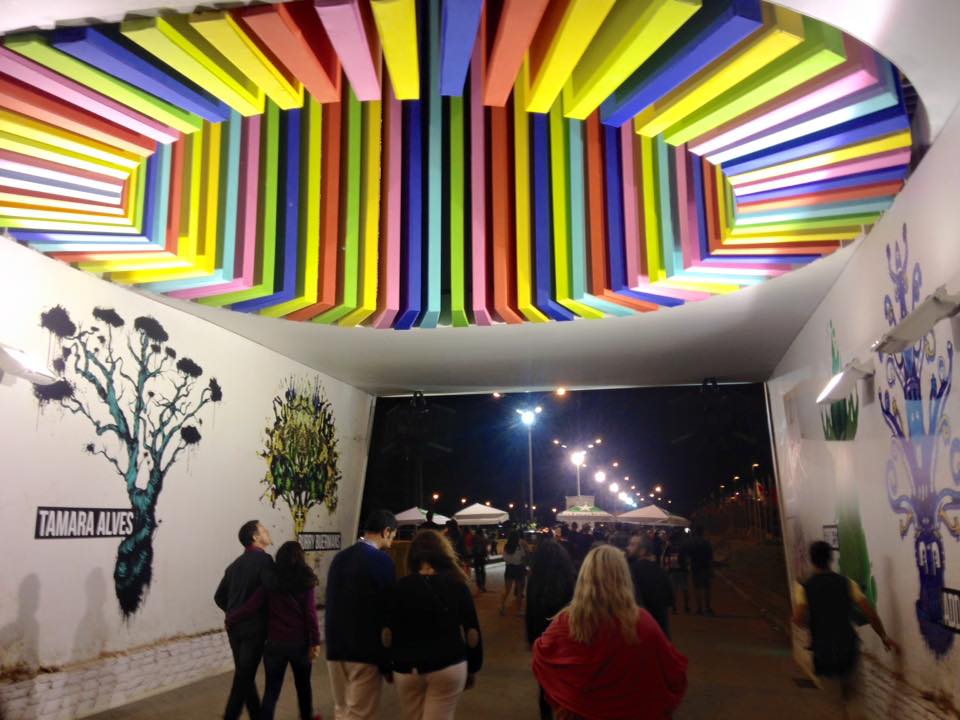
High spirits continued at Nos Alive music festival, which filled three of our seven nights in Lisbon. Situated in Passeio Marítimo de Algés (a 15 minute drive from Liberdade) the festival had four stages, indoor toilets, food, bars and walking beer tenders.

With headline acts including: The Prodigy, Muse and Mumford and Sons, Nos Alive 15 tickets were surprisingly cheap (costing £90 for all three nights). Each night ran until 3am, providing miles better value than a UK festival.
L Traveling

Travel

The only disadvantages of the festival closing at 3am was fighting competition for a taxi home; and suffering a post- midnight fare hike.

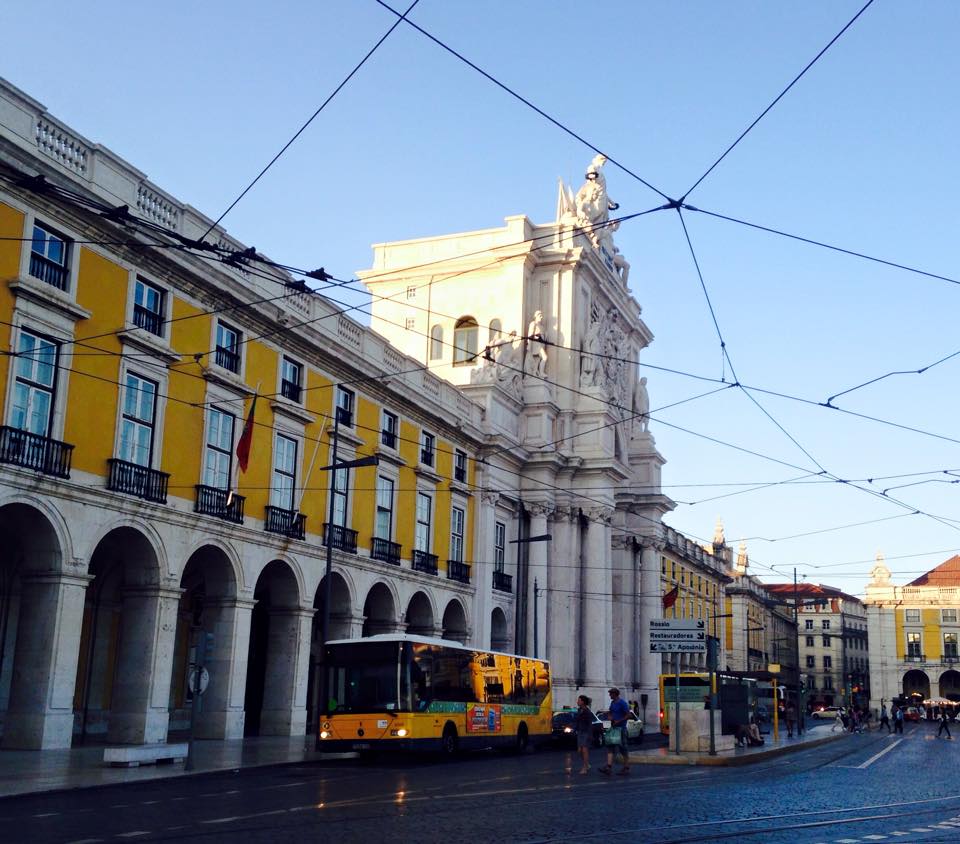
Aside from post-festival fares, Lisbon’s taxis were by large cheaper than those of the UK. As were its trams, buses and trains. While only the taxi’s had working air conditioning, each mode of transport had its appeal.

Aero-buses acted as punctual transfers from Lisbon Airport to the districts, while trams offered a vintage view of Lisbon’s ‘seven hills’. For travel outside of Lisbon centre, the trains offered quick and spacious speed.
L Art appreciating

Art appreciating

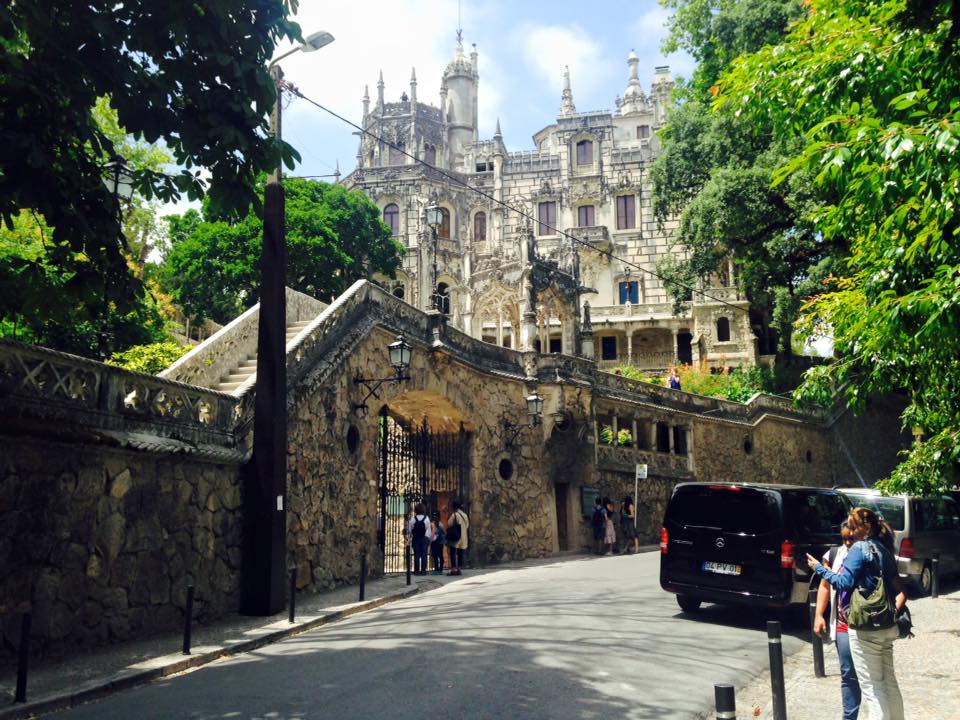
To escape the city, my boyfriend and I boarded a train to Sintra, Lisbon’s neighboring old town.

With regal buildings, museums and cliffs, the area had plenty to see. But we bee-lined to the Quinta da Regaleira, a World Heritage Site complete with chapel, underground tunnels, grotto and Gothic mansion. It really was the stuff of dreams.

The mansion house offered Portuguese history briefs, as well as drawings from the architect’s restoration. With multi-coloured tiles, intricate wooden paneling and fresco painting, signs explained that António Augusto Carvalho Monteiro (Monteiro the Millionaire) bolstered the manor’s splendor, as testament  to Portugal’s golden age.

After two hours of exploring my boyfriend and I resigned ourselves to the journey home, but not before scouring Sintra village’s crafts and wine shops.

As the trip drew to an end the group reflected on all we had done and all that we would have done, had we booked more time. Turns out a week isn’t long enough to see all Lisbon has to offer.

RCA Graduate Show

RCA picture

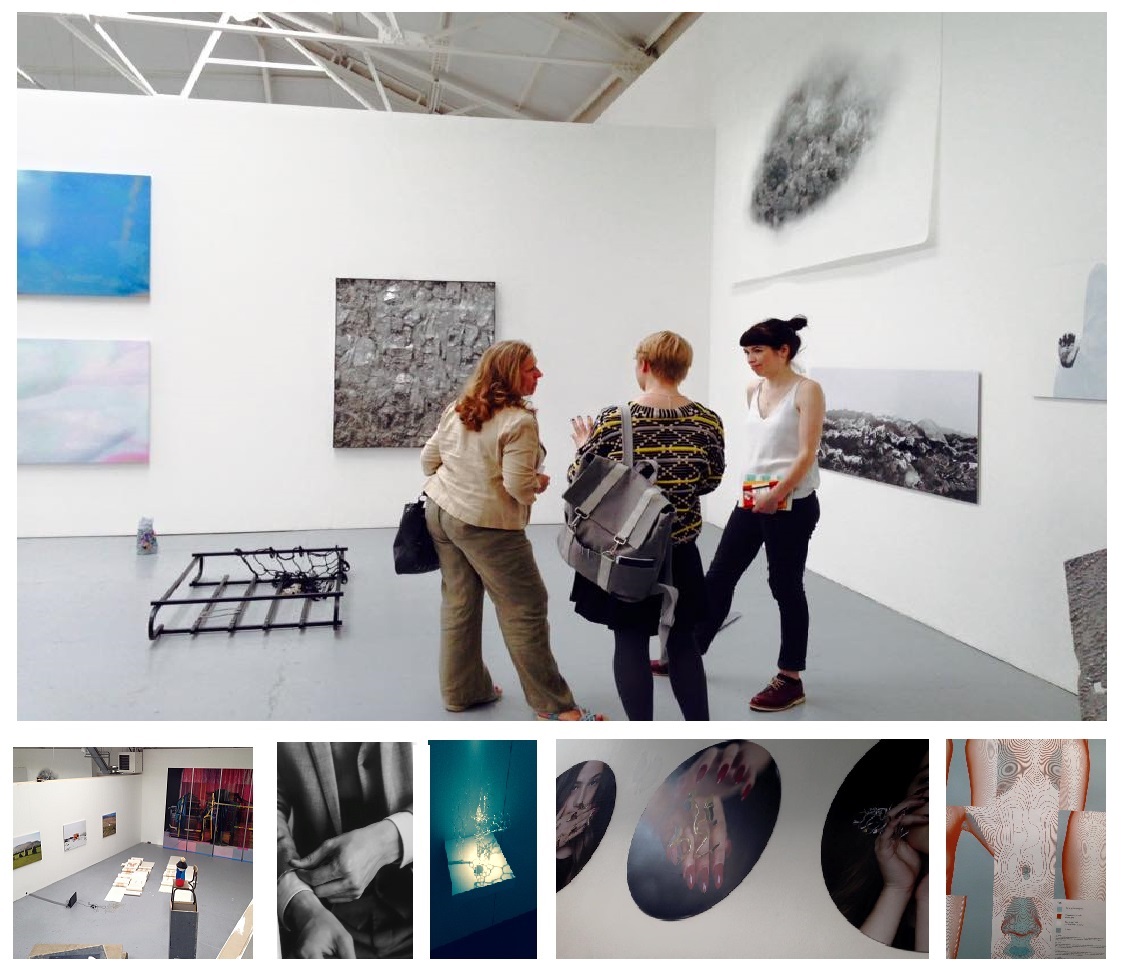
Art is for everyone; and to prove the point the Royal College of Art (RCA)  welcomed the public, without fee, to its Graduate Show 2015.

RCA Head of Communications & Marketing, Áine Duffy said: “This year saw the biggest ever graduating cohort – 648 MA, MPhil and PhD students in total, across six Schools: Architecture; Communication; Design; Humanities; Fine Art and Material.

“The Show Team, led by Dean of Fine Art Professor Juan Cruz worked tirelessly on every aspect – from ensuring that each student had the right space for her or his work to delivering the online catalogue, with 648 different profiles.”

The show featured work from its latest Alumna, across all disciplines; letting viewers wander from sublime sculpture to ridiculous renditions.

While performance art contrasted with material; the show had one constant, it was thought provoking. Throughout the exhibition artists used form to reflect preoccupations such as: fetishes, science and politics.

On the ground floor a huge print loomed over guests; its black and white puffs suggested tree canopies. Yet artist, Kate Fahey, explained the ‘trees’ were actually mushroom clouds, looming over Syria. She sourced aerial pictures of explosions before layering them into a dystopian textile.

RCAKate

She said: “The gap between what we see (and our reaction to it) and the initial, functional intention of the photograph on its capture is becoming further from our grasp.

“In the fragility of the work I reference both the ephemerality of the ‘poor image’ that ‘operates against the fetish value of high resolution’ and the instability of the subject matter.

“In its form and placement within space I reflect on our relationship with contemporary images – screen based perspectives, aerial, satellite and elevated views.”

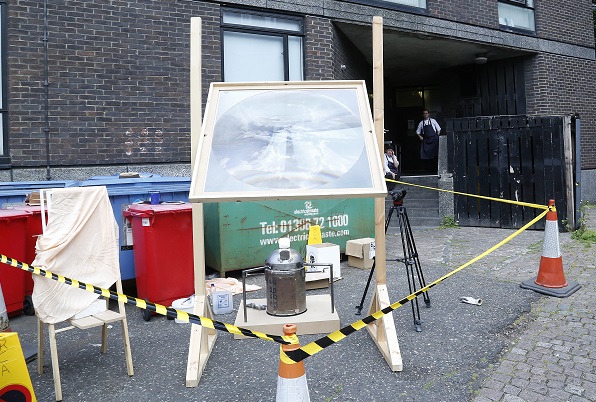
While Fahey used excess to highlight atrocity, another graduate used it to harness energy. Ghanaian artist, Nana Asafua Dawson, used his home-land’s heat as inspiration to make a (huge) magnifying- glass furnace.

Nana furnace

He said: “Back in Ghana I had worked with craftsmen who used an open- air, electric powered furnace to melt their wax and metal.

“I got to asking how craftsmen could work in an environment like this, without wasting so much fuel. So I came up with the concept of using heat conduction, conversion and rotation to harness the power of the sun.”

Dawson explained: “I bought a 1.1m squared lens; created a solar powered furnace; tested it in London; and it worked! I managed to get the lens to produce temperatures of 1500 and above. Then I used it to melt scrap metal, and create the jewelry displayed at the show.”

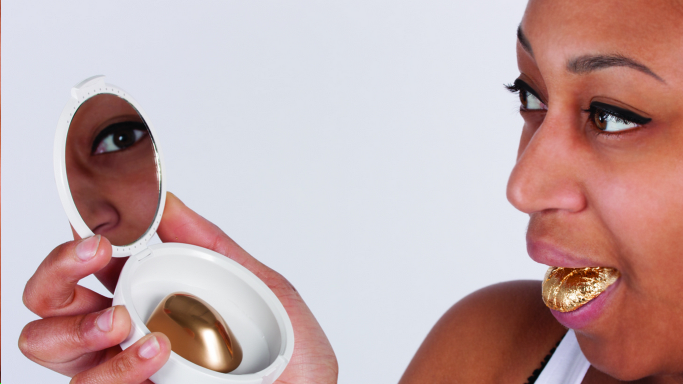
Nature again inspired metalwork, as artist Victoria Shennan displayed her jewellery and musical- collaboration about bacteria. The graduate first researched the quantities of human bacteria, before making jewellery that reflected its proportion and place in the body.

RCAVic

She then sought to replicate its patterns, in a musical collaboration with Exeter University Medical School Research Fellow ; Dr Linda Long, and creator of Molecular Music, Jack Hurst.

Shennan said: “The body is a landscape, host to many habitats, vastly uncharted, and part of a wider ecosystem. Through the medium of the body we experience the world.

“My exhibition asks: ‘what if you could experience the world hidden in plain view and hear the rhythms of nature that underpin existence or weigh the value of these invisible worlds?’”

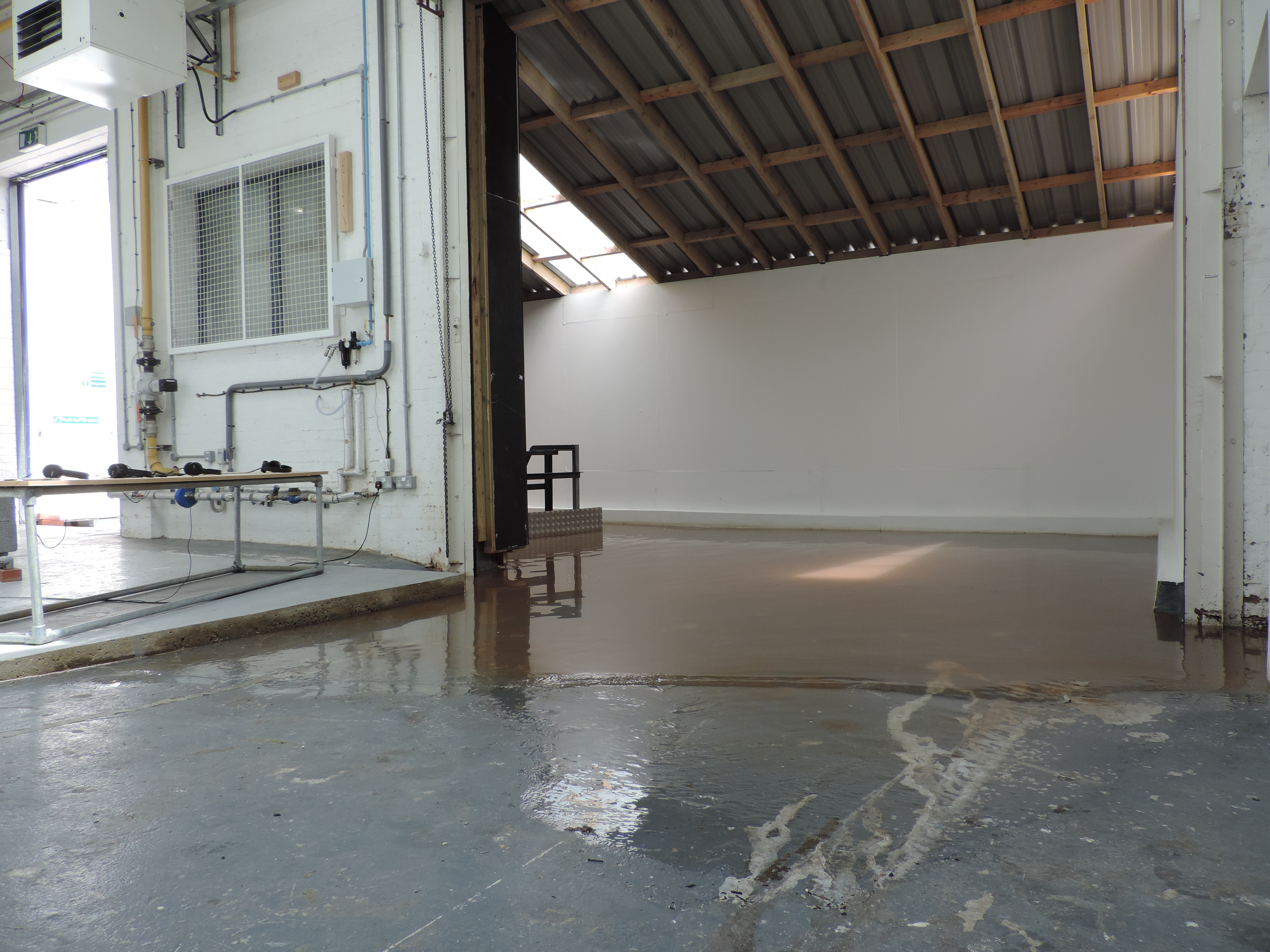
Invisible forces also acted as inspiration for artist Alexander Duncan’s installation. At the show, Duncan flooded an area and added (partially concealed) machinery to create a fake tide.

RCA Alex Duncan

He said: “In this work a loading ramp becomes a slipway; somewhere intertidal and uncanny. An artificial lapping wave powered by a pointless machine.

“I’m fascinated with how people react to water; to want to be close to something potentially harmful and control it.”

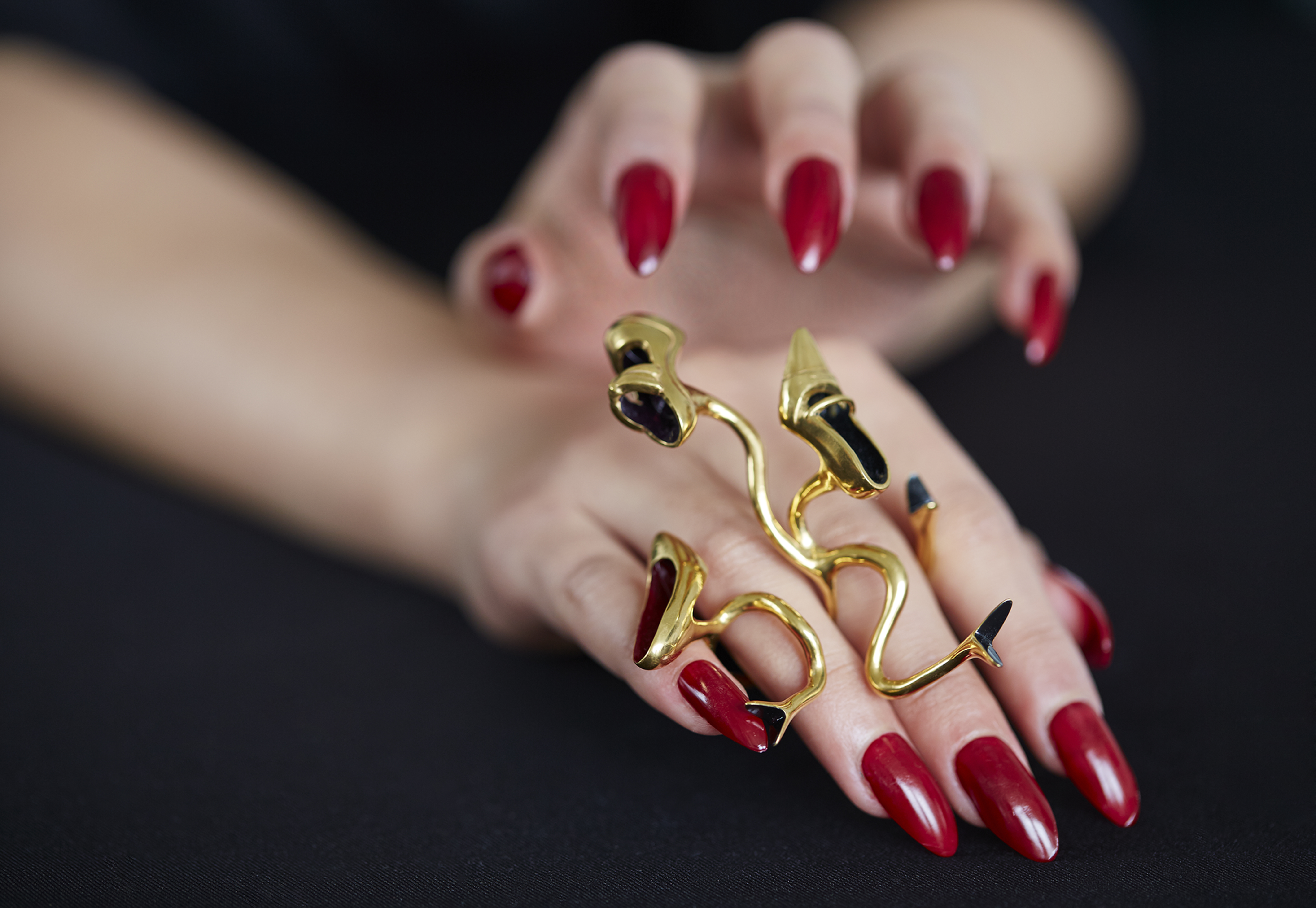
Control is a theme which resurfaced in artist Yunjung Lee’s work. Her jagged jewelry showcased rings and necklaces with fangs, snakes and stilettos.

RCAYunjungLee

She explained: “I found that there are two female stereotypes: the princess and the monster. Barbie doll is an example of the princess; Medusa and Vagina Dentata the monster.

“I fused the two different representations and created something in between. Throughout the project I tried to shed the new light on the representation of women, and make the jewellery that can be part of the wearer’s identity.”

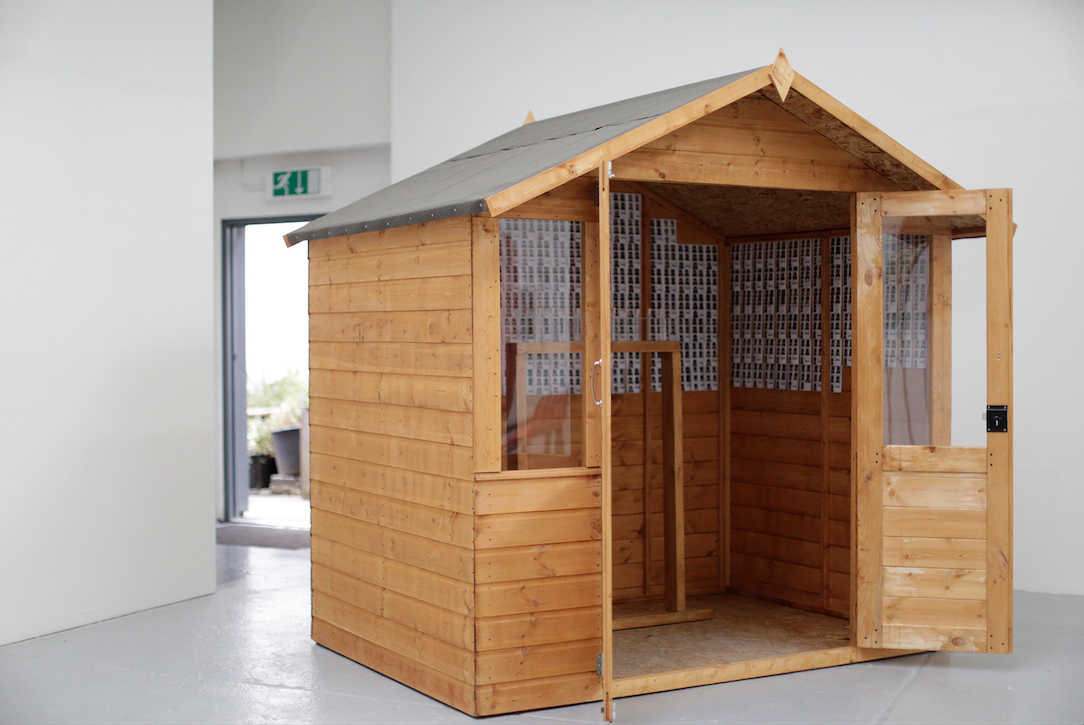
Identity formation also prevailed in RCA photographer Ruidi Mu’s work. Mu’s centrepiece was a wooden hut, papered in passport photos of similar looking people. These pictures sat behind test tubes (containing hair) in a combination that suggested cloning.

RCA Rudi Mu

Mu said: “My works revolves around the idea of ‘happening’; trying to find the boundary between art and life, and shrinking it as much as possible; using photography to recreate the environment.”

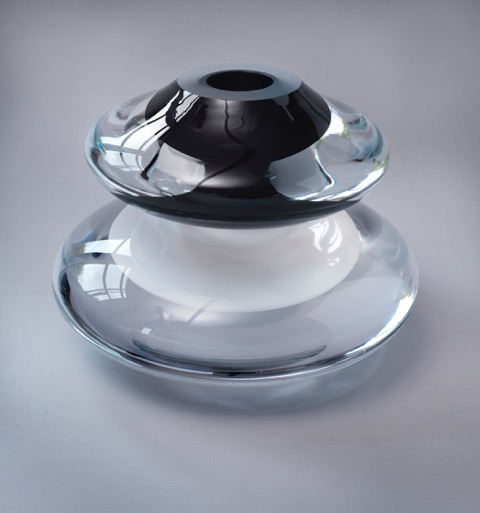
Another artist using variable environment to manipulate form was Isabella Kullmann. Kullmann’s glass vases and bowls showed clean edges that responded well to light.

RCAIsabella

She said: “This body of work is all about the glass object in its domestic environment or architectural setting- the play of light, the fall of shadows, the reflection on the surface, and the refraction of colour.

“These transitory properties stand in contrast to the permanence of the material itself. The situated environment becomes active: adding colour, movement, and light to the object, while the hardness of the glass dissolves into the space surrounding it.”

Reactive and proactive in parts, the RCA Graduate show offered something for everyone.

Head of Communications & Marketing, Áine Duffy concluded: “The RCA 2015 show has been an unmatched showcase for the talented designers and artists graduating this year.”

West End Festival

West end festival

Celebrating its 20th year in business, the West End Festival has returned to Glasgow with bigger acts than ever before.

Festival Founder Michael Dale said:“The 2015 WEF has a lot of big names, including comedian Elaine C Smith, choir composer Mark Carroll, and (the Gruffalo) author Julia Donaldson.

“There is a real mix of activities scheduled: music, shows, food and drink stalls, galas and guided walks through the city.”

Over 100 Glasgow-based organisations have joined the festival, which showcases arts groups and local talent. The festival does this by presenting national treasures alongside hidden gems.

Dale said: “One of the most exciting local acts at the West End Festival will be a collective of Samba players (from across Scotland). The Samba players will be performing at the end of the parade, on the steps of the Kelvingrove Art Gallery, and again at the Kelvingrove bandstand.”

He added: “The bandstand will also be hosting lots of local bands (of different genres) on the last day of the festival.”

Another musical must-sees, Dale said, is the WEF Festival of Choirs. This concert unites Glasgow Phoenix, Govan Gaelic, Dublin Airport, Glasgow Philharmonic Male Voice, and the Govan Schools Combined Choirs, at the Govan Old Parish Church.

He said: “Govan used to be in the same borough as Partick, till about 1914, so the choir concert celebrates this connection to the West End.”

Connecting the West End to the international music scene is Elaine C Smith and Christina Dunwoodie’s show, Torch Song Divas. The show (running at Websters Theatre) will examine eternal themes of love, loss, betrayal in a variety of genres.

Dale added: “Torch Song Divas should be great; it promises lots of big song numbers.”

While the adults are bound to love the gigs, Dale explained there is more to the festival than music.

He said: “The festival appeals to people of all ages, for kids there is a series of children’s author talks, both in and outside of schools.”

Among these talks is Julia and Malcolm Donaldson’s appearance at Maryhill Central Community Hall. Here the authors will be joined by illustrator Nick Sharratt, to recount tales from their books.

Books may not appeal to all kids, and so Dale explained interactive family workshops are also sprinkled through the festival.

He said: “There will be lots of workshops, including those ran by the Children’s Wood group (in North Kelvinside). This group offers nature based workshops exploring things like bugs in the habitat.”

For the less green fingered, there will also be workshops ran by professional artists, making  costumes for the parade.

The parade, Dale explained, was one of the founding principles of the festival.

He said: “The first festival was in June 1995 and it occurred to me then that we needed a way to promote the event; so I came up with the idea of having a parade, not that I had a one to hand, but I didn’t think it would be too hard to make.

“I met some people who wanted to start a parade in Glasgow, and make the costumes, so between ourselves we created the first West End Festival.”

Although it is an iconic part of the festival, Dale stressed that there is more to the event than the procession.

He said: “The West End comes alive in a special way during the festival. There are events throughout each day, including: exhibitions, concerts, food and drink. Those who have never been to the area before will be surprised just how much there is to do.”

He concluded: “A lot of the festival is free, with many people taking part on a voluntary basis.

“The West End Festival Website has a search function that you can use to find free events each day.”


Representing Dennistoun

wasps6

In the past Glasgow’s East End suffered a bad reputation, but keen to show its transformation is community group Impact Arts. This group is working on a three year Representing Dennistoun project, using creative works to depict residents’ realities.

Representing Dennistoun is a collaborative project between Impact Arts and the Glasgow Centre of Population Health. Funded through the Arts and Humanities Research Council, it comes as part of a national project called Representing Communities.

Impact Arts Project Manager, Natalie McFadyen White said: “The idea behind Representing Dennistoun was that we wanted to make a new narrative for Dennistoun, because a lot of images of the East End (portrayed through film or books) are now outdated.

“Dennistoun is almost regenerating itself; it hasn’t had a lot of investment, but it is up and coming, with good housing, restaurants and a large arts community.

“There town also has a huge multicultural community, with people who have lived there for generations mingling with newcomers.

“Everyone we have talked to has said it is a very positive place to be, and when we asked the question: ‘what is Dennistoun’, the main answer ‘friendly’.”

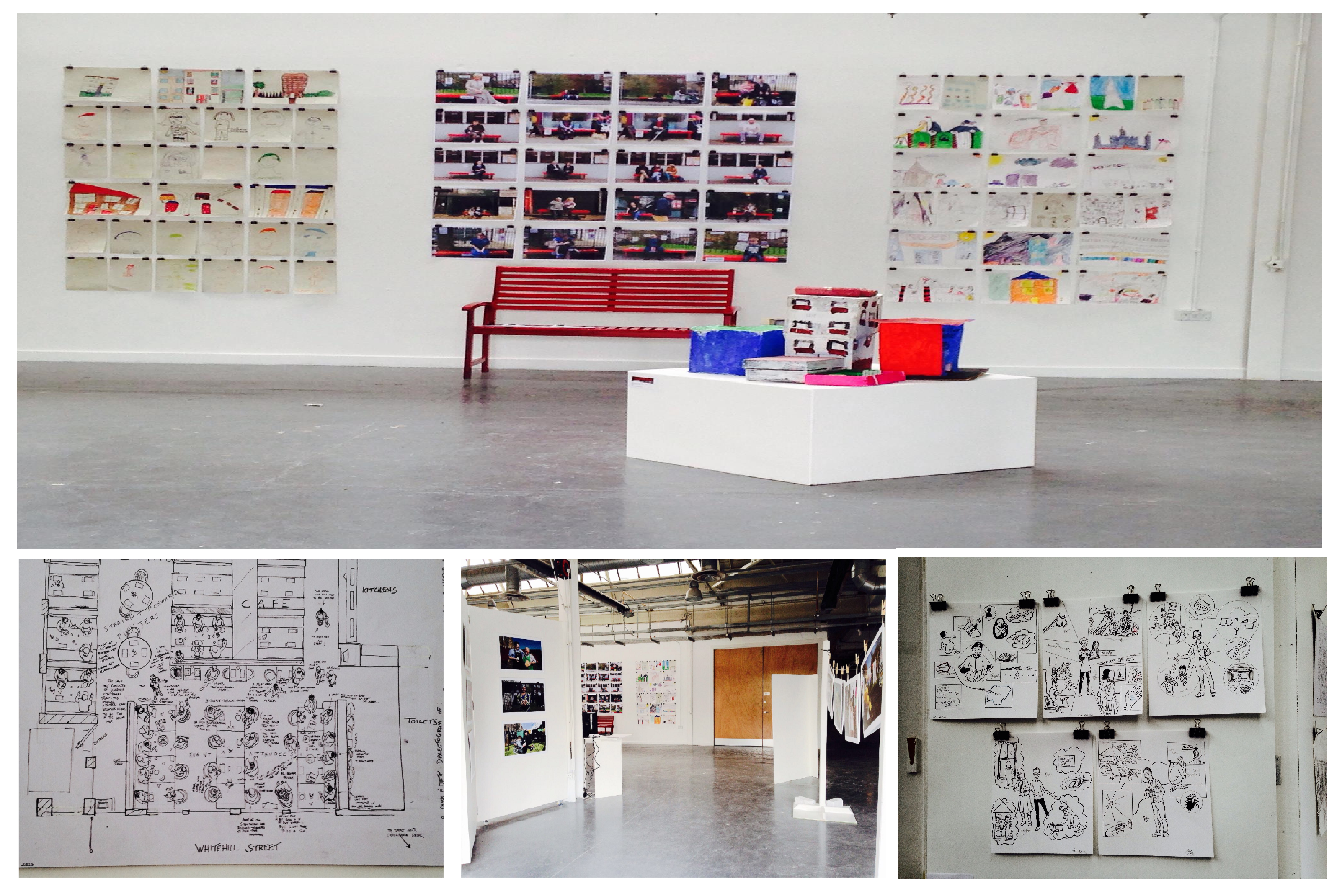
This community spirit was showcased, during the Celebrate Dennistoun: Our 2014 Story exhibition, which ran in May 2015, at the Hanson Street Wasps studios.

The exhibition focused on Dennistoun in 2014; a pivotal year for the East End, with many Commonwealth Games events hosted there.

McFadyen White explained: “We asked professional and amateur artists to focus on 2014 and tell us their personal stories from that time and place.”

Participants told these stories through a mix of mediums, such as sketching, photography, film and writing.

McFadyen White  said: “We worked with an artist called James Gow who delivered workshops to local primary schools; getting children to explore the community and create visual responses to it.”

Local community groups also got the chance to collaborate with professional artists. Film-maker Bash Khan formed a photography group in Dennistoun Library, and author Ellie Thom used stories – collated during the first part of the project – to create an original novel.

McFadyen White  added: “We were also lucky to be able to include Eoin Carey photographs in the exhibition, because he and his partner Paula Morgan were running a ‘Washing Line’ show at exactly the same time as we were gathering our work from the community.”

She said: “The exhibition was great to be a part of; everyone involved has been super talented, and I have felt really privileged to work with them.”

During the exhibition visitors were encouraged to write on postcards, sharing their stories of Dennistoun by pinning them to a board.

McFadyen White  said: “I was recently looking through all of these postcards, and we had some really funny local stories.

“Everyone who attended the exhibition loved it.”

Although no longer running in the Wasps studios; an online tour of Celebrate Dennistoun: Our 2014 Story will be stationed in the town’s library. The Representing Dennistoun wider project will continue through 2015, with a final showcase in spring 2016.

McFadyen White  concluded: “There is still scope for people get involved in the project; they can use the Representing Dennistoun Twitter account, an Impact Arts Twitter, Facebook and my own email to get in touch.”

Merchant City Festival

Merchant City Festival

Preparations have begun for this year’s Merchant City festival and it promises to be the biggest yet. Running twice the length of previous events, the 2015 bill will span July 25 – August 2.

Festival Executive Producer, Lorenzo Mele, said: “The 2014 Festival was exceptional because it supported the Commonwealth Games, acting as the cultural centre for the programme. Last year’s festival brought the city alive with outdoor content and that will continue this year.”

The outdoor content is expected to include acting, circus performances, and of course music.

Mele said: “The festival will include lots of different art forms, but its central element will be music. We have two outdoor stages every year and this year they will host a variety of artists, playing everything from rock, to RnB, and dance music.”

The Brunswick Street Stage will have a marquee with large screen and bar area; while the Emerging Talent Stage will showcase new bands.

Indoors, the Blackfriars Stage will once again feature music acts, but this year it will also become a comedy hub.

Headline comedy and music events will be cost ticketed, however Mele explained the majority of festival events will be free.

Bargain-seekers can enjoy a variety of performances and workshops throughout the day.

Mele said: “We want the festival’s daytime schedule to appeal to as much as the night; so we are hosting a weekday family zone, in Merchant City Square, from 27 –31 July.

“The festival will have interactive workshops for toddlers and parents; music for adults; and this year – for the first time – a programme for those 55 and older.”

Mele welcomed guests from all ages and walks of life.

He said: “The Merchant City Festival is good at bringing the focus on art, but also at attracting members of the public who wouldn’t usually go to gigs.”

He described plans to attract shoppers with interactive fashion and beauty events.

Mele said: “The team are examining ways to make the fashion element of the festival interactive, with things like upcycling and accessorising workshops.”

He added: “We have a Barcelonan act coming to the festival, called Osadia. This group create fantasy makeovers, taking people from the audience and transforming their look with hair and make- up sculpture.

“Osadia performed at the festival last year and they were hugely popular, so we look forward to having them back.”

Another international act Mele anticipates being a hit, is Dutch musician-come- chef: The Screaming, Cooking Prince; whose act does what it says on the tin.

As well as international acts, the festival will showcase home-grown talent.

Mele explained: “One of the highlights will be a UK dance performance called Fragile; a world Premier show from the Motionhouse dance company. It will involve around 25 performers dancing in, on and around JCB diggers. It should be quite spectacular.”

He concluded: “The Merchant City Festival really does have something for everyone. As well as great acts there will be stalls selling food from around the world.”

The festival’s themes include: Scotland’s Year of Food and Drink, and Glasgow’s Year of Green; these themes provide inspiration for organisations hoping to participate.

Organisations hoping to participate in Merchant City Festival can apply for grants of up to £500, through the Get Involved Fund.

Proposals should include specially planned activities that incorporate city space.

Open House Art Festival

Tine

Bringing visual art to the public, Glasgow’s Open House Festival returned for its second year. Running May 2 – 4; the weekend saw local art installed in everyday buildings.

Open House Artist Tine Bek said: “The festival involved almost 200 artists, whose work was spread out throughout town, in houses and public spaces; to make it more accessible.”

The festival provided a platform for (emerging and established) artists to open their practices, and sometimes homes, to new audiences. By removing art from conventional spaces and embedding it in infrastructure Open House gave a second perspective of Glasgow.

Turning heads in the Savoy Centre was photographer Tine Bek. She and fellow artist, Scott Caruth, made the ‘Twofold’ exhibition in Savoy Centre disused units.

Bek explained: “The exhibition was collaboration between myself and Scott; we arranged our space together, but as two separate shows with the common link of travel.”

In Twofold Bek and Caruth presented work developed during artist residencies abroad. Bek was ‘artist in residence’ in Buenos Aires, and Caruth was one in Modena.

Caruth mused on the legacy of the 70s Italian movementAutonomia’, while Bek examined the Baroque period and its influence.

She said: “This is a selection of images from a book I am making called the Barok. It views the Barok as a state of mind, as opposed to a just time in history. The work examines human interactions; the way people deal with space and excess.”

Bek describes the baroque as both a period in design and as a philosophy on duality. Bek’s work showed this conflating illusion and reality, light and dark and time and space.

These contrasts worked well in Twofold’s unusual setting.

Bek said: “Exhibiting in a Savoy Centre unit has been awkward, but in a good way. Working in unconventional space challenged me as an artist, and opened my work to people who wouldn’t usually see it.”

Opportunity has also arisen in her partnership with Caruth.

Bek explained: “Scott and I have been talking about working together for about three years, having both graduated from Glasgow School of Art (GSA) Fine Art photography. It has been great to finally collaborate and bounce ideas off each other.”

She added: “We are thinking about working together in the future, and possibly making a book of photography.”

This natural development of talent was the founding principle of Glasgow Open House (GOH) an artist-led, not-for-profit group, established by GSA alumna Amalie Silvani-Jones, in 2013.

Since its founding, GOH has helped grassroots artists circulate their work. This ethos was then enshrined in the Glasgow Open House Art Festival 2014.

The 2014 festival showcased 80 artists, however a year later the festival had grown and included new ‘Art Walks’, touring its exhibitions. Specially commissioned flags were made (in partnership with Project Ability and COLOUR HOTEL) to adorn Glasgow buildings, pinpointing the art.

Artist work and details of the 2015 festival can be viewed at the Glasgow Open House Art Festival website.

Galoshans Festival

GALOSHANS PIC

There’s a new UK arts festival and it’s called the Galoshans. With the Scots name for ‘guising’ it’s unsurprisingly scheduled North of the border. The exact location is however, more surprising. Unlike most Scottish festivals, it isn’t going to Glasgow or Edinburgh, rather Inverclyde.

Bringing the festival to Inverclyde is Scottish charity UZ Arts. The group works to commission, produce and distribute art in all its forms.

UZ Arts Executive producer, Jo McLean, said: “The Community Trust had been organising events as part of the Inverclyde Space programme and, in 2014, they spoke to UZ Arts about growing a festival.

“The Galoshans was an idea that the Community Trust had introduced to us. They told us it was a traditional folk play about George and the dragon. The original custom was to perform the play in spring;  but Inverclyde adapted it to take place around Halloween [alongside guising]. ”

Now UZ Arts are expanding the custom into an arts festival. The festival will still nclude the Galoshans play, as well as music, performances, and installations throughout Inverclyde.

Galoshans will run from 30 October to 1 November, with a complimentary fringe programme that ends in  Inverclyde’s firework display (November 7).

As well as this, the festival will launch with a symposium entitled Moving Out, which pushes artists and audiences outside of their comfort zones.

Using the European network IN SITU, UZ Arts will bring artists across seas to engage with the people of Inverclyde. The artists will create work outside conventional venues, reimagining iconic landmarks.

McLean said: “UZ Arts are part of IN SITU, a 19 country network, which funds international arts projects, and enables collaberations. IN SITU artists will be coming to the Galoshans festival to showcase their work.”

As well as artists, the public can get involved with the Galoshans.

McLean explained: “UZ Arts will be looking for volunteers to assist at the festival. We will also be running internships and opportunities, especially aimed at young jobseekers.

“Whenever UZ Arts run a festival we always try to make it benefit the local community.”

All visitors will benefit from the Galoshan’s reasonably priced and free events (ticket details to be confirmed).

McLean concluded: “We hope the festival will celebrate the international community, while reflecting the Inverclyde’s local pride.”

Galoshans may continue to be an annual source of pride, as UZ Arts have provisionally planned to roll it out in future years.

To get involved with the 2015 festival, visit the UZ Arts Website or email the team.

Southside LIFE Drawing

Southside LIFE2

Alison Johnston


Whether you’re doodle daft or a working artist, life drawing classes can provide an outlet.

Life drawing’s prehistoric roots can be traced in caves around the world. However, as the practice evolved throughout the centuries, it became an art school staple. This trend was largely set by the Carracci family, in the 1580s, as they led the Accademia degli Incamminati in Bologna (Italy). This art school had its pupils first copy human form engravings; then plaster casts, before finally letting them draw a live model.

This strict approach has mellowed through the years and life drawing has returned to the masses. It is now estimated (by the Register of Artists’ Models) there are over 2000 life drawing employers in the UK; with many classes in residential venues. One such class is Glasgow Southside LIFE drawing.

LIFE drawing tutor, Alison Johnston said: “I started Southside LIFE Drawing two years ago after the class I had attended stopped. All the drawing classes I enquired about were in the city centre, and as a single mum I couldn’t find the time to travel to and fro. I therefore decided to start up my own class this side of the river.”

Johnston, a GSA graduate and qualified teacher, has since been running classes fortnightly on Tuesdays (7 to 9pm) in Argosy Bar function suite.

The suite is set with background music, tables, and chairs.

Johnston said: “It’s a very relaxed class. I play chilled out music and there’s a little break half way through when people chat and nosey at one another’s work.  There’s also the opportunity to bring a wee drink up from the bar downstairs.

“The suite has plenty of tables, but students can bring an easel if they prefer. There is lots of room and, unlike other classes, you don’t have to fight to get a good view of the model.”

The open atmosphere is furthered by LIFE drawing’s diverse mix of students.

Johnston explained: “The class is very mixed in gender, age and ability. I have people who haven’t drawn since school, mixing with secondary school students, and very competent and working artists. The class is open to everyone.”

Classes are £10  and £7 for students (in education). Beginners can join with just a sketchbook and drawing implement. Usually extra paper and materials are also on hand, for those who fancy variety.

Johnston said: “Beginners need not worry as I’m there to give advice and help out where I can.”

“Life drawing is a fantastic way to relax! I find time disappears really fast when drawing.

“The common misconception is its sleazy; it’s nothing like that at all. I have a fantastic group of very professional life models who are posed in various positions – either standing, seated or reclining.”

Sessions usually start with several brief sketches, before going on to more in depth poses, and usually concluding in two half hour poses.

Students can build upon their skills by attending multiple classes, but Johnston explained, block bookings are not mandatory.

She said: “I’m aware sometimes students can’t attend every week due to other commitments, but they can keep abreast of all the latest session dates through the group’s Facebook page.”

The Southside LIFE drawing Facebook page also offers pictures of the student’s sketches and answers to their queries.

Johnston concluded: “Lots of people say life drawing is something they have thought about trying; so why not come along and try it for yourself? It is open to all and can be a great new skill.”


Travelogue

Travelouge 3

If you enjoy Nordic fiction, then why not explore the landscape through visual art? This voyage can be taken in Glasgow’s Briggait (studio) through Clive A Brandon’s Travelogue exhibition (running April 27 to June 5).

Travelogue showcases Brandon’s work from residencies in Norway, Scotland, Sweden and Iceland.

He explained: “I had visited Scandinavia several times before Travelogue and had a yearning to explore these countries more deeply. I loved the atmosphere and wanted to experience what it was like to live and work there, even if only for short time.”

In April 2013 Brandon left for a 20 month journey through Northern Europe, completing residencies that examined natural and manufactured elements of remote places.

He said: “I wanted to see how my work, which had become very ‘urban’, would develop in natural landscapes.”

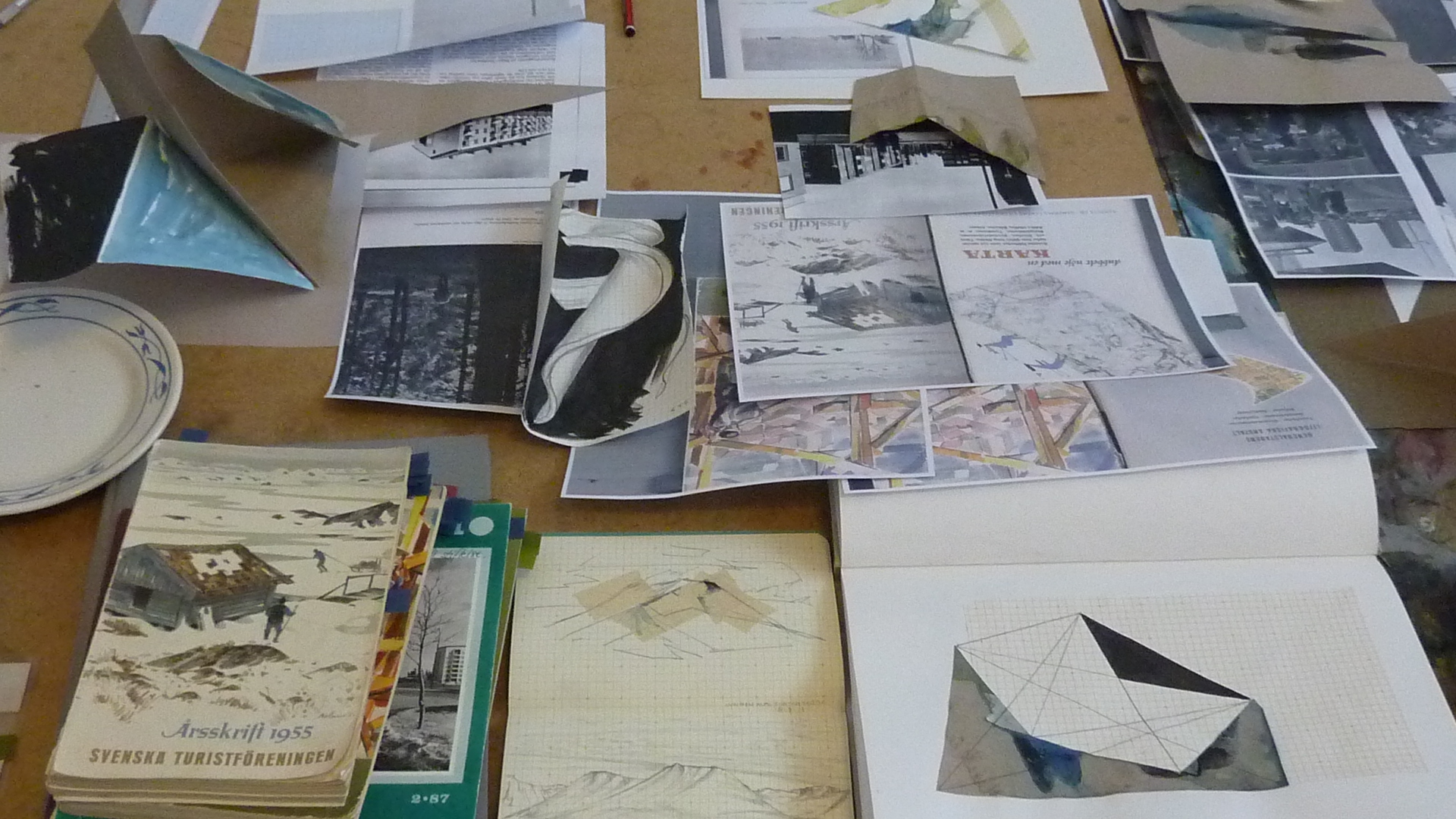
Brandon explored these landscapes through excursions; making photos, sketches and watercolours that he combined with recycled materials and local information. These became a bricolage of material.

Brandon recalled: “When travelling I couldn’t carry very much, so I worked out a basic art kit with a watercolour travel set, acrylic paint, brushes, canvas, watercolour pads, moleskin sketchbooks, scissors, pens/pencils and graph paper. I made a rule that this all had to fit into an A3 folder and pencil case.”

On arrival at each residency, Brandon scoured the area for base materials such as cardboard. This often involved rummaging through recycling bins or asking strangers for shoe boxes.

He said: “I did get some strange looks, but if anyone asked what I was doing I just told them I was an artist, which normally excuses all sorts of behaviour.”

At the end of each residency Brandon would package most of his work and post it back home.

He added: “I left different things at each place; sometimes pieces just wouldn’t fit in postage, other times I donated paintings or sketches to my hosts.”

Meeting interesting people was – Brandon said – one of the highlights of his trip. He listed other highlights as: challenging his work patterns, having to be resourceful, seeing amazing countries and living like a local.

However living like a local was not always easy.

Brandon explained: “Before Travelogue I had never done any residencies; so arriving in another country without familiar studios, friends or materials was hard.

“The first day of each residency was a bit strange; I would arrive to an empty room and wonder how I was going to make something from nothing.

“My first actions were normally to get some ideas up on the walls, rearrange the space and make it feel like mine.”

After setting up, Brandon absorbed his environments by collecting materials and making sketches, this – he said – helped him to relax and built towards his final projects.

He added: “I’m really happy with the body of work I produced, which is why I was keen to collectively show it when I returned.”

Before his travels Brandon lived and worked in England, having studied an MA at Wimbledon and BA at Leicester De Montfort.

Upon returning to the UK Brandon started touring his exhibition.

He said: “I found that travelling can be a brilliant experience that can change your work forever.

“To any artist considering working abroad I would say: plan ahead, set goals (but have an open mind and avoid being too prescribed) then get to know the local people and arts scenes.”

International residency opportunities can be found at Res artists’, Transartists’ and WASPS studios’ websites.

WASPS studios hold special resonance with Brandon, as they are hosting his Travelogue exhibition.

Brandon said: “This is my first Scottish show and first solo show in the UK, so it’s a very exciting time.

“I hope people will get a lot out of Travelogue; it is a large body of work that allows viewers to immerse themselves in the sense of place. It shows how palettes change with the seasons, and landscapes shift from rolling hills, to forests to volcanic areas.”

Travelogue dates and locations can be found on Brandon’s website.

Gdańsk

gdask start

One of Europe’s best kept secrets is Gdańsk, Poland’s principle sea port. Bursting with culture and not stag-do in sight; it is literally a breath of fresh air.

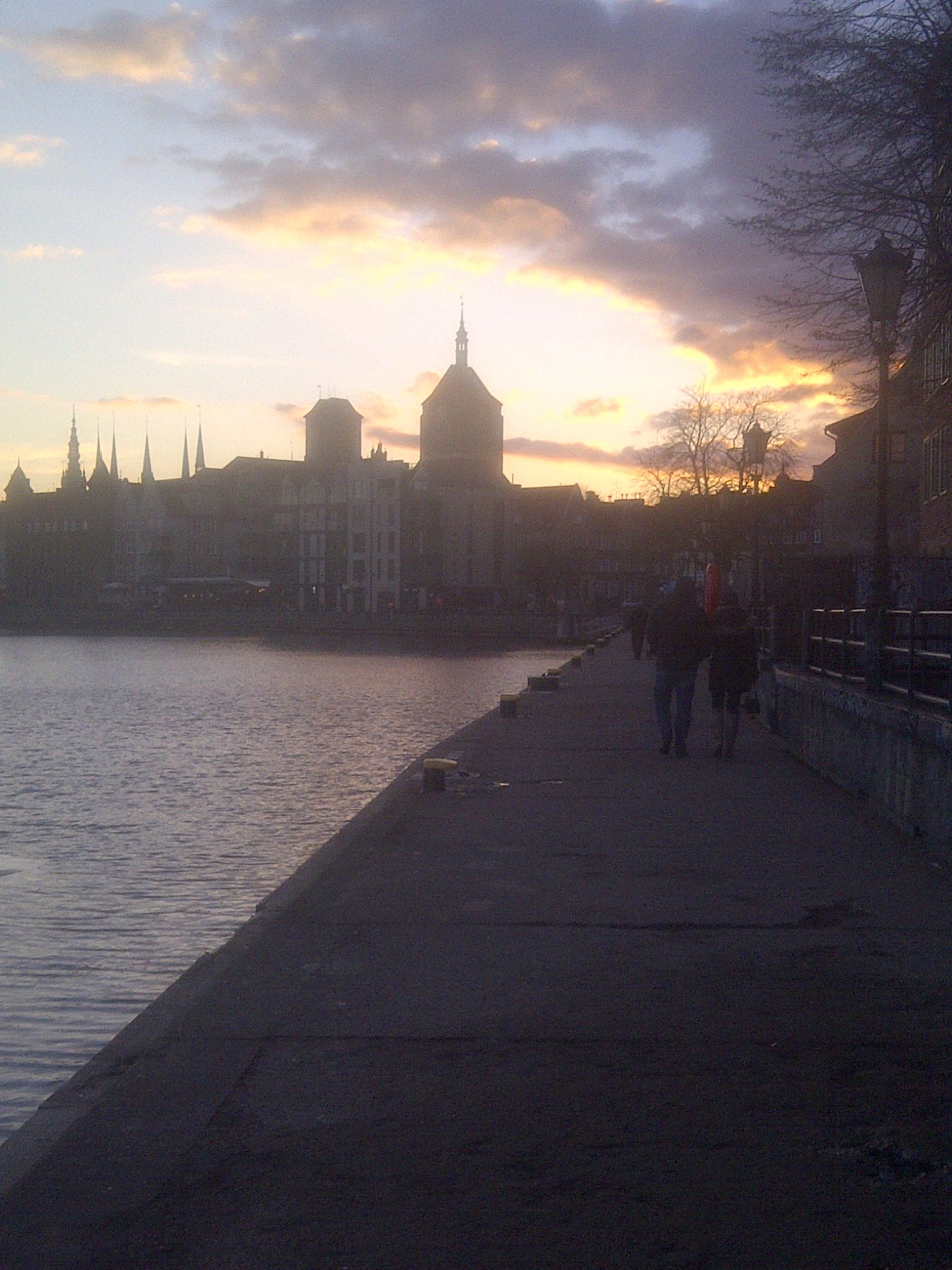
On a frozen February 2014 my mum and I visited my Dad (a marine engineer) as he worked in Gdańsk. We stayed in an apartment with views of the river and echoes of clock chimes.

These chimes led us to beautiful buildings, eclectic art and cheap cuisine.

So here’s my recommendation for finding the best of the city.

gdansk town hall

Art appreciating

To cast your eye over Gdańsk’s heritage there is no better place than the Main Town Hall (Ratusz Głównego Miasta). This public building (restored from WWII bombing) is part art gallery, part domestic museum.

After crossing its threshold a multi lingual guidebook explains its Gothic Renaissance paintings, sculptures and  wooden replica ships.

This mix of high and low brow art continues as you move upstairs, into an antiquated household, complete with vintage clothes and kitchen items.

Finally a photo exhibition of Gdańsk, pre and post WWII leads you to the exit.

gdansk amber

Old and new meet again in the Amber Museum (Muzeum Bursztynu) as contemporary jewellery showcases with historical. Here visitors can see amber finely carved into items, from around the globe.

Muzeum Bursztynu documents Gdańsk’s connection to the material, sourced in Baltic countries and circulated through its hub of merchants. This attraction is a must see for anyone who appreciates sculpture.


gd neptune

Traveling

Aesthetic treats are not confined to galleries; Gdańsk’s streets are awash art and architecture that deserves a walking tour. Moving through them, visitors can’t miss Neptune’s Fountain (Fontanna Neptuna) an icon of the Greek sea god, holding his trident poised.

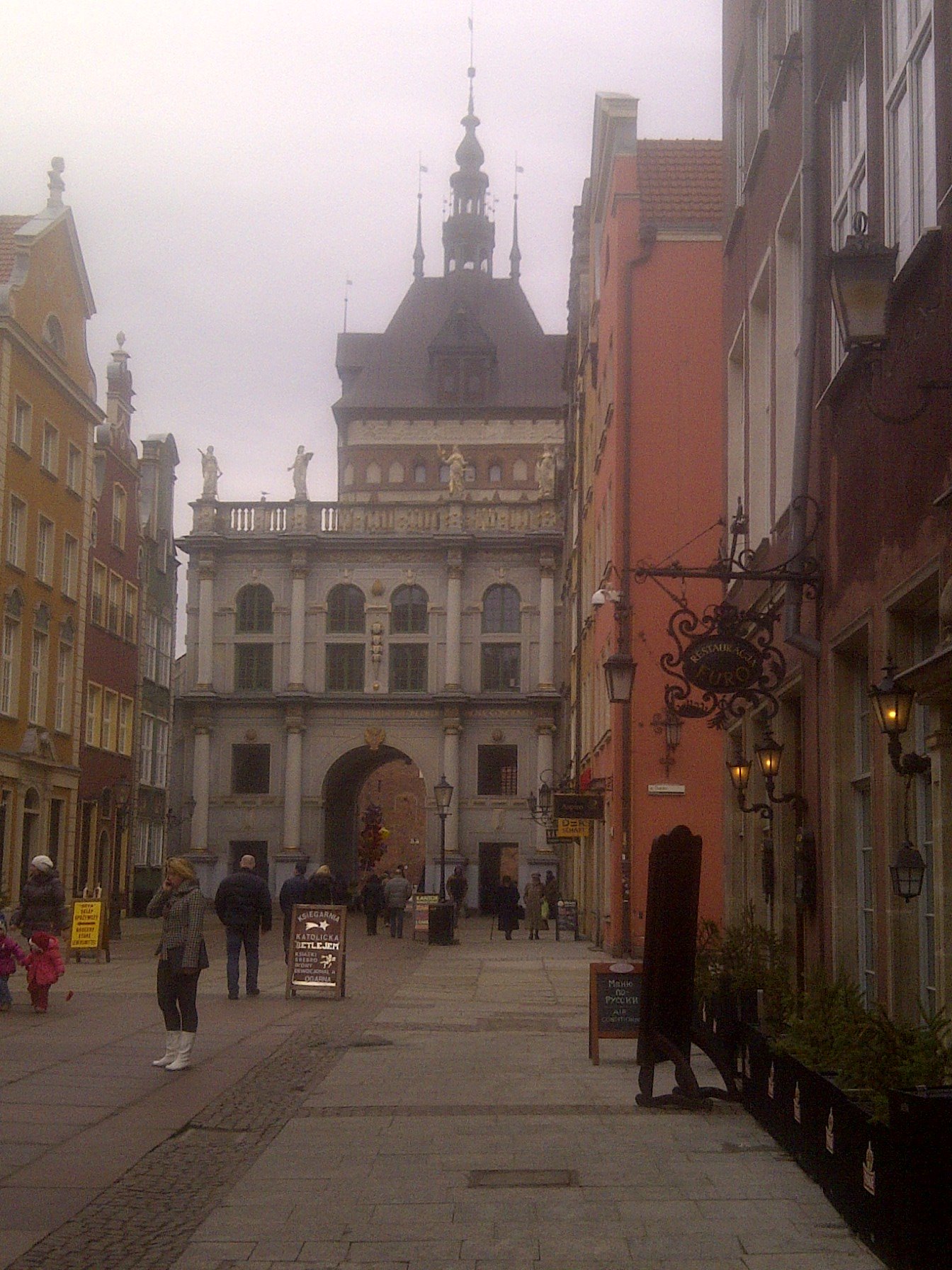
Neptune is situated in the heart of the ‘Long Market’ a bustling street of cafes and stalls, flanked by the Golden Gate on one end and the Green Gate at the other. Like most of Gdańsk architecture these Gates have Mannerist and Dutch influence that transports you back to a grander time.

Alternativly, for a working class tour, take the ferry across the river to The Crane. One of Gdańsk’s iconic symbols, the Crane was once used to transfer cargoes, erect ship masts and defend the city gates.

Defending the city from ideological attack was the Solidarity (socialist) movement. This movement, which saw shipyard workers fight for better living conditions, is recalled in the Maritime Museum (just next to the Crane).

While these attractions are a wandering distance from the town centre, further ones can be reached via the town’s metro. With cheap tickets, regular trains and colour co-ordinated maps, the lines are easy to navigate.

gdansk pyrabar

Dining

Just as easy to navigate are Gdańsk’s eateries; with cafes and bars on every street, all cheaper than their UK counterparts.

The best bargain my mum and I had was at the service of the Pyra Bar, on Garbary Road. This Ikea chic diner transformed potatoes into masterpieces. Its portions were big and included saucy casseroles, potato pancakes and stews. We ordered two casseroles and three pints of beer, getting change from 56 złotych (a tenner).

Then, for fancier fare, we headed to Goldwasser, a bistro overlooking the river. With outdoor seating, lanterns and a gothic interior, it was the perfect place to fine dine. Named after the famous liqueur (containing gold flakes) the aperitif was the perfect end to a seafood chowder starter and steak main. And if all the rich food is too much, you can walk it off – as we did – along the promenade.

gda l

Staying

Directly across the river from Goldwasser was my Dad’s working accommodation, where my mum and I stayed during our trip. However, if you stay on the Goldwasser side of town, and walk into its centre, there is a horde of accommodation to choose from, ranging from hostels to hotels.

With so much to see, eat and drink, Gdańsk really does spoil its visitors.