
West End Festival

West end festival

Celebrating its 20th year in business, the West End Festival has returned to Glasgow with bigger acts than ever before.

Festival Founder Michael Dale said:“The 2015 WEF has a lot of big names, including comedian Elaine C Smith, choir composer Mark Carroll, and (the Gruffalo) author Julia Donaldson.

“There is a real mix of activities scheduled: music, shows, food and drink stalls, galas and guided walks through the city.”

Over 100 Glasgow-based organisations have joined the festival, which showcases arts groups and local talent. The festival does this by presenting national treasures alongside hidden gems.

Dale said: “One of the most exciting local acts at the West End Festival will be a collective of Samba players (from across Scotland). The Samba players will be performing at the end of the parade, on the steps of the Kelvingrove Art Gallery, and again at the Kelvingrove bandstand.”

He added: “The bandstand will also be hosting lots of local bands (of different genres) on the last day of the festival.”

Another musical must-sees, Dale said, is the WEF Festival of Choirs. This concert unites Glasgow Phoenix, Govan Gaelic, Dublin Airport, Glasgow Philharmonic Male Voice, and the Govan Schools Combined Choirs, at the Govan Old Parish Church.

He said: “Govan used to be in the same borough as Partick, till about 1914, so the choir concert celebrates this connection to the West End.”

Connecting the West End to the international music scene is Elaine C Smith and Christina Dunwoodie’s show, Torch Song Divas. The show (running at Websters Theatre) will examine eternal themes of love, loss, betrayal in a variety of genres.

Dale added: “Torch Song Divas should be great; it promises lots of big song numbers.”

While the adults are bound to love the gigs, Dale explained there is more to the festival than music.

He said: “The festival appeals to people of all ages, for kids there is a series of children’s author talks, both in and outside of schools.”

Among these talks is Julia and Malcolm Donaldson’s appearance at Maryhill Central Community Hall. Here the authors will be joined by illustrator Nick Sharratt, to recount tales from their books.

Books may not appeal to all kids, and so Dale explained interactive family workshops are also sprinkled through the festival.

He said: “There will be lots of workshops, including those ran by the Children’s Wood group (in North Kelvinside). This group offers nature based workshops exploring things like bugs in the habitat.”

For the less green fingered, there will also be workshops ran by professional artists, making  costumes for the parade.

The parade, Dale explained, was one of the founding principles of the festival.

He said: “The first festival was in June 1995 and it occurred to me then that we needed a way to promote the event; so I came up with the idea of having a parade, not that I had a one to hand, but I didn’t think it would be too hard to make.

“I met some people who wanted to start a parade in Glasgow, and make the costumes, so between ourselves we created the first West End Festival.”

Although it is an iconic part of the festival, Dale stressed that there is more to the event than the procession.

He said: “The West End comes alive in a special way during the festival. There are events throughout each day, including: exhibitions, concerts, food and drink. Those who have never been to the area before will be surprised just how much there is to do.”

He concluded: “A lot of the festival is free, with many people taking part on a voluntary basis.

“The West End Festival Website has a search function that you can use to find free events each day.”


Representing Dennistoun

wasps6

In the past Glasgow’s East End suffered a bad reputation, but keen to show its transformation is community group Impact Arts. This group is working on a three year Representing Dennistoun project, using creative works to depict residents’ realities.

Representing Dennistoun is a collaborative project between Impact Arts and the Glasgow Centre of Population Health. Funded through the Arts and Humanities Research Council, it comes as part of a national project called Representing Communities.

Impact Arts Project Manager, Natalie McFadyen White said: “The idea behind Representing Dennistoun was that we wanted to make a new narrative for Dennistoun, because a lot of images of the East End (portrayed through film or books) are now outdated.

“Dennistoun is almost regenerating itself; it hasn’t had a lot of investment, but it is up and coming, with good housing, restaurants and a large arts community.

“There town also has a huge multicultural community, with people who have lived there for generations mingling with newcomers.

“Everyone we have talked to has said it is a very positive place to be, and when we asked the question: ‘what is Dennistoun’, the main answer ‘friendly’.”

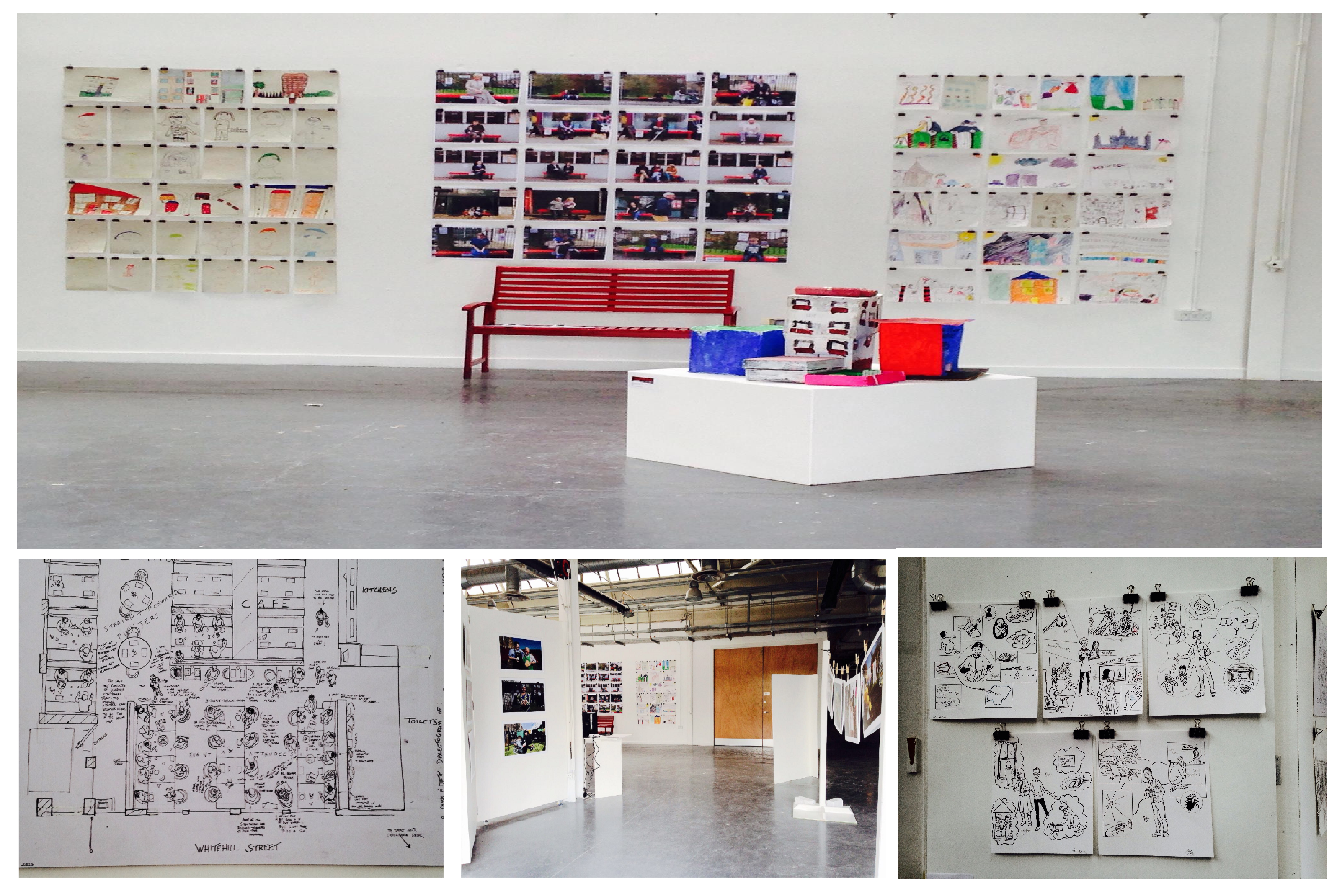
This community spirit was showcased, during the Celebrate Dennistoun: Our 2014 Story exhibition, which ran in May 2015, at the Hanson Street Wasps studios.

The exhibition focused on Dennistoun in 2014; a pivotal year for the East End, with many Commonwealth Games events hosted there.

McFadyen White explained: “We asked professional and amateur artists to focus on 2014 and tell us their personal stories from that time and place.”

Participants told these stories through a mix of mediums, such as sketching, photography, film and writing.

McFadyen White  said: “We worked with an artist called James Gow who delivered workshops to local primary schools; getting children to explore the community and create visual responses to it.”

Local community groups also got the chance to collaborate with professional artists. Film-maker Bash Khan formed a photography group in Dennistoun Library, and author Ellie Thom used stories – collated during the first part of the project – to create an original novel.

McFadyen White  added: “We were also lucky to be able to include Eoin Carey photographs in the exhibition, because he and his partner Paula Morgan were running a ‘Washing Line’ show at exactly the same time as we were gathering our work from the community.”

She said: “The exhibition was great to be a part of; everyone involved has been super talented, and I have felt really privileged to work with them.”

During the exhibition visitors were encouraged to write on postcards, sharing their stories of Dennistoun by pinning them to a board.

McFadyen White  said: “I was recently looking through all of these postcards, and we had some really funny local stories.

“Everyone who attended the exhibition loved it.”

Although no longer running in the Wasps studios; an online tour of Celebrate Dennistoun: Our 2014 Story will be stationed in the town’s library. The Representing Dennistoun wider project will continue through 2015, with a final showcase in spring 2016.

McFadyen White  concluded: “There is still scope for people get involved in the project; they can use the Representing Dennistoun Twitter account, an Impact Arts Twitter, Facebook and my own email to get in touch.”

Merchant City Festival

Merchant City Festival

Preparations have begun for this year’s Merchant City festival and it promises to be the biggest yet. Running twice the length of previous events, the 2015 bill will span July 25 – August 2.

Festival Executive Producer, Lorenzo Mele, said: “The 2014 Festival was exceptional because it supported the Commonwealth Games, acting as the cultural centre for the programme. Last year’s festival brought the city alive with outdoor content and that will continue this year.”

The outdoor content is expected to include acting, circus performances, and of course music.

Mele said: “The festival will include lots of different art forms, but its central element will be music. We have two outdoor stages every year and this year they will host a variety of artists, playing everything from rock, to RnB, and dance music.”

The Brunswick Street Stage will have a marquee with large screen and bar area; while the Emerging Talent Stage will showcase new bands.

Indoors, the Blackfriars Stage will once again feature music acts, but this year it will also become a comedy hub.

Headline comedy and music events will be cost ticketed, however Mele explained the majority of festival events will be free.

Bargain-seekers can enjoy a variety of performances and workshops throughout the day.

Mele said: “We want the festival’s daytime schedule to appeal to as much as the night; so we are hosting a weekday family zone, in Merchant City Square, from 27 –31 July.

“The festival will have interactive workshops for toddlers and parents; music for adults; and this year – for the first time – a programme for those 55 and older.”

Mele welcomed guests from all ages and walks of life.

He said: “The Merchant City Festival is good at bringing the focus on art, but also at attracting members of the public who wouldn’t usually go to gigs.”

He described plans to attract shoppers with interactive fashion and beauty events.

Mele said: “The team are examining ways to make the fashion element of the festival interactive, with things like upcycling and accessorising workshops.”

He added: “We have a Barcelonan act coming to the festival, called Osadia. This group create fantasy makeovers, taking people from the audience and transforming their look with hair and make- up sculpture.

“Osadia performed at the festival last year and they were hugely popular, so we look forward to having them back.”

Another international act Mele anticipates being a hit, is Dutch musician-come- chef: The Screaming, Cooking Prince; whose act does what it says on the tin.

As well as international acts, the festival will showcase home-grown talent.

Mele explained: “One of the highlights will be a UK dance performance called Fragile; a world Premier show from the Motionhouse dance company. It will involve around 25 performers dancing in, on and around JCB diggers. It should be quite spectacular.”

He concluded: “The Merchant City Festival really does have something for everyone. As well as great acts there will be stalls selling food from around the world.”

The festival’s themes include: Scotland’s Year of Food and Drink, and Glasgow’s Year of Green; these themes provide inspiration for organisations hoping to participate.

Organisations hoping to participate in Merchant City Festival can apply for grants of up to £500, through the Get Involved Fund.

Proposals should include specially planned activities that incorporate city space.

Open House Art Festival

Tine

Bringing visual art to the public, Glasgow’s Open House Festival returned for its second year. Running May 2 – 4; the weekend saw local art installed in everyday buildings.

Open House Artist Tine Bek said: “The festival involved almost 200 artists, whose work was spread out throughout town, in houses and public spaces; to make it more accessible.”

The festival provided a platform for (emerging and established) artists to open their practices, and sometimes homes, to new audiences. By removing art from conventional spaces and embedding it in infrastructure Open House gave a second perspective of Glasgow.

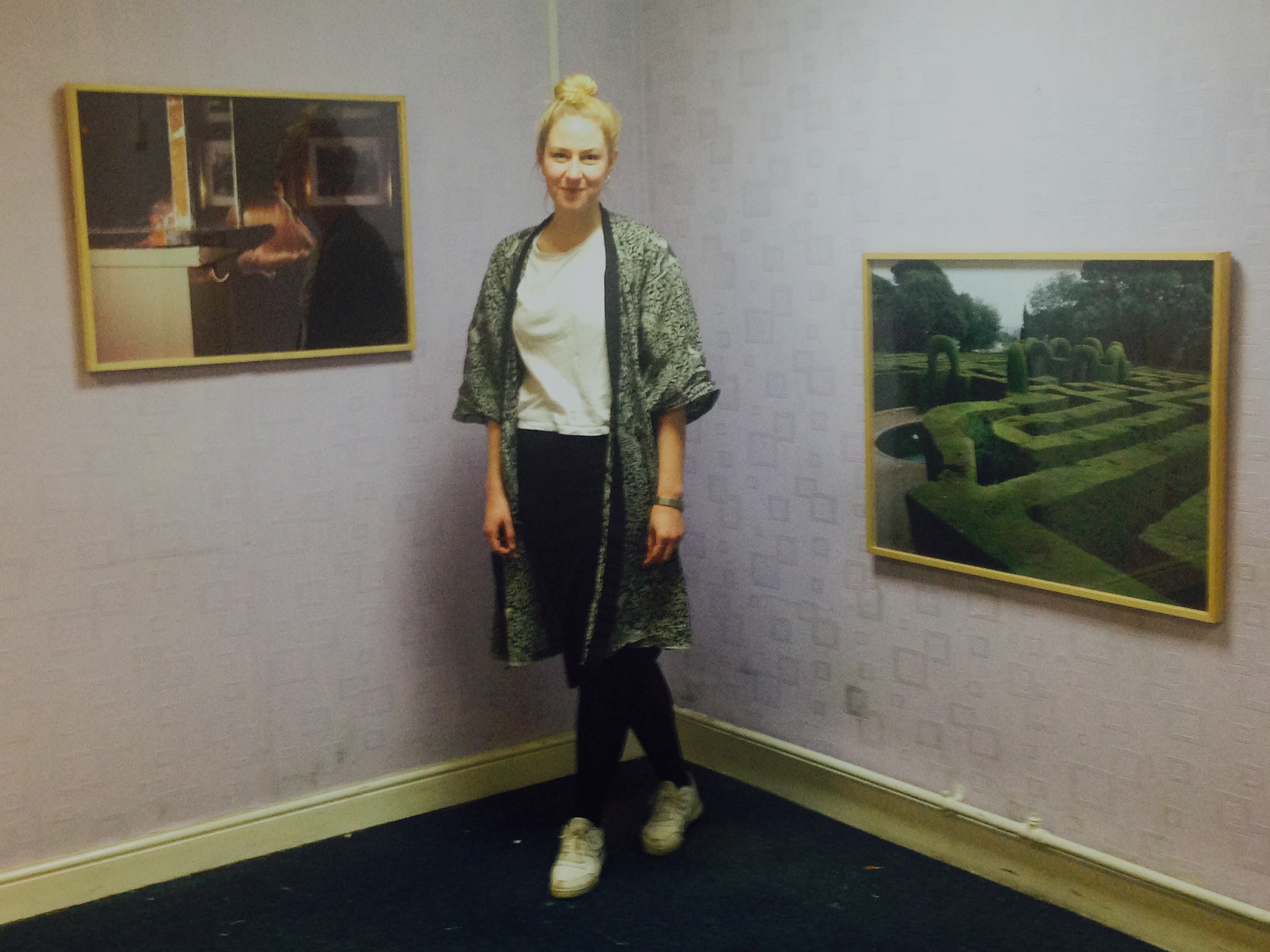
Turning heads in the Savoy Centre was photographer Tine Bek. She and fellow artist, Scott Caruth, made the ‘Twofold’ exhibition in Savoy Centre disused units.

Bek explained: “The exhibition was collaboration between myself and Scott; we arranged our space together, but as two separate shows with the common link of travel.”

In Twofold Bek and Caruth presented work developed during artist residencies abroad. Bek was ‘artist in residence’ in Buenos Aires, and Caruth was one in Modena.

Caruth mused on the legacy of the 70s Italian movementAutonomia’, while Bek examined the Baroque period and its influence.

She said: “This is a selection of images from a book I am making called the Barok. It views the Barok as a state of mind, as opposed to a just time in history. The work examines human interactions; the way people deal with space and excess.”

Bek describes the baroque as both a period in design and as a philosophy on duality. Bek’s work showed this conflating illusion and reality, light and dark and time and space.

These contrasts worked well in Twofold’s unusual setting.

Bek said: “Exhibiting in a Savoy Centre unit has been awkward, but in a good way. Working in unconventional space challenged me as an artist, and opened my work to people who wouldn’t usually see it.”

Opportunity has also arisen in her partnership with Caruth.

Bek explained: “Scott and I have been talking about working together for about three years, having both graduated from Glasgow School of Art (GSA) Fine Art photography. It has been great to finally collaborate and bounce ideas off each other.”

She added: “We are thinking about working together in the future, and possibly making a book of photography.”

This natural development of talent was the founding principle of Glasgow Open House (GOH) an artist-led, not-for-profit group, established by GSA alumna Amalie Silvani-Jones, in 2013.

Since its founding, GOH has helped grassroots artists circulate their work. This ethos was then enshrined in the Glasgow Open House Art Festival 2014.

The 2014 festival showcased 80 artists, however a year later the festival had grown and included new ‘Art Walks’, touring its exhibitions. Specially commissioned flags were made (in partnership with Project Ability and COLOUR HOTEL) to adorn Glasgow buildings, pinpointing the art.

Artist work and details of the 2015 festival can be viewed at the Glasgow Open House Art Festival website.

Fashion Revolution

fashion rev rady

Flash mobs, a fashion tardis and upcycling workshops celebrated Glasgow’s Fashion Revolution Day.

Campaigners met at the Glasgow Lighthouse (on April 24) to promote sustainable fashion and commemorate the Rana Plaza disaster. The 2013 disaster saw Bangladesh’s Rana Plaza factory collapse, killing over 1100 and injuring thousands.

This is one of many incidents that continue to haunt fashion supply chains.

In 2013, International Labour Organization (ILO) estimated accidents and diseases at work caused two million fatalities every year. ILO also forecast around 40% of the world’s workers earn under £1.30 a day, and over 50% lacked secure employment.

Oxfam’s website explained: “Workers producing for companies like Nike, Adidas, and Puma often endure low wages and long hours, in dangerous and hostile conditions.

“The sad fact is many workers in the garment industry are living in poverty, even though they have paid jobs.”

In 2009, the Ethical Trading Initiative reported that 48% of its corporate members’ weren’t paying workers in full. That year the Fair Labor Association showed 58% of its audited suppliers were underpaying wages.

Fashion Revolution campaigner, Niki Taylor explained underpaid labour is often used to make cheap garments.

She added: “We hope people will start to ask why their garments are so cheap and think more about what they are buying.

“We wanted to encourage people to ask ‘who made my clothes?’”

This question was carried on placards and pins that campaigners distributed on Buchanan Street (Glasgow). The ‘flash mob’ asked shoppers about their buying habits and invited them to the Lighthouse workshop.

Taylor said: “Fashion Revolution was at the Lighthouse to commemorate the Rana Plaza disaster and promote ethical fashion.

“We had a ‘fashion tardis’ changing room, where people could turn their clothes inside out, then get their photo taken, showing their labels and asking social media #whomademyclothes?”

The campaign encouraged fashion brands to share their factories’ locations and photos. It was supported by events held across 71 countries.

Joining the Glasgow campaign was fashion designer Iona Barker.

She said: “I ran the upcycling workshop as part of Fashion Revolution Day. The workshop was quite busy and there were a lot of tourist stopping by, wanting to know what it was all about.

“Some of the tourists hadn’t heard of the Rana Plaza disaster, so it was good way to raise awareness.”

The workshop also promoted sustainable fashion by encouraging people to create new clothes from old. Practicing this ethos was participant Novada Hale.

She said: “I came along to fashion Revolution Day to help my friend Jen campaign, but I ended up taking part in the upcycling workshop. I worked with Iona to transform an old t-shirt into a dress.”

Barker added: “I would encourage people to think twice before they throw things out. A piece of worn clothing can be changed into something cool and new.

“If people want to upcycle clothes, but aren’t very good with a sewing machine, they can always use fabric glue and paint!

“Upcycling newbies can also get help in haberdashery shops. Glasgow has a lot of great material shops and the staff are all very friendly.”

Barker explained that clothes can be recycled via charity shops or ‘swap parties’ (where guests exchange unwanted garments). She encouraged shoppers to look for ‘swapping’ events in their area.

Concluding, Taylor added that Future Fashion Revolution Events, such as documentary screenings, will be advertised on the group’s website.

Galoshans Festival

GALOSHANS PIC

There’s a new UK arts festival and it’s called the Galoshans. With the Scots name for ‘guising’ it’s unsurprisingly scheduled North of the border. The exact location is however, more surprising. Unlike most Scottish festivals, it isn’t going to Glasgow or Edinburgh, rather Inverclyde.

Bringing the festival to Inverclyde is Scottish charity UZ Arts. The group works to commission, produce and distribute art in all its forms.

UZ Arts Executive producer, Jo McLean, said: “The Community Trust had been organising events as part of the Inverclyde Space programme and, in 2014, they spoke to UZ Arts about growing a festival.

“The Galoshans was an idea that the Community Trust had introduced to us. They told us it was a traditional folk play about George and the dragon. The original custom was to perform the play in spring;  but Inverclyde adapted it to take place around Halloween [alongside guising]. ”

Now UZ Arts are expanding the custom into an arts festival. The festival will still nclude the Galoshans play, as well as music, performances, and installations throughout Inverclyde.

Galoshans will run from 30 October to 1 November, with a complimentary fringe programme that ends in  Inverclyde’s firework display (November 7).

As well as this, the festival will launch with a symposium entitled Moving Out, which pushes artists and audiences outside of their comfort zones.

Using the European network IN SITU, UZ Arts will bring artists across seas to engage with the people of Inverclyde. The artists will create work outside conventional venues, reimagining iconic landmarks.

McLean said: “UZ Arts are part of IN SITU, a 19 country network, which funds international arts projects, and enables collaberations. IN SITU artists will be coming to the Galoshans festival to showcase their work.”

As well as artists, the public can get involved with the Galoshans.

McLean explained: “UZ Arts will be looking for volunteers to assist at the festival. We will also be running internships and opportunities, especially aimed at young jobseekers.

“Whenever UZ Arts run a festival we always try to make it benefit the local community.”

All visitors will benefit from the Galoshan’s reasonably priced and free events (ticket details to be confirmed).

McLean concluded: “We hope the festival will celebrate the international community, while reflecting the Inverclyde’s local pride.”

Galoshans may continue to be an annual source of pride, as UZ Arts have provisionally planned to roll it out in future years.

To get involved with the 2015 festival, visit the UZ Arts Website or email the team.

Say It Aint Sew

sewing1

As clothes became cheaper the art of sewing waned, but the craft fought back and was reborn as recreation.

Programmes like The Sewing Bee capitalised on this trend, reflecting the latest wave of interest.

Costume designer, Iona Barker said: “The image of sewing has shifted over the years from something girly to something androgynous and cool. This shift has been aided by programmes like The Sewing Bee, which has had more and more male contestants.

“So now I think guys are keen to get into sewing and don’t worry about being mocked by their pals.”

Barker speaks from experience, as she runs the Say It Aint Sew class in  Edinburgh’s Cabaret Voltaire (Monday 6.30 to 8.30pm) and Glasgow’s Hillhead Bookclub (Tuesday 6.30 to 8.30pm).

Barker said: “I started running the Glasgow class in May 2010, when I was working in a local bar. The Hillhead Bookclub was just about to open and its’ soon –to-be manager was a friend of a friend, looking to incorporate activities.”

“I was terrified at the concept of running a class; I had never done anything like it, but as the years passed it went from strength to strength; now I just love it.”

The love of sewing had filled Barker from a young age.

She said: “When I was a kid I was very creative; I enjoyed making things and watching old films where the actresses wore big dresses. So I started cutting up my mum’s clothes and turning them into costumes.

“Later I went on to Glasgow Caledonian University and studied Fashion Business.”

As a fashion student Barker sought craft tutorials in Glasgow; but the classes she found were institutional and costly. This inspired her to start a group that was free and accessible to the public.

Barker explained: “Say It Aint Sew is a total beginners group. Attendees don’t have to bring anything. All the equipment and fabric is there waiting for them.”

“I work as a costume designer, so over the years I have collected masses of material, and the classes are a great way to use my horde.”

Barker’s range of materials influence the items made in class. However, inspiration also comes from participant’s requests and the seasons; for example the class made chicks at Easter.

The tutor said: “We have made a real mix of things from headbands to Super Mario figurines.”

This variety of projects has led to a diverse group.

Barker explained: “We usually have a mix [of over 18s] from students, to professionals and elderly people.

“There is a mix in gender too; a lot of the girls bring their boyfriends to the class and the guys tend to find it is better than what they had expected.”

The class starts by grabbing a drink and name sticker at the bar. Then once seated, the sewing and socialising begins.

Barker said: “Everything is explained from the start, from the amount of thread needed, to the technique of a basic stitch.

“Beginners can be a bit apprehensive, but after an hour they get totally into it. Everybody leaves with the finished piece and a sense of accomplishment.”

She concluded: “The class is a great way to discover a new skills and people. Everyone gets the chance to chat and I have seen lasting friendships formed.”

For more information visit the Say It Aint Sew Facebook page.

Southside LIFE Drawing

Southside LIFE2

Alison Johnston


Whether you’re doodle daft or a working artist, life drawing classes can provide an outlet.

Life drawing’s prehistoric roots can be traced in caves around the world. However, as the practice evolved throughout the centuries, it became an art school staple. This trend was largely set by the Carracci family, in the 1580s, as they led the Accademia degli Incamminati in Bologna (Italy). This art school had its pupils first copy human form engravings; then plaster casts, before finally letting them draw a live model.

This strict approach has mellowed through the years and life drawing has returned to the masses. It is now estimated (by the Register of Artists’ Models) there are over 2000 life drawing employers in the UK; with many classes in residential venues. One such class is Glasgow Southside LIFE drawing.

LIFE drawing tutor, Alison Johnston said: “I started Southside LIFE Drawing two years ago after the class I had attended stopped. All the drawing classes I enquired about were in the city centre, and as a single mum I couldn’t find the time to travel to and fro. I therefore decided to start up my own class this side of the river.”

Johnston, a GSA graduate and qualified teacher, has since been running classes fortnightly on Tuesdays (7 to 9pm) in Argosy Bar function suite.

The suite is set with background music, tables, and chairs.

Johnston said: “It’s a very relaxed class. I play chilled out music and there’s a little break half way through when people chat and nosey at one another’s work.  There’s also the opportunity to bring a wee drink up from the bar downstairs.

“The suite has plenty of tables, but students can bring an easel if they prefer. There is lots of room and, unlike other classes, you don’t have to fight to get a good view of the model.”

The open atmosphere is furthered by LIFE drawing’s diverse mix of students.

Johnston explained: “The class is very mixed in gender, age and ability. I have people who haven’t drawn since school, mixing with secondary school students, and very competent and working artists. The class is open to everyone.”

Classes are £10  and £7 for students (in education). Beginners can join with just a sketchbook and drawing implement. Usually extra paper and materials are also on hand, for those who fancy variety.

Johnston said: “Beginners need not worry as I’m there to give advice and help out where I can.”

“Life drawing is a fantastic way to relax! I find time disappears really fast when drawing.

“The common misconception is its sleazy; it’s nothing like that at all. I have a fantastic group of very professional life models who are posed in various positions – either standing, seated or reclining.”

Sessions usually start with several brief sketches, before going on to more in depth poses, and usually concluding in two half hour poses.

Students can build upon their skills by attending multiple classes, but Johnston explained, block bookings are not mandatory.

She said: “I’m aware sometimes students can’t attend every week due to other commitments, but they can keep abreast of all the latest session dates through the group’s Facebook page.”

The Southside LIFE drawing Facebook page also offers pictures of the student’s sketches and answers to their queries.

Johnston concluded: “Lots of people say life drawing is something they have thought about trying; so why not come along and try it for yourself? It is open to all and can be a great new skill.”


Travelogue

Travelouge 3

If you enjoy Nordic fiction, then why not explore the landscape through visual art? This voyage can be taken in Glasgow’s Briggait (studio) through Clive A Brandon’s Travelogue exhibition (running April 27 to June 5).

Travelogue showcases Brandon’s work from residencies in Norway, Scotland, Sweden and Iceland.

He explained: “I had visited Scandinavia several times before Travelogue and had a yearning to explore these countries more deeply. I loved the atmosphere and wanted to experience what it was like to live and work there, even if only for short time.”

In April 2013 Brandon left for a 20 month journey through Northern Europe, completing residencies that examined natural and manufactured elements of remote places.

He said: “I wanted to see how my work, which had become very ‘urban’, would develop in natural landscapes.”

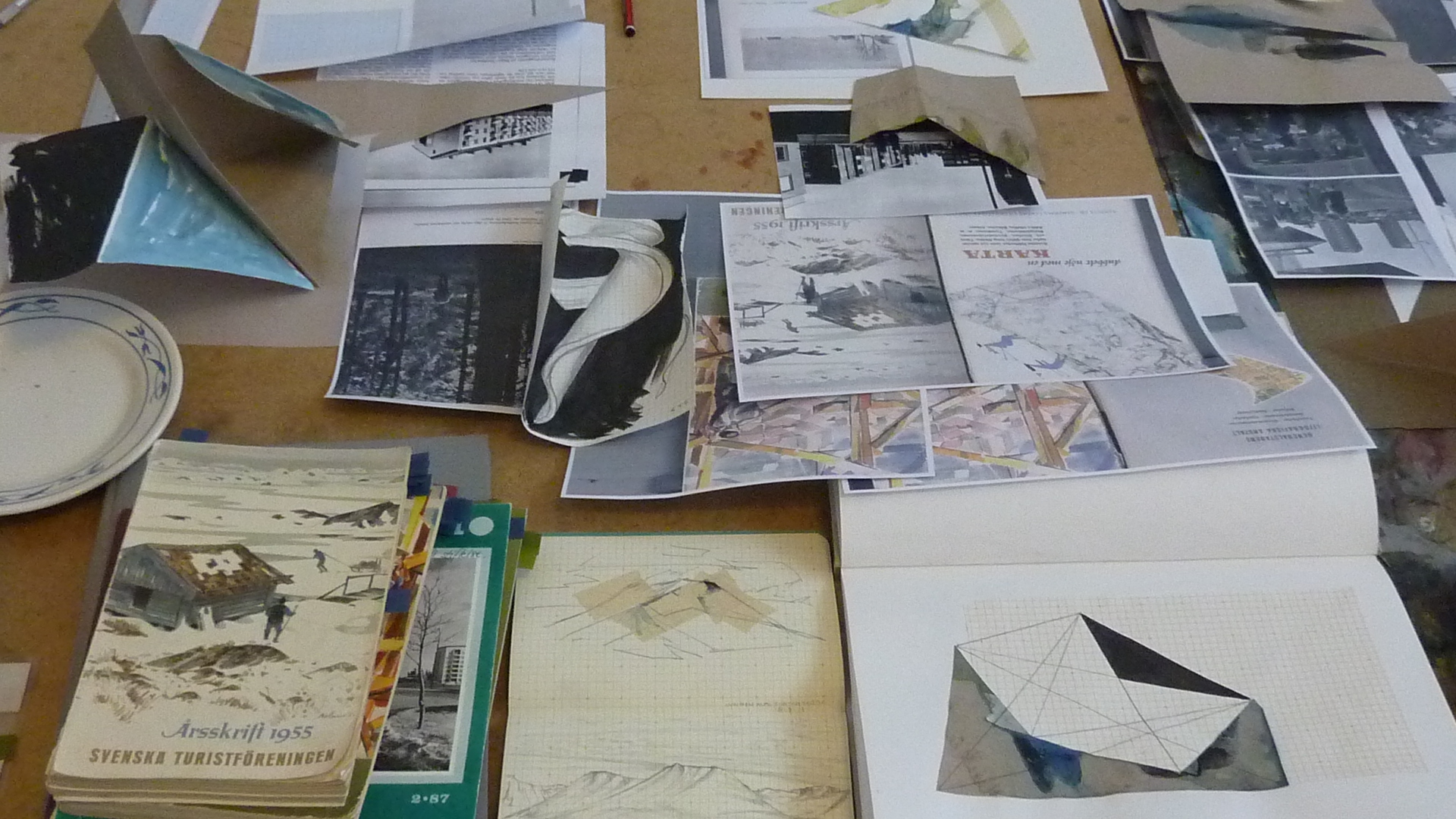
Brandon explored these landscapes through excursions; making photos, sketches and watercolours that he combined with recycled materials and local information. These became a bricolage of material.

Brandon recalled: “When travelling I couldn’t carry very much, so I worked out a basic art kit with a watercolour travel set, acrylic paint, brushes, canvas, watercolour pads, moleskin sketchbooks, scissors, pens/pencils and graph paper. I made a rule that this all had to fit into an A3 folder and pencil case.”

On arrival at each residency, Brandon scoured the area for base materials such as cardboard. This often involved rummaging through recycling bins or asking strangers for shoe boxes.

He said: “I did get some strange looks, but if anyone asked what I was doing I just told them I was an artist, which normally excuses all sorts of behaviour.”

At the end of each residency Brandon would package most of his work and post it back home.

He added: “I left different things at each place; sometimes pieces just wouldn’t fit in postage, other times I donated paintings or sketches to my hosts.”

Meeting interesting people was – Brandon said – one of the highlights of his trip. He listed other highlights as: challenging his work patterns, having to be resourceful, seeing amazing countries and living like a local.

However living like a local was not always easy.

Brandon explained: “Before Travelogue I had never done any residencies; so arriving in another country without familiar studios, friends or materials was hard.

“The first day of each residency was a bit strange; I would arrive to an empty room and wonder how I was going to make something from nothing.

“My first actions were normally to get some ideas up on the walls, rearrange the space and make it feel like mine.”

After setting up, Brandon absorbed his environments by collecting materials and making sketches, this – he said – helped him to relax and built towards his final projects.

He added: “I’m really happy with the body of work I produced, which is why I was keen to collectively show it when I returned.”

Before his travels Brandon lived and worked in England, having studied an MA at Wimbledon and BA at Leicester De Montfort.

Upon returning to the UK Brandon started touring his exhibition.

He said: “I found that travelling can be a brilliant experience that can change your work forever.

“To any artist considering working abroad I would say: plan ahead, set goals (but have an open mind and avoid being too prescribed) then get to know the local people and arts scenes.”

International residency opportunities can be found at Res artists’, Transartists’ and WASPS studios’ websites.

WASPS studios hold special resonance with Brandon, as they are hosting his Travelogue exhibition.

Brandon said: “This is my first Scottish show and first solo show in the UK, so it’s a very exciting time.

“I hope people will get a lot out of Travelogue; it is a large body of work that allows viewers to immerse themselves in the sense of place. It shows how palettes change with the seasons, and landscapes shift from rolling hills, to forests to volcanic areas.”

Travelogue dates and locations can be found on Brandon’s website.

Gluten Free Treats

gluten free treats

Ever eaten a pizza only to have joy crushed with stomach cramps? Then you might be gluten sensitive. Gluten – the protein in wheat, barley and rye – has been waging havoc on diners for decades.

For some gluten can be a serious (even life threatening) ingredient. These people have Celiac Disease: an intolerance that can cause digestive, bone and reproductive problems. For others (including those with Irritable Bowel Syndrome) it inflicts bad digestion.

So what can be done if you fit either category? Well avoid these grains and you will avoid symptoms. But this is not as simple as it sounds, with many products disguising grain, such as couscous and semolina.

Add to this the temptation of hot baked goods and gluten free life can be hard.

But fear not! There are plenty of tasty substitutes in home cooking or dining out. So here is some temptation -tackling tips:

Home cooking

The key to gluten cooking is getting a good flour substitute. There are a myriad of options including: corn flour, rice flour and potato flour, all of which you can source at Chinese supermarkets.

Corn flour is great for coating/ deep-frying anything (tempura style). It is also good for thickening sauces.

Rice flour – on the other hand – has a pungent taste, which overpowers much home cooking; so is best avoided unless specifically cited in a recipe. The best rice products are fettuccine noodles,which can be steamed, boiled or deep-fried instead of pasta.

Potato flour is contrastingly versatile, suiting both savoury and sweet recipes. Potatoes can also be used to thicken sauces or baking by adding Smash (dried potato substitute) to the wet mixture.

But the freshest way to bake with potato is by using mash to make a cake. Fresh mash can be made the old fashioned way (peeling, boiling and crushing totties) or can be bought pre-cooked, in the vegetable aisle. To use it instead of flour, take the flour weight equivalent and split it into three parts mashed potato and one part ground almonds; before putting both into your mixture. This will make a fresh moist bake.

Another great baking substitute is egg whites, which can be whipped into peaks to make treats like:

Flourless pancakes can also be made by soaking porridge oats in yogurt overnight and frying. And oats’ uses don’t stop there; their chewy texture also make great biscuits, granola, and flap jacks.

Texture is a challenge in gluten free baking, with many flour substitutes unable to meet wheat’s moist elasticity. So, to stop your bakes from crumbling, add ground nuts and fruit wherever possible.

Dining Out

Possible and probable are two different things; while it is possible to bake a gluten free pizza, it is improbable that the base will hold. So why not leave it to the professionals and dine out in a gf friendly Italian, like Paperinios.

Another chain embracing gfree foodies is La Tasca. This Spanish tapas joint offers both gluten free food and beer! Its stock of Estrella Damm Daura will spark joy in the hearts of lost lager lovers.

Surprising treats can also be found in Dakhin, a Glasgow based Southern Indian restaurant. Here foods like onion badgies are made with garum flour, a gluten-free delight.

But if you are looking to lunch (or even brunch) in Glasgow, the Butterfly and the Pig is best. The Bath Street tearoom offers gfree soups, sarnies and cakes (that would make your stomach grumble).

If this sounds good, but you prefer a takeaway treat then why not visit Tapaorganic (a Glasgow gf friendly bakery). With a store in the West End and another in Dennsitoun, Tapaorganic offers Fairtrade coffee to accompany gfree bakes.

So now you see, you can dine like a king without suffering wheat- hangover. Happy eating!