Wolf Ruby
Reply
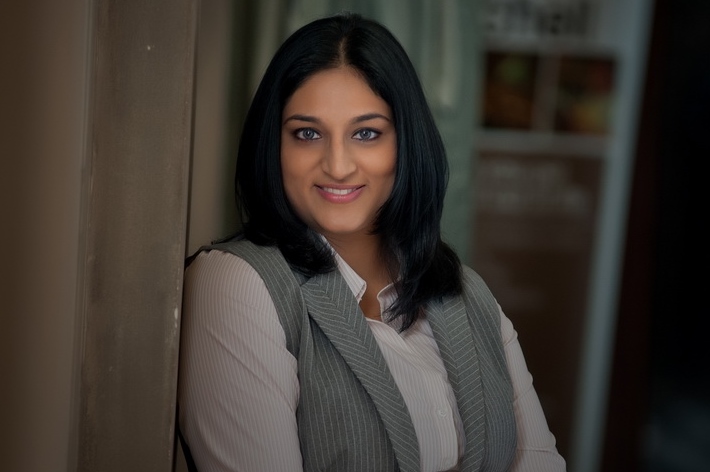
First known for her fan-fiction; fantasy author Safina Mazhar captured the imagination of teens across the globe and went on to write the Power of Four series. Now Mazhar is returning to her Glaswegian roots, to share writing tips in a Mitchell Library Workshop (on December 19).
Mazhar said: “I have been writing novel length stories for over seven years. I wrote a Harry Potter fan-fiction named, The Dark Prince Trilogy, and published it on Fanfiction.net. Somehow my stories gained an impressive readership, and a lot of people ended up liking them, reviewing them, and writing their own fan-fictions based on them.”
This series of stories were translated over 12 different languages and accumulated over 21 thousand reviews. Building upon this success, Mazhar decided to establish her own legacy of novels.
She said: “After years of writing and enjoying it, I decided to try my hand at an original piece; The Power of Four Series.
“The Power of Four series tells the story of Aaron Adams, who discovers a secret about himself, on his fourteenth birthday. It follows his journey to discover who he really is and what part he has to play in a dangerous war.”
Keen to share her inspiration with readers, Mazhar agreed to host a Creative Writing Workshop at Glasgow’s Mitchell Library, in association with the Young Muslim Glasgow (YMG) Group.
YMG Volunteer and Event Organiser, Dr Sahira Dar, said: “Safina Mazhar is a local Muslim who young adults will be able to relate to – she went to a Glasgow school and understands the challenges facing the city’s youth. This empathy makes her passion more infective and her success more inspiring.”
Dar explained that the workshop aims to encourage kids to not only read and write, but to break social barriers.
She said: “Reading and storytelling are cross cultural passions that can unite people from different backgrounds.
“Ethnic and religious minorities can often be pigeon holed; so we must show our youth good examples of successful professionals from all spheres; to inspire them and introduce them to areas they may not know.”
The workshop welcomes novice writers and will build skills from the bottom up.
Starting at 10am, attendees will enjoy introductions and ice breakers.
Dar, said: “We have asked the young adults to bring a book by their favourite author and to share their thoughts on this choice.”
Then the day will be split into two workshops with the morning session covering writing techniques and, after a complimentary lunch, the afternoon running a creative writing circle. The workshop will finish at 3.30pm.
Dar explained that the workshop was aimed at 11-16 year olds from all backgrounds.
She said: “Tickets are £10, and prior to attending registration is required at EventBrite website.”
She concluded: “We hope the workshop will inspire youths and broaden their horizons.”

Finding Glasgow’s heart through its stomach is the Centre for Contemporary Arts project the Cooking Pot.
Launched in September 2015, the ongoing venture has seen workshops, screenings and community meals pop up throughout the city.
Project founder and CCA Public Engagement Curator, Viviana Checchia, said: “By pulling together culinary knowledge of Glasgow’s local, permanent and temporary communities the programme discovers the cultures they share.”
She continued: “The Cooking Pot also investigates food production and distribution in local and international context; as well as food poverty and awareness.”
Helping the CCA has been a number of organisations, such as food outlets and interest groups, including: Camcorder Guerillas, Open Jar Collective, the Goethe Institute, Auticulture Network, bakery47, Ricefield, the Glad Cafe, Alsham, Milk, The Project Cafe, Rum, Egg and Muck, Tchai Ovna, Soul Food Sisters, Saramago Cafe bar, Kinning Park Complex, Alliance Francaise, Annie Higgins, The Italian Project, The Village Storytelling Centre, Woodlands Community Garden, and Xchange Scotland.
Checchia added: “We’ve had almost 500 participants in Cooking Pot so far; across 23 events around Glasgow.
“Coming up in the new year, we’ll also be working with Slow Food Youth Network Scotland, Glasgow University Environmental Sustainability Team, Lost Soup Kitchen, Glasgow Allotments Forum, Reidvale Neighbourhood Centre, Food Thought and The Fred Paton Centre.”
While some of the events will be held in external venues, others will be staged at the CCA.
Checchia explained that many Cooking Pot events are free ticketed, and family friendly.
She enthused: “Everyone should come along to one of our events!’
Event information can be found on the CCA website, Facebook page and brochure.
Checchia concluded: “Not only do people love the Cooking Pot but they feel so inspired by it that they want to get more and more involved.
“Food is Magic!”

Social conscience stirs as Glasgow plans its alternative lifestyle festival. The Only Way Ethics will busy the city, from November 29 to December 6, with ethical discussions focused on improving Glasgow.
Organiser Craig Tannock said: “Some of the issues the festival will cover include the energy crisis, anti austerity, women’s activism, ethical arts funding and organic food.”
He explained: “The festival will cover issues in a range of ways, such as panel discussions, theatre events, film screenings and community meals.”
Food will also reign supreme at Vegfest Scotland, the Vegan exhibition that is partnering the festival. This exhibition will run in the SECC, during the last two days of The only Way is Ethics. Vegfest Scotland will offer information, demonstration and delectation.
Tannock explained: “Vegfest is a huge event, but for the rest of the festival we encouraged smaller venues to get involved. We wanted to make the festival accessible to everyone; so it has a variety of spaces for people to engage with experts and others on ethical issues.”
These spaces will be found in venues throughout the city, including The University of Glasgow, Chemikal Underground Records, Glasgow Women’s Library, and Toonspeak Young People’s Theatre.
While most venues are open to all ages, Tannock explained that some licensed events won’t admit children, and other events have adult themes.
He said: “Some events are for a more adult audience, such as the talk and screening of a film about vCJD in the food chain. This kind of event doesn’t make for easy consumption and people would probably decide not to bring children; however we will leave it to them to decide.”
As well as heavy discussion the festival will have light entertainment. Nowhere is this truer than in its opening gig at St Luke’s. The venue (near the Barrowlands) will host Radio 2 Folk Award winner, Karine Polwart and artist Ela Orleans, among others.
Then, after eight days of events, the festival will close in equal style.
Tannock said: “The closing night will be a real chilled out party at the Flying Duck; with some unannounced surprises. By this point there will have been plenty of chin- scratching, so it will be a purely social event, allowing people to catch up with others they have met.”
Encouraging everyone to come along, Tannock concluded: “The Festival of Ethics provides a space for free thought on social issues; it allows people to get involved in movements that can change lives.”
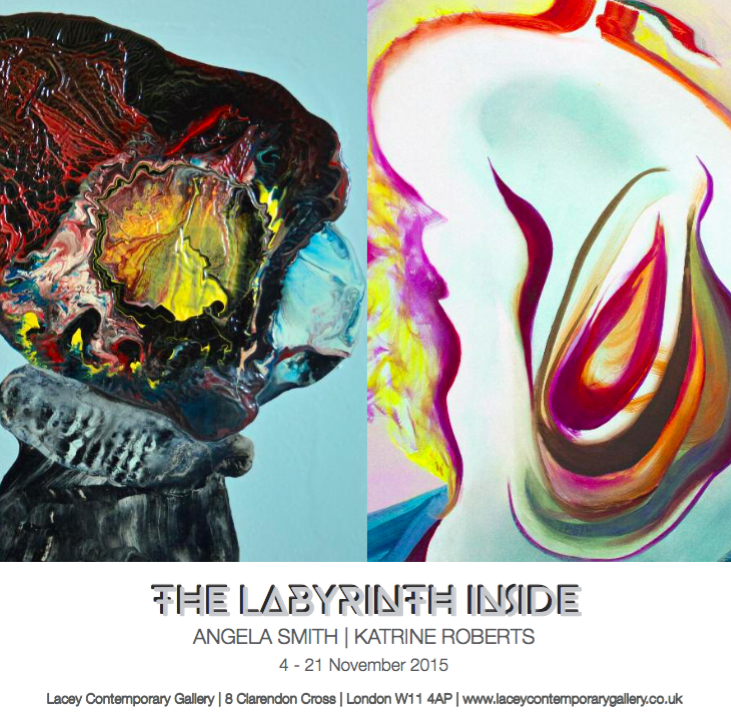
Exploring inner turmoil in inner London is the modern art exhibition, The Labyrinth Inside. Running from 4 – 21 November, at Lacey Contemporary Gallery, the show features work from Katrine Roberts and Angela Smith.
Roberts said: “Angela and I met through Lacey Contemporary Gallery; we were both approached a little over a year ago by Andrew Lacey, who founded the space.
“In this instance we were selected to show alongside one another. We share a common ground in our visual language and overlapping concerns with woven, tangled forms depicting strange, abstruse creatures or environments.”
These environments are featured in paintings and an installation at the Lacey Contemporary Gallery. The works explore themes of the psyche and body, in an interactive way.
Roberts said: “The Gallery space is used as a metaphor, the materials’ movements and audience participation bringing attention to the life breathed into any space once inhabited.”
This affect is achieved by splitting the Gallery in half, with Smith’s work at the front and Roberts’ at the back.
Roberts detailed: “We chose to divide our work, to allow each of our ‘worlds’ to breathe, with a pendulum-like interaction between the two.”
Roberts’ work consists of paintings on canvas and board, as well as an installation that paints the gallery structure.
She said: “I have made a number of installations in the past, often using paint, paper and tools to cut into the walls; but each piece takes on a different form, as every space is different.”
Having graduated from the Royal College of Art in July, with an MA in Painting; Roberts first gained a BA in Fine Art Painting at London Art School, in 2011. Since then she has been working as a professional artist.
Recounting her proudest achievements, Roberts said: “I was so excited to be selected for the Catlin Guide in 2012. Then it was great being included alongside artists I admire, such as Carla Busutill, in South Korea’s Space K Galleries. But more recently my proudest achievement has been being shortlisted for the Griffin Art Prize.”
The Griffin Art Prize is a competition that celebrates the UK’s best emerging artists. Its winner will be announced at the Private View, on 18 November.
An exhibition of work by all of the shortlisted artists, including Roberts, will be held at West London’s Griffin Gallery, from 19 November to 18 December.
As well as exhibitions, Roberts has been busy founding a contemporary art forum called ArtNow.Discuss, which focuses on discussion and projects.
Roberts concluded: “Based in London, AN.D takes the form of interviews both online and offline with Artists, Curators, Gallery Managers, Project Managers, Collectors, Investors, Educators and Writers. It offers a multifaceted view of what is happening at this moment.”
Autumn 2015 saw the abstract sculpture of Oliver Braid fill Wasps’ Hanson Studios. As Braid’s show, The One Where We Wonder What Friends Did, drew to a close he explained the inspiration behind it.
He said: “As a project this new sculpture was inspired by relationships in late 20th century culture; collaborative and curatorial practices across early 21st century culture; as well as distortion and medieval mereological thought.”
He added: “As an object the sculpture was developed with two questions in mind; what is the use of artistic embroidery atop philosophical carpentry; and what is the relationship between use and not-use?”
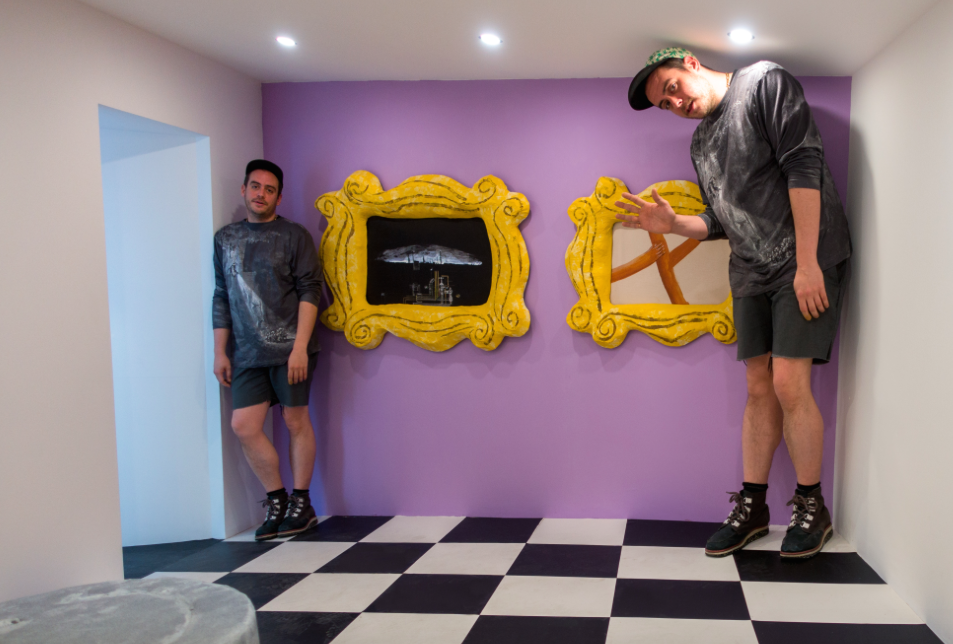
Braid’s exhibition uses papier-mache, embroidery, architecture, optical illusions, and semiotic art; encompassed in sculpture. His work forms a hut, the outside of which is covered salmon coloured foam, and adorned with the bust of Margaret Beaufort.
On the side of the hut is a peep -hole, through which the viewer can see a reimagining of the Friend’s set for Monica’s apartment. It has a checked floor, purple wall, sculptures, and gold -framed impressions of other artists’ work.
Braid explained: “Inside the room you can take a closer look at the display of five objects, which I made based on existent artworks produced by friends of mine. Over the past fifteen years these friends have influenced my own thinking about art.”
He continued: “When someone moves into this room space and walks across it they grow in size, and it becomes clear the space and the objects have been distorted to create an optical illusion.”
The challenging of perspective is central to Braid’s work ethos; as he explained: “Throughout my work I wish to maintain a critical perspective on local and global contemporary art.”
He added: “By the time I am designing a work it’s sort of chosen itself, there doesn’t appear to be any other way to respond to the world at that time.”
Braid explained that he was first drawn to art at the age of thirteen, upon seeing the exhibition Sensation (in 1997). He then went on to study at the Falmouth College of Arts, before Glasgow School of Art.
Now an established artist, Braid lives in the Glasgow and works from Wasps Hanson Studios. He uses the studios to develop a cultural space he calls Phew.
He said: “The exhibition that I have at Wasps right now is also an off-site project for Phew’s first season Tell Me Less & Tell Me More, which explores practice of over-relating and withdrawing.”
Withdrawal from expectation is a method Braid uses to avoid cliché; as he explained he no longer courts exhibition opportunities or popular approval.
Braid briefed: “I’m bored of the arts trying to persuade people to come to something, it seems self-defeating all this begging. My vibe is like, I’m doing this thing that I am focused on and that I believe in and think is valuable.
“In an ideal world art will be allowed to become as hermetic as science, and also be given equal respect.”
Looking to the future, Braid is developing the first season of Phew (running September 2015 until March 2016).
He will also bring a solo exhibition to Vane, Newcastle, in January 2016.

Honouring lives lost and risked for Mexican freedom of Expression is the Mitchell Library Day of the Dead event.
Hosted by The Scottish Writers’ Centre in partnership with Scottish PEN, the event will take place on November 2 -from 5.30pm- in the Glasgow Room.
The free, un-ticketed event will see readings both about the country and from its writers.
Host and writer Jean Rafferty explained: “We’re celebrating the Day of the Dead to honour ‘Absent Friends’ and commemorate the courage of writers, poets, and journalists living and working in Mexico; one of the most dangerous countries in the world for freedom of expression.”
Rafferty has organised the event as part of her role within Scottish PEN.
She explained: “PEN is an international writer’s organisation whose Scottish branch has been gathering for nearly 90 years.
“Scottish PEN supports freedom of expression in every form. For instance, I am chairman at the Writers at Risk society, which supports people who have been threatened for speaking out against their government.”
While the society has paid tribute to Mexican writers before; Rafferty explained that this event has particular significance.
She said: “This year’s Day of the Dead event will be particularly poignant, as we have Mexican writer Lydia Cacho as an honorary Scottish PEN member.”
Rafferty added: “As well as being a great writer, Lydia runs rescue centres for women that have suffered sexual and physical abuse. Lydia’s work will be read at the event.”
The event will also feature readings from Anabel Hernandez, whose novel Narcoland exposes Mexican drug cartel, an exposure which has seen threats on her life.
Rafferty said: “As well as established writers, we will also hear from Mexican student, Bernardo Otaola Valdes, who has written a very moving piece about his plan to go back home and study journalism. Studying journalism in a country like Mexico is dangerous; and shows that Bernardo fits the night’s theme of Courageous Writers”.
She added: “As well as Bernardo’s reading there will be a reading from a Mexican poet, Javier Sicilia’s work. Javier lost his son to the violence, and wishes to share his own final verses.”
Following this there will be an ‘open mic’ section of the night. Here writers can take the stand and respond to the theme: ‘Mexico or Courage in Speaking Out.’
Writers wishing to participate in the open mic section can contact Rafferty via email.
The organiser explained: “The open mic section has seen applications from various people, including Portuguese film writer; Carla Novi, who has made a documentary Desaparecidos, about the disappeared Mexican students.”
Rafferty concluded: “Scottish PEN not only cares about the writers whose lives are endangered in Mexico, but the people all over the country, whose experiences are expressed in the writing.
“Freedom of expression is a basic human right. It is important to support writers because they represent everyone’s struggle.”

Bringing urban to Dundee is Hip Hop Vibe; an event that celebrates street dance, art and music.
On October 20 from 2-9pm, Bonar Hall will host choreographer Andy Instone; who has worked with artists such as Dizzee Rascal, Sean Paul and Alexandra Burke.
This time working in union with Dundee Dance Partnership, Instone will deliver a programme of urban tutorials and a closing party.
Scottish Dance Theatre Head of Creative Learning, Dawn Hartley, said: “We open with Andy Instone giving us a presentation about the history of street dance; and after that it’s practical dance, graffiti art, and DJ skills workshops; finishing with an after party where everyone can get their groove on.”
Attending the event will be Leisure & Culture Dundee’s Urban Moves Dance Company, but Hartley explained guests with no urban knowledge were also welcome.
She said: “The event is open to all over five years old. We want a wide range of age groups, because dance is for everyone.”
Hartley added: “Attendees need only bring enthusiasm, a smile, and clothes they can move easily in.”
Tickets to access all areas cost £25; with a discounted rate of £40 for two. Tickets to the after-party, which runs from 7.30 – 9pm, are £10. Guests can book tickets and register for workshops via the Dundee Rep website.
Hartley said: “We are very privileged to get Andy Instone up to Scotland for this event, his passion is contagious and knowledge is priceless. The event is a must for all dance enthusiasts!”
Leisure & Culture Dundee Dance Officer, Alex Hare, concluded: “Leisure & Culture Dundee are delighted to be part of this event. We have been busy organising an exciting timetable for the day and are looking forward to the community celebrating all things urban.”
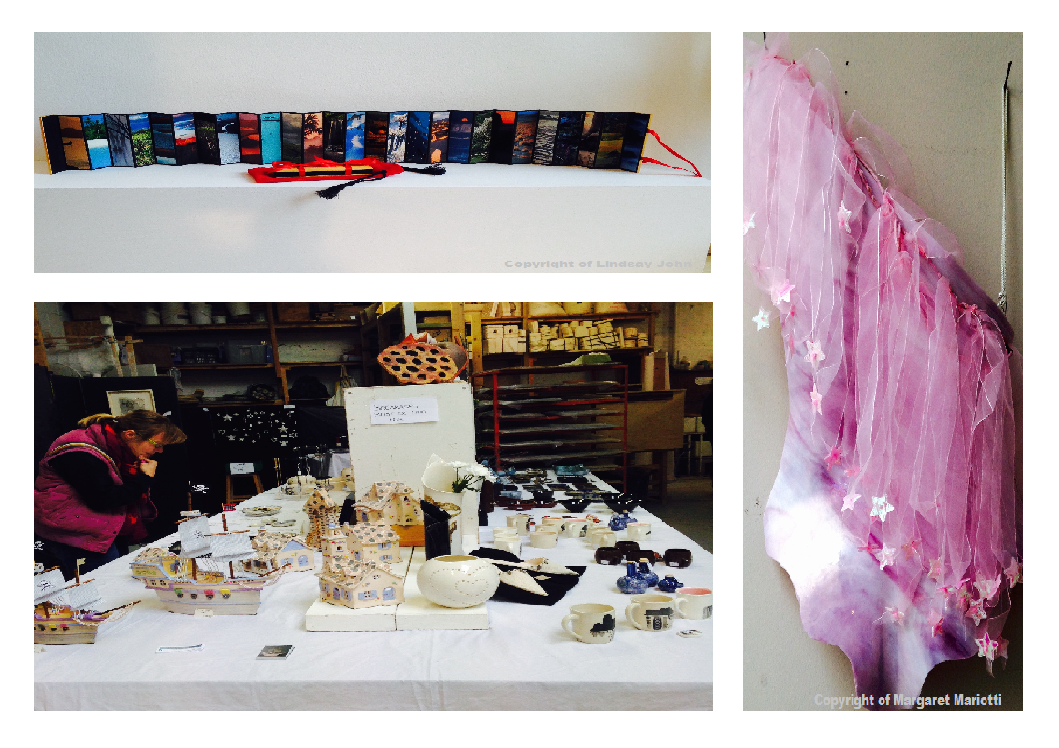
Hidden inside a Dennistoun building is a feast for the eyes; Wasps Hanson studios. Here ceramics, stained glass and drawings are just some of the treasures tucked away. But – once a year – the studios hosts an open weekend, to show the public what it has been missing.
Speaking from the event, ceramicist Eleanor Caie said: “Open weekends are a rare treat, and a lovely chance to let the public explore our working space.”
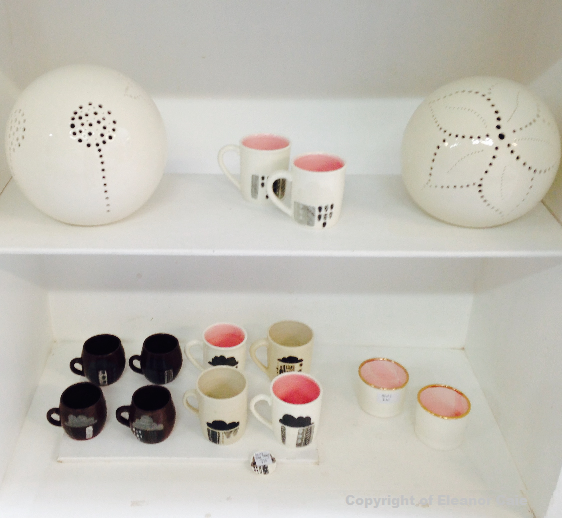
Caie’s shared space showcased her Scottish landscape pots; Japanese style bowls and sphere lamps, which cast patterns from tiny holes.
She said: “I spend a lot of time making things and developing ideas, and the Glasgow ceramics studio [at Hanson] is the best space for this kind of work.”
As well as studio work, Caie helps run an arts fare on Royal Exchange Square, showcasing her and other artists’ produce.
Such multitasking seems common among Hanson’s artists, as stained glass specialist, Alan Robinson showed.
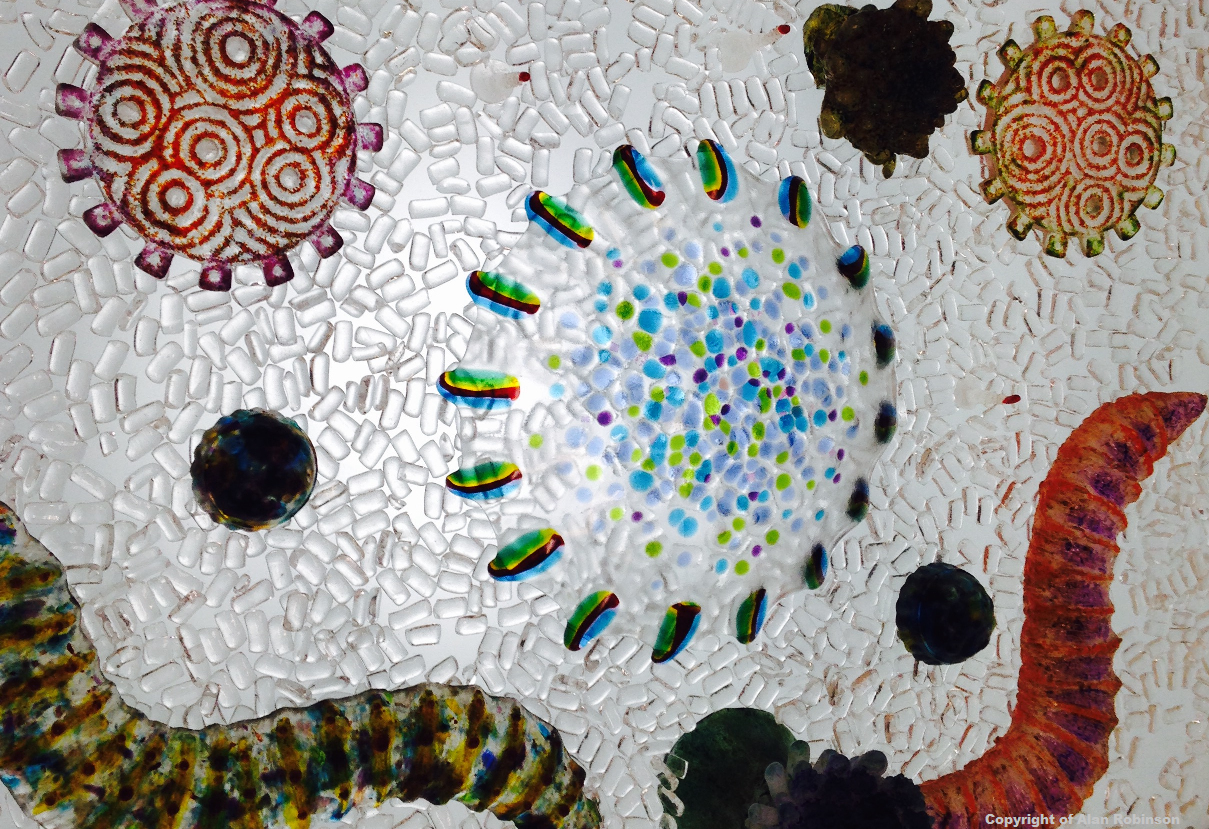
He said: “I am a full-time artist; I create work here at Hanson, but also use the space to run stained glass classes, for people interested in learning the craft. Students come as beginners, develop their skills, and often end up honing them over years.”
These skills, Robinson explained, are vital to a city renowned for its stained glass.
He said: “Glasgow is the UK’s leading stained glass city; so restorations make up about fifty per cent of my commercial work.”
The other half he listed as original wall mountings, windows and sculpture.
Robinson explained: “I have sculptures on display which I showed at an exhibition in Edinburgh, called Number, Sign and Pattern. These pieces include both fused, and cast and painted glass, with layered surfaces. The pieces explore the relationships between marks and signs, textures and patterns, images and objects.”
Another artist using glass in a different way was Alicia MacInnes. MacInnes showed functional jewellery and sculpture, made via bottle slumping and multiple firings. Tartan patterned glass pendants and bottle dishes were some of the results.
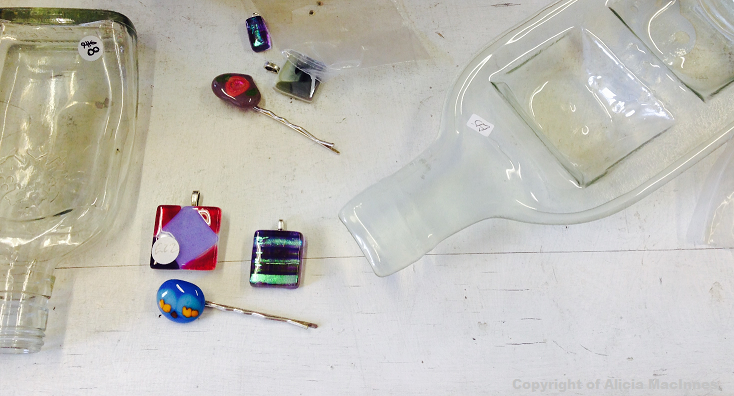
MacInnes reflected on the changes she had seen during her time at Hanson.
She said: “I originally came to Wasps Hanson about fifteen years ago, to work in the collective glass studio. Long before that the Hanson building was a tobacco factory, which was eventually turned into artists’ studios. Then – in 2001- the studios were further refurbished with Lottery funding.
“At the time they looked fantastic; since then they have worn a little around the edges, but are still a good space.”
Another long-standing resident showing at the open weekend was artist Susan Eaton. Eaton joined the studios fourteen years ago, after leaving art school.
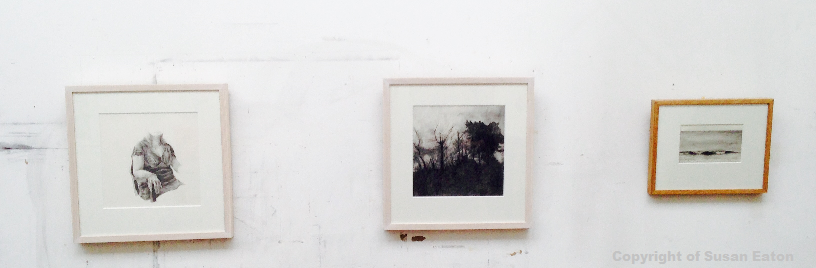
She said: “I have always enjoyed the space here. The Hanson Studios have a huge variety of artists working across different mediums.”
Eaton’s medium of choice had recently been pencil, as she explained: “I have been focusing on drawing for the past few years. I work with fine leads and build up layers to get a dense black effect; it’s time consuming but worth it.”
She added: “The works I have on display are incomplete portraits of women, focusing on the texture of their clothing and the weight of the limbs, as opposed to the identity of the subject.”
Also focused on the human form was artist Lindsay John, who showed a series of drawings he had made in Japan, 1981. Each drawing depicted several stylised characters in motion.
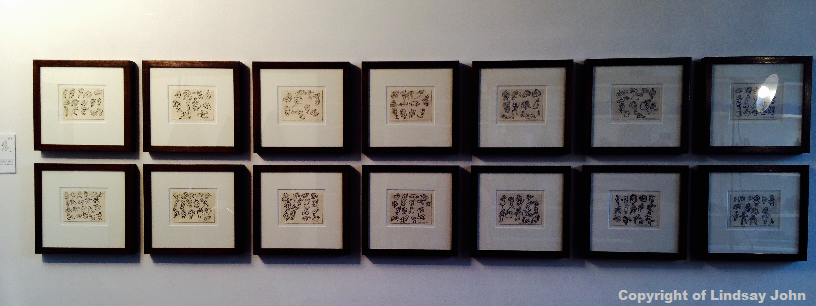
He said: “I have had these drawings hidden away, and have just recently had them framed, so am showing them for the first time. They are very special to me.”
John added: “The images were made with a pen brush, common in Japan, which I used to show movement and performance. The figures are a mix of human and animal; reflecting different aspects of the human condition.”
Further anthropic thought was put into John’s screen sculpture, a fan-like object that unfolded into landscapes.
He said: “I made the screen as a gift for one of my friends who recently had a child. It can be held by an adult and shown to their child, to sooth them. Then, as the child grows up, the screen can be a memento.”
John concluded: “The screen shows landscapes from different places in the world. Each scene has a person in it; these represent the journey that the child will go on.”
Escapism was present not only in John’s work, but throughout the Hanson studio. The open day showed how the space works to bring bespoke experiences to a diffident district.
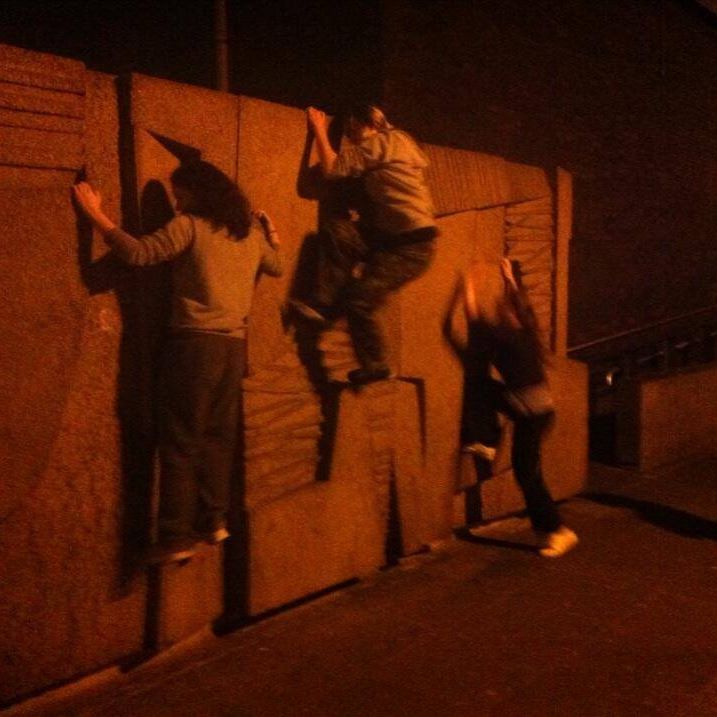
Born in France and immortalised in Hollywood, Parkour has trickled down to Scotland; shedding its macho image on the way.
Over five years ago a group of women, Glasgow Parkour Girls, adapted the free-running art to their city and physic.
This was no mean feat, as the training discipline meant navigating the streets via running, climbing, swinging, vaulting, jumping, rolling, and quadrupedal movement.
As well as physical obstacles, the women had to overcome the image of Parkour as a male sport.
Coach Kel Glaister said: “Parkour has its roots in France, where in the early eighties a group of young men in Lisses (near Paris) began training to their functional strength, and developing movement through environment.”
She continued: “Parkour’s unofficial motto is ‘être fort pour être utile’; be strong to be useful. Training is focused on the functionality of movement, the longevity of the traceuse, and on helping others.”
This community spirit is central to Glasgow Parkour Girls (GPG) group.
Glaister said: “We recognise that to an outsider Parkour can seem inaccessible, scary, and macho. Our group aims to change that perception, and make space for those who identify as female; especially those feeling marginalised in other sports.”
Welcoming women of all ages and builds, Glaister explained that GPG caters to different abilities.
She said: “The the current group consists of women in their early twenties to thirties, but Parkour is for all ages. We’ve had Glasgow Parkour Girls in their fifties and sixties.”
She added: “Everything we train can be scaled to all levels of confidence and ability. There should be something challenging for everyone, and something that everyone is good at.”
Glaister explained that strength and confidence building is part of training.
She said: “Parkour training is focussed on longevity; for instance practicing landing technique so you absorb the impact with you muscles rather than your joints.
“It also means learning to judge risk and to trust your own judgement. We rarely train at height, and no one will ever pressure their peer into a jump, drop or climb at a GPG session.”
This supportive environment is, Glaister said, one attraction of the group.
She explained: “GPG is non-competitive, and that’s a draw for a lot of people. There’s no way to win or lose at Parkour, it’s all about individual progress. This means everyone understands the struggle. Getting the first climb-up or speed vault is an amazing moment, and everyone will cheer – no matter how slow or low it is.”
GPG classes start with a twenty minute warm up, before drills and techniques are learned. This is followed by a twenty minute strengthing and conditioning session, and rounded off with stretches.
Glaister said: “GPG has a private facebook group, and that’s where we chat about training. We are based around Glasgow, so we have most classes near one of its underground stations.”
Glaister explained that GPG members are equals, however, the group benefits from the knowledge of professional coaches.
She said: “I lead Glasgow Parkour Coaching women’s classes, which happen every Tuesday evening.
“We ran a fundraising campaign to get me qualified, and we’ll be fundraising again to support more female coaches.”
Also keen to attract new GPG members, Glaister said: “Anyone interested in the class should come along – all our training is focussed on safety and longevity- and it really is accessible.”
 artsnfaffs